Abstract Games
Browse all Abstract board games in the Meeple Pulse database.
Styles
Themes
AbstractAdventureAncientAnimalsArtBusinessCard GameCo-operativeComic BookCooperativeCrimeEconomicEnvironmentalismExplorationFantasyHistoricalHorrorHumorIntrigueLiteraryMagicMarvelMedievalModernMuseumMysteryMythologyNatureNauticalPoliticalPress Your LuckSatireSci-FiSocial CommentarySocial InteractionSpaceSuperheroesThematicTravelWarWesternWord-Guessing
Mechanics
3D PlacementActingAction / DexterityAction DraftingAction Point AllowanceAction Point Allowance SystemAction Point SystemAction PointsAction ProgrammingAction QueueAction RetrievalAction SelectionAction/EventAlliancesAlternate ActivationApp-AssistedApp-DrivenArea ControlArea InfluenceArea MajorityArea Majority / InfluenceArea MovementArgumentationAsymmetricAsymmetric FactionsAsymmetric GameAsymmetric PowersAsymmetrical PowersAuction & BiddingAuction/BiddingAuctioningBag BuildingBettingBetting and BluffingBetting and WageringBetting and WagersBiddingBingoBlind BiddingBluffingCampaign / Battle Card DrivenCampaign / LegacyCampaign / Legacy GameCampaign / Mission-basedCampaign / ScenariosCampaign GameCampaign PlayCard DraftingCard DrawingCard DrivenCard Driven ActionCard Driven CombatCard Driven Dice AllocationCard Driven MovementCard ManagementCard PlayCard Play / Hand ManagementCard Play Conflict ResolutionCard SheddingCard-Driven MovementCharacter CreationCharacter ProgressionChit-Pull SystemCo-op PlayCo-operative GameCo-operative PlayCode-breakingCombat ResolutionCombo ChainCommand CardsCommodity SpeculationCommunication LimitsContract FulfillmentContractsCooperative GameCooperative GameplayCooperative PlayCooperative Trick-takingDebateDeck BuildingDeck ConstructionDeck, Bag, and Pool BuildingDeck-BuildingDeductionDexterityDice DraftingDice PlacementDice RollingDiplomatic InfluenceDraftingDynamic Battle SystemEnclosureEnd Game BonusesEngine BuildingEngine-BuildingEscape RoomEvent DrivenExplorationFarmingFlip and WriteFollowFollow ActionGrid CoverageGrid MovementHand ManagementHex-and-CounterHexagon GridHidden MovementHidden RolesI Cut You ChooseIncomeInfluence / Area MajorityLadder ClimbingLegacyLegacy ElementsLegacy GameLegacy SystemLimited CommunicationLine DrawingLine of SightMancalaMap MovementMarketMarket DraftingMarket ManipulationMarket MechanicMarket SpeculationMatchingMeasurement MovementMemoryMission ObjectivesModular BoardModular Board ConstructionMovement TemplatesMulti-Use CardsMulti-use CardsMultiple ScenariosMust FollowNarrative ChoiceNarrative Choice / ParagraphNegotiationNegotiation MechanicsNetwork & Route BuildingNetwork BuildingNetwork and Route BuildingOne vs ManyOne vs. ManyOpen DraftingPaper-and-PencilPartnershipsPattern BuildingPattern RecognitionPick-up and DeliverPlayer EliminationPlayer InteractionPlayer JudgePoint SaladPoint to Point MovementPolyominoesPush Your LuckPush-Your-LuckPuzzlePuzzle-LikePuzzle-SolvingRaceReal-TimeRecipe FulfillmentResource ManagementRole PlayingRole SelectionRoll / Spin and MoveRondelRoute BuildingRoute-BuildingRoute/Network BuildingSanity SystemScenario / Campaign PlayScenario / Mission / Campaign GameScenario / Mission FunctionSecret Unit DeploymentSemi-Cooperative GameSet CollectionSheddingSimulationSimultaneous ActionSimultaneous Action SelectionSimultaneous Hidden AllocationSocial DeductionSocial InteractionSolo / Solitaire GameSpace ExplorationStat Check / Skill CheckStock HoldingStorytellingStrategic PlanningTableau BuildingTactical Decision-MakingTake ThatTargeted CluesTeam PlayTeam-Based GameTeam-Based GuessingTeamworkTech TreesTech Trees / Tech TracksTechnology & Armament TracksTechnology TreeTension & Aggression TracksTile DraftingTile LayingTile PlacementTime TrackTime TravelTower DefenseTrack MovementTradingTrick-takingTug of WarTurn Order: PassTurn Order: Stat-BasedUnit PlacementVariable Phase OrderVariable Player PowersVariable Set-upVariable SetupVictory Point TracksVotingWord AssociationWord GameWord GuessingWord-GuessingWord-guessingWordplayWorker Placement
RANK #57
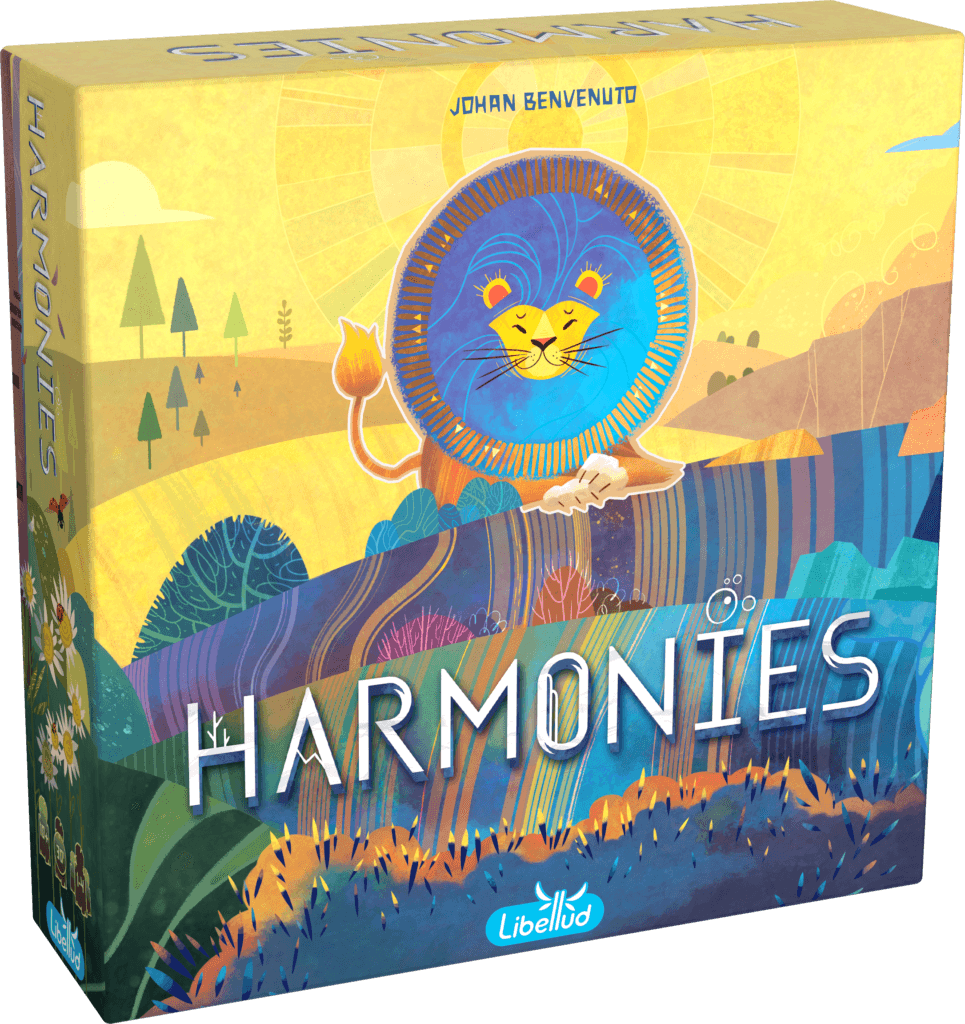
Harmonies
2024In Harmonies, players take on the role of nature spirits, tasked with creating vibrant and flourishing ecosystems. This visually stunning game invites you to craft a personal landscape, a miniature world filled with mountains, forests, rivers, and fields. The ultimate goal is to build habitats that are so inviting and well-balanced that they attract a diverse array of animal species. By carefully arranging natural elements into specific patterns, you earn victory points for the wildlife you successfully house. The player who creates the most harmonious and populous environment, demonstrating a deep connection to the natural world, will be declared the winner. It's a game of poetic construction and gentle strategy, where every piece placed contributes to a beautiful, three-dimensional diorama on your player board.
The gameplay loop is elegant and intuitive, centered around an open drafting mechanic. On your turn, you will select a group of three element tokens from a central market. These tokens represent different terrain types—water, trees, mountains, fields, and buildings. You must then place all three of these tokens onto your personal hexagonal grid. A key innovation in Harmonies is its verticality; tokens can be stacked on top of one another to create 3D features. For example, placing a green token on a brown one forms a tree, while stacking grey tokens creates towering mountain ranges. This adds a unique spatial puzzle to the tile-laying. In addition to placing tokens, you can claim animal cards from a shared display. Each card shows a specific habitat pattern required by that species. Once you successfully replicate that pattern on your board, you can place an animal cube onto your creation, scoring points and completing the card.
Harmonies has captured the hearts of players with its serene theme and engaging, puzzle-like gameplay. The act of building a tangible, 3D landscape is deeply satisfying, offering a strong sense of creation and accomplishment. While the rules are straightforward enough for families and newcomers to learn quickly, the game reveals layers of strategic depth. The decision of which tokens to draft and where to place them to optimally fulfill multiple animal cards at once presents a constant, rewarding challenge. The game also boasts significant replayability, thanks to a solo mode for individual play and an expert variant that introduces "Nature's Spirit" cards, which provide unique end-game scoring objectives. This blend of accessibility, strategic nuance, and beautiful production makes Harmonies a standout title for anyone who enjoys clever pattern-building and creating something beautiful on the tabletop.
1-4 45m⚖️ 1.9

RANK #59
Cascadia
2021Welcome to the vibrant wilderness of the Pacific Northwest! Cascadia is an award-winning puzzle game that invites players to build their own thriving ecosystems. In this beautifully illustrated game, your goal is to create the most harmonious environment by carefully selecting and placing habitat tiles and populating them with native wildlife. You'll compete to build the largest contiguous areas of different terrains—forests, prairies, wetlands, mountains, and rivers—while also strategically placing wildlife tokens to satisfy unique scoring conditions. Success requires a keen eye for patterns and a bit of foresight, as you balance the dual objectives of expanding your habitats and fulfilling the specific needs of the animals that call them home. The player who creates the most balanced and synergistic environment, scoring points for both land and fauna, will be declared the winner.
The gameplay in Cascadia is elegant and accessible, centered around a simple yet engaging turn structure. On your turn, you must choose one of the four available pairs, each consisting of a hexagonal habitat tile and a wooden wildlife token. This core choice presents a compelling dual-layered puzzle. You must decide where to place the new habitat tile to expand your personal landscape, aiming to create large, unbroken corridors of matching terrain types. Simultaneously, you must place the accompanying animal token—be it a bear, elk, salmon, hawk, or fox—onto a suitable tile in your environment. Each of the five animal species scores points based on a specific scoring card drawn at the beginning of the game, introducing significant variability. Bears might want to be in pairs, while hawks prefer to be solitary. To add a layer of tactical flexibility, players can spend 'nature tokens' to break the pairing rule, allowing them to choose any tile and any token from the display, opening up crucial strategic opportunities.
Cascadia has captured the hearts of players worldwide due to its perfect blend of simplicity and strategic depth. It serves as an excellent 'gateway' game, with rules that can be taught in minutes, making it approachable for families and new gamers. However, the shifting puzzle of the tile display and the variable scoring objectives for the wildlife provide a satisfying challenge for even seasoned strategists. The game's replayability is immense; with multiple scoring cards for each animal, no two games ever feel quite the same. This variability, combined with the tactile pleasure of placing the chunky tiles and wooden tokens, creates a deeply rewarding experience. The serene and beautiful artwork by Beth Sobel further elevates the game, immersing players in the tranquil beauty of the natural world it represents. It's a peaceful yet competitive puzzle that rewards clever planning and adaptability.
1-4 45m⚖️ 1.9
RANK #146
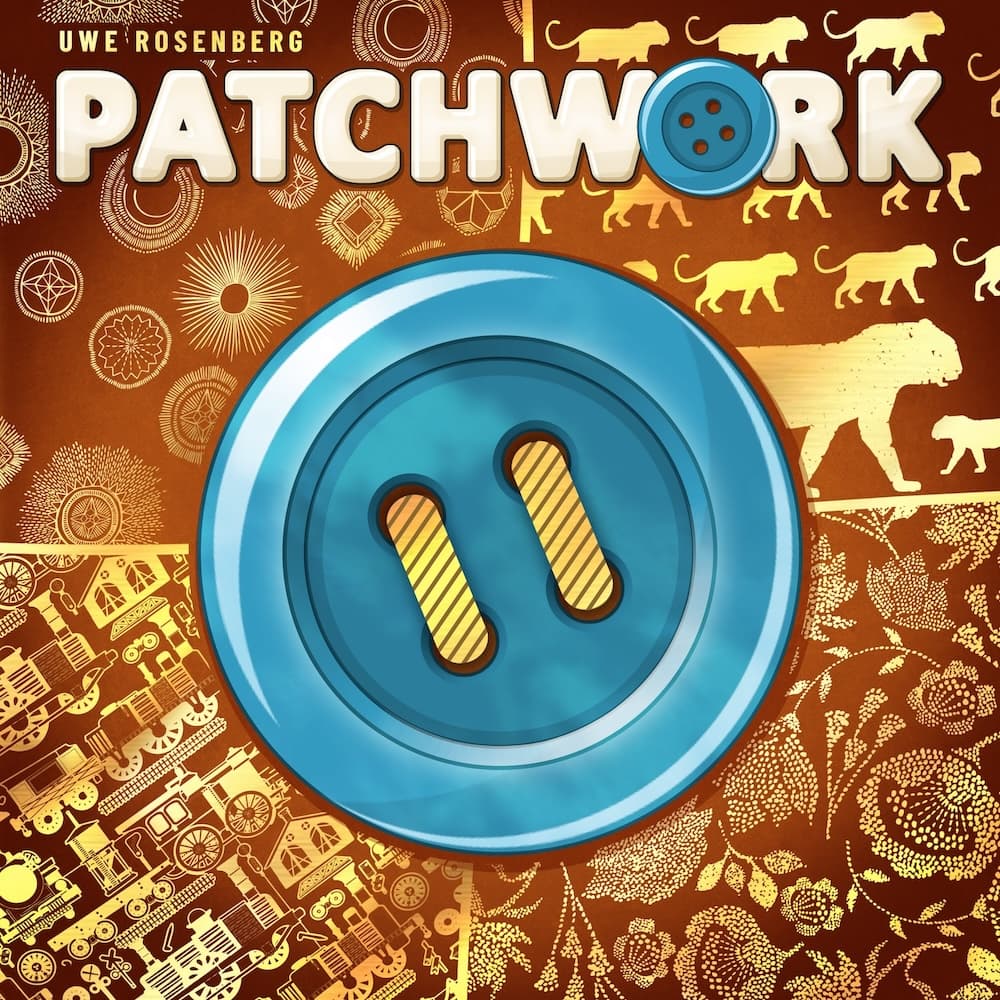
Patchwork
2014Patchwork is a celebrated two-player abstract strategy game from famed designer Uwe Rosenberg. In this charmingly themed contest, players compete to craft the most complete and valuable quilt on their personal 9x9 game boards. The game's currency and victory points are one and the same: buttons. Players must skillfully manage their button economy to purchase irregularly shaped fabric patches, each with its own cost in both buttons and 'time'. The ultimate goal is to fill your board as completely as possible, accumulating a hoard of buttons while avoiding empty spaces, as each uncovered square on your quilt results in a penalty at the end of the game. It's a delightful blend of economic management and a satisfying spatial puzzle.
The gameplay is driven by a unique time track mechanism that dictates the entire flow of the game. Rather than alternating turns, the player whose token is further behind on the central time board is the one to take the next action. When you purchase a patch, you move your token forward a number of spaces equal to its time cost, potentially allowing your opponent to take several turns in a row while you wait. Alternatively, a player can choose to pass and advance their token to the space just ahead of their rival, collecting one button for each space they moved. This creates a fascinating tactical dilemma. Furthermore, as tokens pass specific points on the time track, players receive button income based on the cumulative icons on the patches they've already placed, adding a light engine-building element to the experience.
The enduring appeal of Patchwork lies in its accessible ruleset, which hides a surprising amount of strategic depth. The game presents players with a constant stream of interesting decisions. Do you spend a lot of time to grab a large, valuable patch that fits perfectly, or do you take smaller, cheaper pieces to maximize your number of turns? The Tetris-like joy of slotting a piece perfectly into your quilt is immense, but it must always be weighed against your position on the time track and your button supply. With a special bonus for the first player to complete a 7x7 square, the game feels both tactical and rewarding, making it a beloved classic that is just as engaging for new players as it is for seasoned strategists.
2 30m⚖️ 1.6
RANK #256
YINSH
2003YINSH stands as a celebrated entry in Kris Burm's renowned GIPF Project, offering a masterful two-player abstract strategy experience. The game is a pure contest of tactical foresight, where players, designated as black and white, compete on a hexagonal board. The objective is deceptively simple: be the first player to achieve victory by removing three of your five personal rings from play. This is accomplished by strategically maneuvering your pieces to form an unbroken line of five markers of your own color. Each time such a line is created, a ring is removed, creating a fascinating countdown to victory that also diminishes a player's power on the board.
The game unfolds in two distinct phases. Initially, players take turns strategically placing their five rings onto the intersections of the board. Once all ten rings are positioned, the main phase begins. On each turn, a player must first select one of their rings and place a marker of their color inside it. This marker joins a constantly evolving landscape of black and white pieces. Next, the player moves that same ring in a straight line to any unoccupied spot. The most critical mechanic is introduced when a ring jumps over a continuous line of markers. The ring must land on the first empty space immediately following the jumped markers, and crucially, all markers that were leaped over are flipped to their opposite color. This constant, dramatic shift in board control is the strategic heart of YINSH.
Successfully forming a row of five friendly markers is a moment of triumph, but it comes with a strategic cost. A player who achieves this must remove the five markers from the board and, as their reward, also removes one of their own rings. While this action brings them one step closer to the three-ring victory condition, it simultaneously reduces their presence and mobility on the board. This creates a compelling strategic dilemma: pursuing victory weakens your operational capacity. This tension defines the game's arc, forcing players to weigh every move carefully. YINSH is adored for this elegant balance of simple rules and profound, emergent depth. It is a game of pure skill with zero luck, where the dynamic, ever-changing board state ensures that no two games are ever alike, offering nearly limitless replayability for those who appreciate a true strategic challenge.
2 45m⚖️ 2.8

RANK #265
Calico
2020In Calico, players step into the cozy world of competitive quilting, tasked with creating the most beautiful and comfortable patchwork quilt to attract the cuddliest cats. This is a puzzly tile-laying game where players strategically place hexagonal fabric patches onto their personal game boards. The ultimate goal is to craft a quilt that is not only visually appealing but also meets a variety of scoring objectives. Success is measured by accumulating the most victory points from fulfilling specific design goals, sewing on buttons, and, most importantly, luring feline friends onto your finished creation. The game masterfully combines its charming, gentle theme with surprisingly deep abstract strategy, creating a challenge that is both relaxing and intellectually stimulating.
The gameplay loop is elegant and straightforward. On their turn, a player chooses one of two patch tiles from their hand, places it onto any empty space on their quilt board, and then drafts a replacement tile from a central, face-up market. This simple sequence of actions belies the game's strategic depth. Points are accrued through three distinct avenues. By stitching together groups of three or more tiles of the same color, players earn a matching button worth points. By arranging patches to form specific patterns dictated by the 'cat scoring' tiles for that game, players can attract a cat token, which provides a significant point bonus. Finally, each player's board features three pre-printed design goal tiles, which score points if the six surrounding hexagons are filled with tiles that meet certain criteria, such as having three pairs of different patterns or containing no repeating colors.
The remarkable appeal of Calico lies in its ability to be both a serene, meditative puzzle and a fiercely competitive brain-burner. The gorgeous, gentle artwork by Beth Sobel draws players in, but the tight decision-making keeps them engaged. Every tile placement is a meaningful choice with cascading consequences, forcing players to constantly evaluate trade-offs between short-term gains and long-term plans. Should you place a tile to complete a button group, work towards attracting a cat, or fulfill a difficult design goal? The limited tile market and the actions of your opponents add a layer of tension and indirect interaction, making every game a unique puzzle to solve. This perfect blend of accessibility and depth has cemented Calico's status as a modern classic, beloved by families and seasoned strategists alike.
1-4 45m⚖️ 2.2
RANK #4,046
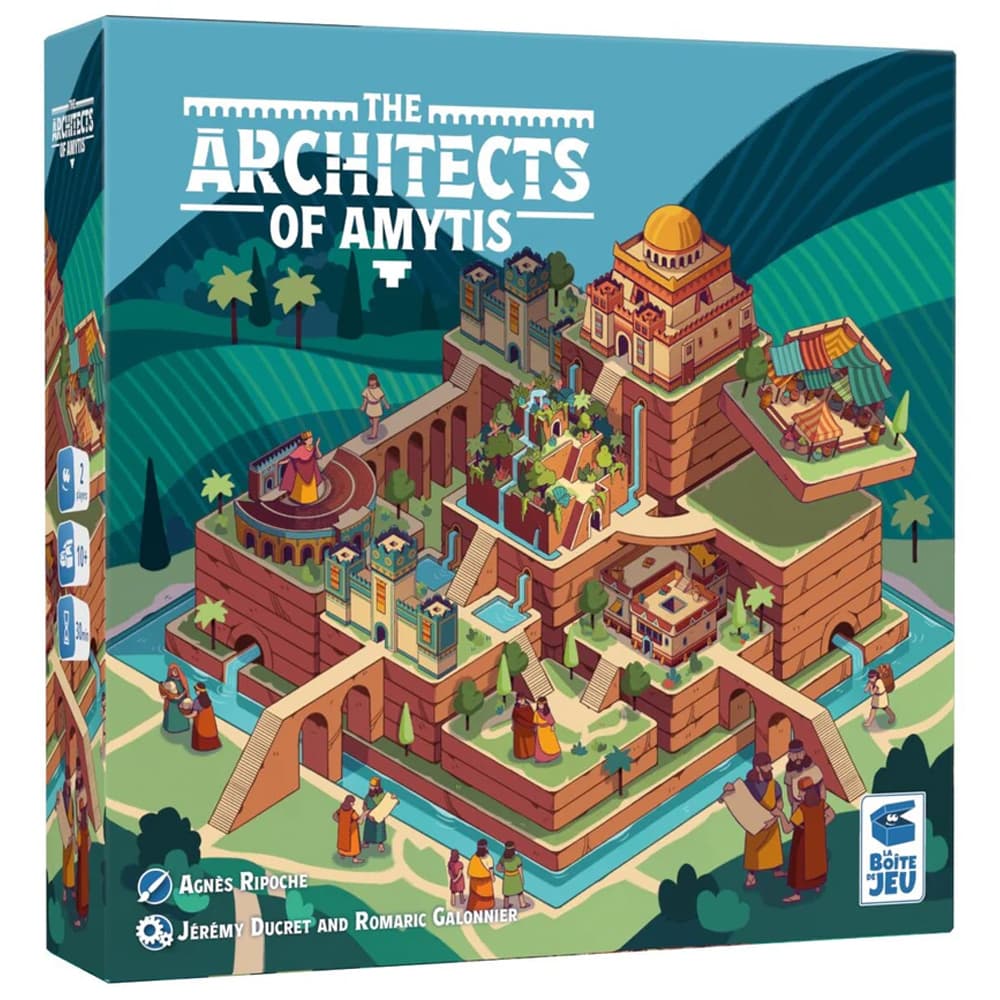
In The Architects of Amytis, two players are transported to ancient Babylon, where they assume the roles of rival architects competing for royal prestige. Commissioned by King Nebuchadnezzar II, your singular goal is to construct the most impressive and magnificent city district for his beloved wife, Queen Amytis. Victory is not achieved through a single grand gesture, but by meticulously accumulating points throughout the game. Players earn points by strategically placing building tiles, completing specific color patterns to satisfy royal 'Project Cards', and cleverly outmaneuvering their opponent to gain the 'King's Favor' for powerful endgame bonuses. The architect with the highest score when the final tile is laid will be celebrated as the greatest builder in all of Babylon.
The gameplay elegantly fuses several mechanics into a tight, interactive duel. The heart of the game is a shared 3x3 market grid, each space holding a stack of building tiles. On your turn, you select and draft one tile from any available stack. However, this choice comes with a crucial consequence: you must immediately place one of your architect pawns onto the now-vacant spot, blocking that stack from both players until your pawn is retrieved. The drafted tile is then placed onto your personal 3x3 city board, either on an empty space or atop an existing tile. Each placement triggers immediate scoring based on the building's type, with variable scoring cards ensuring no two games feel the same. This core loop is complicated by a brilliant spatial mini-game on the market board; if you successfully align three of your architect pawns in a row, column, or diagonal—much like tic-tac-toe—you earn a significant scoring bonus.
The Architects of Amytis is celebrated for its remarkable depth within a very accessible and fast-paced framework. While the rules can be taught in minutes, the strategic implications of each move are profound. The constant tension between improving your own city and blocking your opponent on the shared market creates a highly interactive and engaging experience. Players must constantly weigh their options: Do you take the perfect tile for your city, or do you draft a less optimal tile purely to block your rival or set up a tic-tac-toe victory on the market? This dual-layer puzzle, combined with high replayability from its modular scoring system, makes it a standout two-player game that offers a sharp, tactical challenge that respects players' time.
2 25m⚖️ 2.1

RANK #6,230
The Great Evening Banquet is a sophisticated board game that invites players into the high-stakes world of diplomatic event planning. Set within the prestigious walls of a brand-new state guest house, the game challenges you to act as a master of ceremonies tasked with organizing the ultimate social event. Your primary goal is to create harmonious seating arrangements for a diverse array of international dignitaries and VIPs. Each guest brings their own set of preferences and social requirements, turning the banquet hall into a complex grid of potential points and political pitfalls. The thematic essence of the game captures the tension and elegance of a formal gala, where the simple act of placing one person next to another can either foster international goodwill or result in a social faux pas.
The gameplay experience is built around a clever mix of token drafting and spatial puzzles. During each round, players draw guest tokens from a bag, introducing an element of controlled randomness that requires constant adaptation. These tokens are then selected through an open drafting mechanic, meaning you must stay vigilant about what your rivals are planning while securing the most beneficial guests for your own tables. The core challenge lies in the seating preferences of the VIPs; some may wish to be surrounded by their own entourage, while others provide bonuses based on the diversity of the table. The game progresses steadily until the grand chamber is filled, ensuring a tight, focused experience that rewards players who can think several moves ahead while managing the immediate tactical opportunities presented by the draft.
What truly distinguishes The Great Evening Banquet is its blend of approachable rules and deep, emergent strategy, a hallmark of the acclaimed publisher Saashi & Saashi. It offers a refined experience that appeals to fans of 'smart' family games, where the mechanics are easy to grasp but difficult to master. The inclusion of expert variants allows seasoned gamers to add layers of complexity, while the robust solo rules ensure that the seating puzzle is just as engaging when played alone. With its charming art style and the satisfying tactile feel of drawing tokens from a bag, the game provides a meditative yet competitive atmosphere. It perfectly captures the puzzle-like satisfaction of seeing a chaotic room transform into a perfectly ordered celebration, making it a standout title for anyone who enjoys abstract strategy with a strong thematic heartbeat.
1-4 45m⚖️ 2.2
RANK #11,619
Flowers
2024In the charming and fast-paced game Flowers, players take on the role of gardeners cultivating their own personal floral displays. This is a clever and puzzle-like tile-placement game where the goal is to score the most points by arranging cards into beautiful monochromatic fields. However, beauty isn't everything; each card also has a numerical value that imposes strict grouping rules that must be met by the end of the game. It’s a delightful challenge of balancing spatial arrangement with numerical constraints, offering a thoughtful experience that blossoms for solo players and small groups alike.
The gameplay loop is deceptively simple. On each turn, a player selects a card from one of three central piles and adds it to their personal garden tableau. This single action is fraught with strategic depth due to the game's dual scoring objectives. To score positive points, cards must belong to a 'field'—a contiguous group of at least five cards of the same color. At the same time, players must plan for the end-game accounting of the numbers printed on the cards. All '4' cards must end up in groups of exactly four, '3's in groups of three, '2's in pairs, and '1's must not be adjacent to any other '1's. Any card that fails to satisfy its numerical grouping requirement is removed from the garden and counts for negative points, creating a tense and engaging puzzle.
Flowers is celebrated for its elegance and remarkable accessibility, with rules that can be taught in just a few minutes, making it an ideal choice for families or as an introductory game. Beneath this simple exterior lies a surprisingly deep and brain-burning challenge. Every card placement is a meaningful decision, forcing players to weigh the immediate benefit of expanding a colorful field against the long-term strategic necessity of satisfying the number groupings. This core tension between two distinct goals makes for a highly replayable and engaging experience, appealing to anyone who enjoys spatial puzzles and compact, clever card games. Its quick playtime and dedicated solo mode further cement its status as a versatile and rewarding filler game.
1-4 15m⚖️ 1.4

RANK #13,808
Skybridge
2006"Skybridge" (2006) is a tactile, three-dimensional abstract strategy game that challenges players to construct a bustling, vertical cityscape. Published by the renowned French company Gigamic, the game is celebrated for its premium, high-quality wooden components that double as architectural building blocks. In this fast-paced game of spatial planning, participants compete to score the most points by thoughtfully stacking blocks, claiming tall towers, and connecting them with bridges. As a beautiful centerpiece on the table, it seamlessly blends light city-building elements with strict placement constraints, forcing players to think critically about every move they make.
The gameplay loop centers around a shared grid where competitors take turns adding exactly one wooden piece from their personal, color-coded supply. The game includes forty-four blocks ranging from single-story and double-story cubes to connecting bridges and pointed roofs. A strict set of placement rules dictates the flow of construction: pieces of the exact same color can never physically touch each other, and blocks must typically be placed on the lowest available legal tier to ensure a gradual upward progression across the board. The most critical mechanic revolves around the roof pieces, which are used to cap and officially claim a tower. Once a player crowns a structure with their roof, nobody else can build upon it, securing points equal to the tower's overall height. This introduces a gripping dilemma of push-your-luck strategy. Do you cap a modest tower early to guarantee a safe point return, or do you risk building it higher, leaving it vulnerable to an opponent who might completely steal the structure out from under you? Additionally, players can deploy bridge components to link two separate towers of identical height, provided they belong to different colors, which yields valuable bonus points and multipliers at the end of the session.
What truly makes this game shine is its unique synthesis of accessible rules and surprising tactical depth. Despite its short playtime of just ten to twenty minutes, the tense spatial puzzle appeals heavily to both families and seasoned tabletop enthusiasts. The tactile satisfaction of manipulating chunky wooden pieces combined with the architectural beauty of the final board state provides a highly rewarding tabletop experience. Highly regarded as a beginner-friendly title, it naturally teaches foundational skills in geometry and risk assessment. Ultimately, the thrill of capping a massive tower just before an opponent can steal it, or perfectly aligning a bridge to multiply your final score, cements "Skybridge" as a timeless, visually striking abstract classic.
2-4 15m⚖️ 1.8

Sagrada
2007Sagrada is a visually stunning dice-drafting game where players take on the role of artisans competing to construct the most beautiful stained-glass window for the Sagrada Família. The objective is to achieve the highest score by strategically placing colorful translucent dice onto a personal player board, which represents a window frame. Each player works with a unique pattern card that dictates specific placement requirements, ensuring that every session offers a fresh set of challenges. By balancing personal secret goals, shared public objectives, and strict construction rules, players must meticulously plan their moves to create a masterpiece that captures the essence of light and color.
The core of the game revolves around a drafting mechanic where a pool of colored dice is rolled each round. Players take turns selecting a single die and positioning it on their 4x5 grid, following a "snake draft" order where the last player picks twice in a row. Placement is governed by strict adjacency rules: dice cannot be placed next to others of the same color or value (orthogonally). Furthermore, the pattern cards inserted into the player boards often feature specific restrictions, requiring certain spaces to be filled with exact colors or shades. To navigate these constraints, players can spend favor tokens to utilize special Tool cards, which provide powerful abilities like moving already-placed dice, re-rolling, or ignoring certain placement rules. This interplay between the luck of the roll and the tactical use of tools creates a satisfying, low-stress puzzle-solving experience.
Sagrada is widely beloved for its accessibility and its breathtaking table presence. The high-quality components, particularly the vibrant, jewel-like dice, mimic the look of real stained glass when they catch the light, making it a favorite for both casual and serious gamers. Beyond its aesthetics, the game offers a deep tactical experience that rewards foresight and adaptability. Because the available tools and scoring objectives change every game, the replayability is exceptionally high. It manages to feel like a relaxing, meditative activity while simultaneously challenging the brain with its spatial constraints and optimization puzzles, firmly establishing itself as a modern classic in the abstract strategy genre.
1-4 45m⚖️ 2.3

Garden Club
2026Step into the tranquil yet surprisingly competitive world of 'Garden Club', a beautifully designed two-player board game where participants take on the roles of enthusiastic cultivators vying for the esteemed title of Club President. Over the course of three distinct seasons—Spring, Summer, and Fall—players must carefully curate a shared community garden while simultaneously nurturing their own personal harvests. By expertly planting a vibrant array of fruits, vegetables, and flowers, contenders strive to complete secret club objectives and cultivate the most impressive arrangements. With its welcoming nature theme and approachable rule set, it offers a cozy aesthetic masking a deeply engaging tactical puzzle that unfolds over an efficient 30 to 45 minutes of playtime.
The core gameplay loop centers around a clever combination of open drafting, tile placement, and engine building mechanics. Each turn, a player selects two double-sided tiles from four available stacks. One side features various types of produce and blooming flowers, while the reverse side displays harvest multipliers. Decisions carry significant weight, as one drafted tile must be added to the central shared garden, while the other is placed on the player's individual harvest board. During the initial Spring round, players establish a foundational four-by-four grid in the community area. However, as Summer and Fall arrive, the available actions decrease, and players must begin stacking tiles directly on top of previously planted flora. This three-dimensional layering dynamic forces constant tactical shifts, as players cover up opponents' carefully arranged patterns to score points through secret project cards and matching sets.
What truly sets 'Garden Club' apart is the brilliant tension between the shared play space and personal progression. End-of-season scoring introduces a fascinating area majority mechanic, where points for vegetable sets in the communal garden are only awarded to the player who controls the most of that specific produce type on their private harvest board. This delicate balancing act—deciding whether to improve your own multipliers or sabotage your rival's carefully laid garden plots—makes every single decision impactful. Aided by specialized tool cards like the Spade or Garden Fork, players can cleverly manipulate the grid to their advantage. Praised as highly accessible yet sneakily strategic, this lightweight duel perfectly caters to casual gaming couples and seasoned enthusiasts alike who appreciate a cutthroat spatial puzzle wrapped in a charming, botanical package.
2 45m⚖️ 2.3