Strategy Games
Browse all Strategy board games in the Meeple Pulse database.
Styles
Themes
AbstractAdventureAncientAnimalsArtBusinessCard GameCo-operativeComic BookCooperativeCrimeEconomicEnvironmentalismExplorationFantasyHistoricalHorrorHumorIntrigueLiteraryMagicMarvelMedievalModernMuseumMysteryMythologyNatureNauticalPoliticalPress Your LuckSatireSci-FiSocial CommentarySocial InteractionSpaceSuperheroesThematicTravelWarWesternWord-Guessing
Mechanics
3D PlacementActingAction / DexterityAction DraftingAction Point AllowanceAction Point Allowance SystemAction Point SystemAction PointsAction ProgrammingAction QueueAction RetrievalAction SelectionAction/EventAlliancesAlternate ActivationApp-AssistedApp-DrivenArea ControlArea InfluenceArea MajorityArea Majority / InfluenceArea MovementArgumentationAsymmetricAsymmetric FactionsAsymmetric GameAsymmetric PowersAsymmetrical PowersAuction & BiddingAuction/BiddingAuctioningBag BuildingBettingBetting and BluffingBetting and WageringBetting and WagersBiddingBingoBlind BiddingBluffingCampaign / Battle Card DrivenCampaign / LegacyCampaign / Legacy GameCampaign / Mission-basedCampaign / ScenariosCampaign GameCampaign PlayCard DraftingCard DrawingCard DrivenCard Driven ActionCard Driven CombatCard Driven Dice AllocationCard Driven MovementCard ManagementCard PlayCard Play / Hand ManagementCard Play Conflict ResolutionCard SheddingCard-Driven MovementCharacter CreationCharacter ProgressionChit-Pull SystemCo-op PlayCo-operative GameCo-operative PlayCode-breakingCombat ResolutionCombo ChainCommand CardsCommodity SpeculationCommunication LimitsContract FulfillmentContractsCooperative GameCooperative GameplayCooperative PlayCooperative Trick-takingDebateDeck BuildingDeck ConstructionDeck, Bag, and Pool BuildingDeck-BuildingDeductionDexterityDice DraftingDice PlacementDice RollingDiplomatic InfluenceDraftingDynamic Battle SystemEnclosureEnd Game BonusesEngine BuildingEngine-BuildingEscape RoomEvent DrivenExplorationFarmingFlip and WriteFollowFollow ActionGrid CoverageGrid MovementHand ManagementHex-and-CounterHexagon GridHidden MovementHidden RolesI Cut You ChooseIncomeInfluence / Area MajorityLadder ClimbingLegacyLegacy ElementsLegacy GameLegacy SystemLimited CommunicationLine DrawingLine of SightMancalaMap MovementMarketMarket DraftingMarket ManipulationMarket MechanicMarket SpeculationMatchingMeasurement MovementMemoryMission ObjectivesModular BoardModular Board ConstructionMovement TemplatesMulti-Use CardsMulti-use CardsMultiple ScenariosMust FollowNarrative ChoiceNarrative Choice / ParagraphNegotiationNegotiation MechanicsNetwork & Route BuildingNetwork BuildingNetwork and Route BuildingOne vs ManyOne vs. ManyOpen DraftingPaper-and-PencilPartnershipsPattern BuildingPattern RecognitionPick-up and DeliverPlayer EliminationPlayer InteractionPlayer JudgePoint SaladPoint to Point MovementPolyominoesPush Your LuckPush-Your-LuckPuzzlePuzzle-LikePuzzle-SolvingRaceReal-TimeRecipe FulfillmentResource ManagementRole PlayingRole SelectionRoll / Spin and MoveRondelRoute BuildingRoute-BuildingRoute/Network BuildingSanity SystemScenario / Campaign PlayScenario / Mission / Campaign GameScenario / Mission FunctionSecret Unit DeploymentSemi-Cooperative GameSet CollectionSheddingSimulationSimultaneous ActionSimultaneous Action SelectionSimultaneous Hidden AllocationSocial DeductionSocial InteractionSolo / Solitaire GameSpace ExplorationStat Check / Skill CheckStock HoldingStorytellingStrategic PlanningTableau BuildingTactical Decision-MakingTake ThatTargeted CluesTeam PlayTeam-Based GameTeam-Based GuessingTeamworkTech TreesTech Trees / Tech TracksTechnology & Armament TracksTechnology TreeTension & Aggression TracksTile DraftingTile LayingTile PlacementTime TrackTime TravelTower DefenseTrack MovementTradingTrick-takingTug of WarTurn Order: PassTurn Order: Stat-BasedUnit PlacementVariable Phase OrderVariable Player PowersVariable Set-upVariable SetupVictory Point TracksVotingWord AssociationWord GameWord GuessingWord-GuessingWord-guessingWordplayWorker Placement

RANK #140
Age of Steam
2002Age of Steam is a legendary and famously unforgiving economic game that places players in the roles of pioneering railroad barons during the 19th-century American industrial boom. The objective is not merely to build a vast network, but to operate it profitably and end with the most victory points. Players must navigate a landscape of fierce competition and razor-thin budgets, where a single poor decision can lead to financial ruin. The game is celebrated for its strategic depth and high level of interaction, demanding careful planning and a willingness to interfere with your opponents' grand designs.
Gameplay unfolds over a series of rounds, each comprising ten distinct phases that create a tense and challenging rhythm. The proceedings begin with players having the difficult choice to issue shares, taking on debt for immediate capital but incurring penalties and ongoing expenses. What follows is a critical auction for turn order, as going first provides a significant advantage in selecting powerful special actions and claiming prime track locations. The heart of the game involves players laying track tiles to build out their rail networks, connecting cities and resources. This phase is intensely interactive, as track can be used to block competitors from lucrative routes. Finally, players move goods cubes along their established lines to cities of a matching color, earning income based on the length of the delivery. This core loop of financing, bidding, building, and delivering is the engine that drives the entire experience.
The true genius and appeal of Age of Steam lies in its brutal economic simulation. After earning income, players must immediately pay for their network's maintenance and the interest on all their issued shares. Failure to cover these costs results in a devastating loss of income, creating a potential death spiral of debt. This constant financial pressure forces players into a delicate balancing act between aggressive expansion and fiscal responsibility. It fosters a 'cutthroat' atmosphere where every dollar and every track placement matters immensely. This demanding, high-stakes environment is precisely why strategic gamers revere it; victory in Age of Steam is a hard-won achievement that feels deeply rewarding.
1-6 120m⚖️ 3.9

RANK #143
Nucleum
2023Welcome to an alternate 19th-century Saxony, where the invention of the 'Nucleum' has ushered in a new age of nuclear power and industrial might. In this heavy eurogame, players assume the roles of ambitious industrialists seeking to shape this revolution and build a powerful economic empire. Your primary goal is to become the most influential businessperson by amassing victory points. This is accomplished by strategically building a vast rail network, constructing a variety of urban buildings, establishing crucial infrastructure like mines and turbines, fulfilling lucrative state contracts, and, most importantly, powering your completed structures by harnessing the incredible energy of the atom. Success demands careful long-term planning, shrewd resource management, and the ability to capitalize on the rapidly changing landscape of this new era.
Nucleum features a dynamic and continuous gameplay loop without distinct rounds or phases. On your turn, you must choose one of three possible actions, creating a constant tension between personal development and expanding your influence on the shared map. You can play an action tile to your personal board to perform its powerful actions, such as constructing new buildings or acquiring contracts. Alternatively, you can use that same tile to build a section of railway on the main board, connecting two cities and expanding your network presence with a worker. This action is highly interactive, as tile colors can trigger bonus actions for both you and your opponents. Your third option is to 'recharge', which allows you to retrieve all previously played action tiles from your board while also collecting income and new workers. A central challenge of the game is energizing your buildings, a complex logistical puzzle that requires you to transport coal or uranium from a source, through a power plant, and to the target building via a completed rail network, which can be owned by any player.
Nucleum's appeal lies in its deep, strategic gameplay and clever integration of mechanics, offering a rewarding experience for fans of complex economic games. The dual-use action tiles present a persistent and fascinating dilemma, forcing players to weigh the immediate benefits of powerful board actions against the long-term strategic value of network expansion. The game fosters significant player interaction without direct conflict; players compete for limited space, use each other's networks, and can even trigger benefits for rivals, making the board state feel alive and constantly evolving. This intricate dance of route-building, action selection, and resource logistics creates a satisfying and brain-burning puzzle that has drawn favorable comparisons to heavy-hitting classics like *Brass* and *Barrage*. Its dedicated solo mode also ensures a compelling challenge for individual players.
1-4 150m⚖️ 4.3
RANK #240
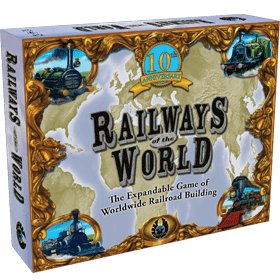
Originally released as Railroad Tycoon, Railways of the World is a quintessential 'train game' that tasks players with building the most successful and profitable railway empire. A more approachable and streamlined version of Martin Wallace's heavier game, Age of Steam, it challenges players to become titans of the 19th-century railroad industry. The goal is to accumulate the most victory points by the end of the game, which are primarily earned by making lucrative deliveries of goods between burgeoning cities. Players must balance aggressive expansion and operational efficiency, managing their finances carefully to lay track, upgrade their locomotives, and fulfill valuable contracts before their rivals can claim them.
The gameplay is structured over a series of rounds, each containing three distinct phases. First, players participate in a crucial auction to determine the turn order for the round, a phase where bidding aggressively can grant a significant strategic advantage. Next is the action phase, the heart of the game, where players take turns performing actions like building track tiles to expand their network across the hex-grid map, upgrading their engines to haul goods over longer distances, and delivering goods cubes by picking them up from one city and moving them to another along their connected routes. A key interactive element is that players can use their opponents' tracks for a delivery, but the track owner earns the points for that portion of the journey. Players can also take on debt by issuing bonds to gain an immediate influx of cash, but this will cost them income and victory points later on.
Railways of the World is beloved for its grand scale and high level of player interaction, which keeps all participants engaged throughout the game. The auction mechanism ensures tense decisions from the very start of each round, while the shared network system creates indirect competition and strategic dilemmas. Do you build a critical link that an opponent might exploit, or do you focus on a more isolated, personal network? This blend of economic management, route optimization, and tactical bidding creates a deeply satisfying and highly replayable experience. With its impressive table presence and the tangible reward of watching your rail network snake across the board, it has cemented its status as a masterpiece in the economic strategy genre.
2-6 120m⚖️ 3.2
RANK #291
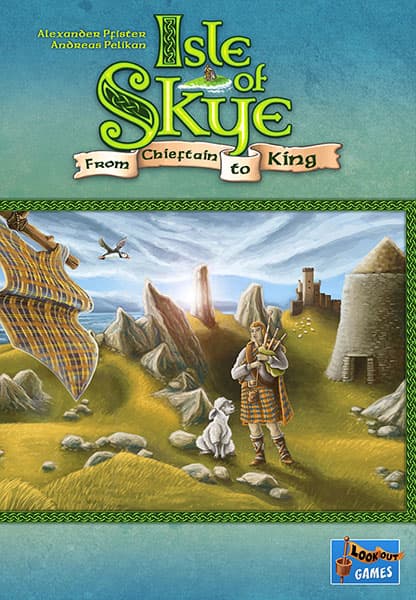
Isle of Skye: From Chieftain to King is a celebrated tile-placement and economic strategy game where players step into the shoes of ambitious clan leaders. Set against the rugged and beautiful backdrop of the Scottish Highlands, the ultimate objective is to expand your territory and accumulate the most victory points to become the rightful King of the Isle. Unlike many traditional tile-laying games, this title introduces a dynamic player-driven economy that ensures no two sessions feel the same. By strategically managing gold and territory, players must navigate a competitive landscape where every decision impacts both their own kingdom and the wealth of their opponents.
The heart of the game lies in its unique auction and pricing system. Each round, players draw three landscape tiles and secretly decide their fate behind a screen. One tile must be discarded using an 'Axe' token, while the remaining two are assigned a gold price from the player's personal reserve. This creates a fascinating risk-reward tension: pricing a tile too low makes it an easy target for rivals to purchase, while pricing it too high forces you to pay that exact amount to the bank if no one else buys it. Once prices are revealed, players take turns purchasing tiles from one another, with the remaining tiles being added to their own expanding kingdoms. Connectivity is crucial, as mountain, grass, and water edges must match perfectly. Whiskey barrels connected to the central castle via roads generate essential income, fueling future bids.
One of the most praised aspects of Isle of Skye is its variable scoring system. From a pool of sixteen different scoring tiles, only four are used in any given game, and their activation rotates through different rounds. This means players must constantly pivot their strategies—one game might reward large bodies of water, while the next focuses on the number of sheep or ships in your territory. The blend of a spatial puzzle with the cutthroat economic interaction of a price-setting auction makes it a standout 'connoisseur' level game that remains accessible to families. It offers deep strategic layers without overstaying its welcome, earning its place as a modern classic in the board gaming world.
2-5 45m⚖️ 2.3
RANK #624
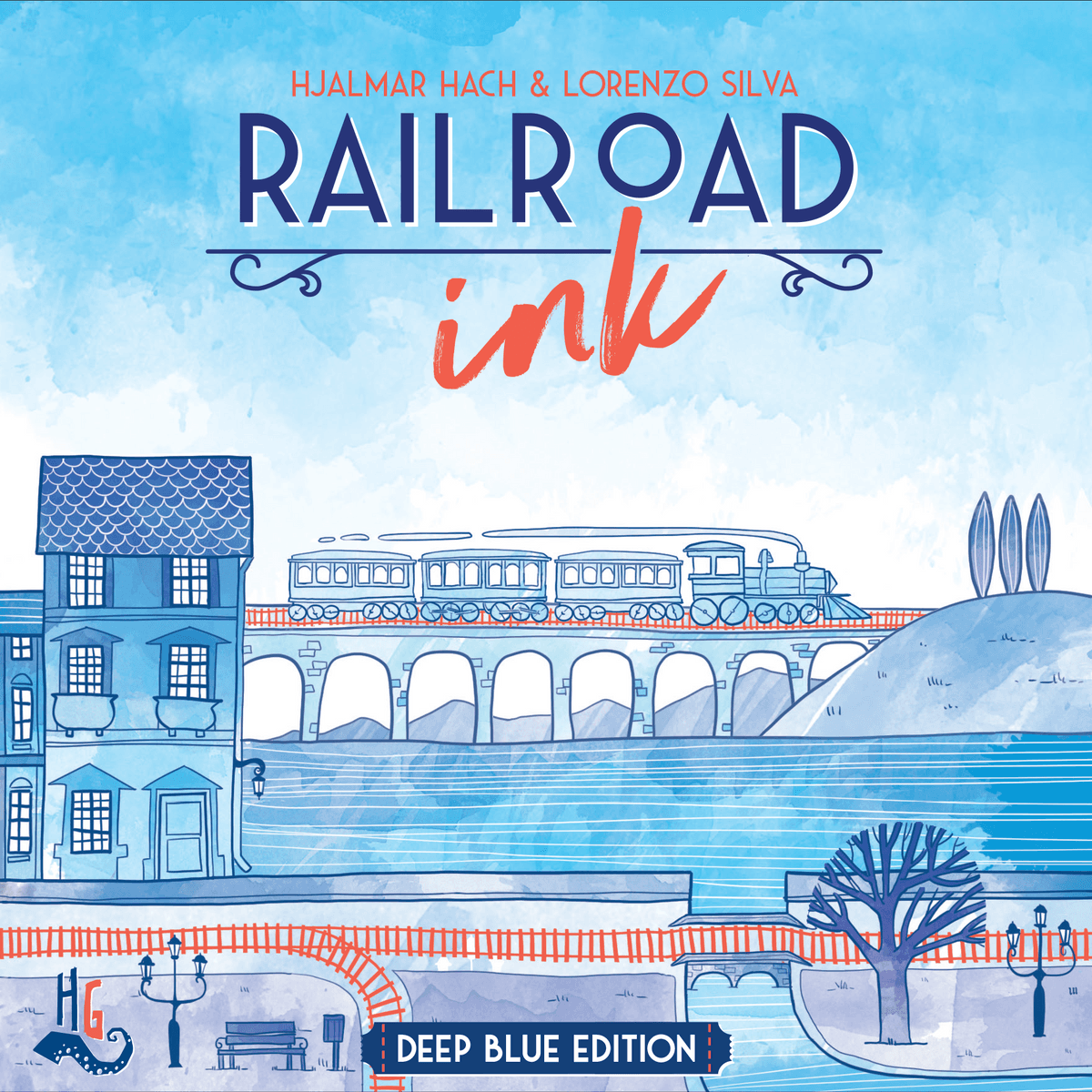
Railroad Ink: Deep Blue Edition is a captivating roll-and-write puzzle game where players strive to build the most efficient transportation network on their personal 7x7 grid. The core objective is to connect as many exits as possible around the perimeter of the board using highways and railways. Released as part of a series, the Deep Blue Edition specifically includes the River and Lake expansions, adding a serene but challenging aquatic twist to the land-based construction. Players compete to earn points by creating long routes, connecting exits, and filling the central squares of their map, all while avoiding incomplete paths that lead to point deductions at the end of the game.
Each round, a set of route dice is rolled, showing various configurations of straight roads, curved rails, or T-junctions. Every player must draw these specific results on their own dry-erase board simultaneously. The catch lies in the placement rules: new segments must connect to existing ones or to an exit. While everyone uses the same dice results, the diverging paths chosen by players quickly lead to unique map configurations. In addition to the standard dice, the Deep Blue Edition introduces expansion dice. Rivers add a separate network that cannot connect to roads or rails (except via a bridge) but offers high scoring potential, while Lakes allow for the creation of massive open water bodies that connect distant ports, maximizing network efficiency in a more fluid, non-linear way.
The appeal of Railroad Ink lies in its elegant simplicity paired with deep tactical decision-making. It is the quintessential 'coffee shop' game—portable, quick to play, and visually satisfying as your network grows. Unlike many competitive games, it features low player interaction, focusing instead on the individual puzzle of optimization. People love it because it rewards both careful long-term planning and the ability to adapt to the luck of the roll. The Deep Blue Edition is particularly praised for its calming theme and the way the water expansions introduce a layer of spatial complexity without bloating the ruleset. Whether played solo to beat a high score or in a large group setting where everyone shares the same dice, it offers a meditative yet mentally stimulating experience that keeps players coming back.
1-6 30m⚖️ 1.5

RANK #13,808
Skybridge
2006"Skybridge" (2006) is a tactile, three-dimensional abstract strategy game that challenges players to construct a bustling, vertical cityscape. Published by the renowned French company Gigamic, the game is celebrated for its premium, high-quality wooden components that double as architectural building blocks. In this fast-paced game of spatial planning, participants compete to score the most points by thoughtfully stacking blocks, claiming tall towers, and connecting them with bridges. As a beautiful centerpiece on the table, it seamlessly blends light city-building elements with strict placement constraints, forcing players to think critically about every move they make.
The gameplay loop centers around a shared grid where competitors take turns adding exactly one wooden piece from their personal, color-coded supply. The game includes forty-four blocks ranging from single-story and double-story cubes to connecting bridges and pointed roofs. A strict set of placement rules dictates the flow of construction: pieces of the exact same color can never physically touch each other, and blocks must typically be placed on the lowest available legal tier to ensure a gradual upward progression across the board. The most critical mechanic revolves around the roof pieces, which are used to cap and officially claim a tower. Once a player crowns a structure with their roof, nobody else can build upon it, securing points equal to the tower's overall height. This introduces a gripping dilemma of push-your-luck strategy. Do you cap a modest tower early to guarantee a safe point return, or do you risk building it higher, leaving it vulnerable to an opponent who might completely steal the structure out from under you? Additionally, players can deploy bridge components to link two separate towers of identical height, provided they belong to different colors, which yields valuable bonus points and multipliers at the end of the session.
What truly makes this game shine is its unique synthesis of accessible rules and surprising tactical depth. Despite its short playtime of just ten to twenty minutes, the tense spatial puzzle appeals heavily to both families and seasoned tabletop enthusiasts. The tactile satisfaction of manipulating chunky wooden pieces combined with the architectural beauty of the final board state provides a highly rewarding tabletop experience. Highly regarded as a beginner-friendly title, it naturally teaches foundational skills in geometry and risk assessment. Ultimately, the thrill of capping a massive tower just before an opponent can steal it, or perfectly aligning a bridge to multiply your final score, cements "Skybridge" as a timeless, visually striking abstract classic.
2-4 15m⚖️ 1.8
BoxNo Cover Art
Concordia: Venus (Expansion)" reinvigorates the acclaimed strategic depth of the original Concordia, offering players expansive new horizons and an innovative team-play experience. This expansion significantly boosts replayability by introducing two new double-sided game boards, each presenting unique strategic challenges and map layouts. The core goal remains to skillfully expand your Roman trading empire, producing and selling goods while wisely choosing your actions through a refined card-driven mechanism, ultimately scoring points based on your unique hand of personality cards.
Gameplay builds seamlessly on Concordia's elegant action-selection system, where players use a hand of seven different role cards to perform actions like moving colonists, establishing new outposts, producing resources, trading goods, and earning money. The "Venus" maps not only provide fresh geographical puzzles but also include a dedicated 2v2 or 3v3 team variant, allowing players to coordinate strategies and share victory points with a partner – a refreshing twist on the typically competitive eurogame formula. This team mode fosters collaborative planning and adds a new layer of player interaction not found in the base game.
Fans adore "Concordia: Venus" for its ability to inject new life into an already brilliant game without unnecessary complexity. It preserves the classic low-luck, high-strategy essence of Concordia while dramatically increasing variety and player count options. The team variant is a particular highlight, offering a cooperative competitive challenge that many find incredibly engaging, proving that even a refined classic can evolve to offer compelling new ways to play and conquer the ancient world.
2-6 90m⚖️ 3.0