Strategy Games
Browse all Strategy board games in the Meeple Pulse database.
Styles
AbstractAbstract StrategyAdventureAnimalsCard GameChildren's GameCivilizationCo-operativeCompetitiveDiceEconomicEducationalEuroExpansion for Base-gameFamilyFantasyFightingHistoricalHorrorMedievalMedium HeavyMiniaturesPartyParty GamePrint & PlayPuzzle-LikeRacingReal-timeSpace ExplorationSportsStrategyTerritory BuildingThematicWargame
Themes
AbstractAdventureAncientAnimalsArtBusinessCard GameCo-operativeComic BookCooperativeCrimeEconomicEnvironmentalismExplorationFantasyFightingHistoricalHorrorHumorIntrigueLiteraryMagicMarvelMedievalModernMuseumMysteryMythologyNatureNauticalParty GamePoliticalPress Your LuckRacingSatireSci-FiSocial CommentarySocial InteractionSpaceSuperheroesThematicTravelWarWesternWord-Guessing
Mechanics
3D PlacementActingAction / DexterityAction DraftingAction Point AllowanceAction Point Allowance SystemAction Point SystemAction PointsAction ProgrammingAction QueueAction RetrievalAction SelectionAction/EventAlliancesAlternate ActivationApp-AssistedApp-DrivenArea ControlArea InfluenceArea MajorityArea Majority / InfluenceArea MovementArgumentationAsymmetricAsymmetric FactionsAsymmetric GameAsymmetric PowersAsymmetrical PowersAuction & BiddingAuction/BiddingAuctioningBag BuildingBettingBetting and BluffingBetting and WageringBetting and WagersBiddingBingoBlind BiddingBluffingCampaign / Battle Card DrivenCampaign / LegacyCampaign / Legacy GameCampaign / Mission-basedCampaign / ScenariosCampaign GameCampaign PlayCard DraftingCard DrawingCard DrivenCard Driven ActionCard Driven CombatCard Driven Dice AllocationCard Driven MovementCard ManagementCard PlayCard Play / Hand ManagementCard Play Conflict ResolutionCard SheddingCard-Driven MovementCharacter CreationCharacter ProgressionChit-Pull SystemCo-op PlayCo-operative GameCo-operative PlayCode-breakingCombat ResolutionCombo ChainCommand CardsCommodity SpeculationCommunication LimitsContract FulfillmentContractsCooperative GameCooperative GameplayCooperative PlayCooperative Trick-takingDebateDeck BuildingDeck ConstructionDeck, Bag, and Pool BuildingDeck-BuildingDeductionDexterityDice DraftingDice PlacementDice RollingDiplomatic InfluenceDraftingDynamic Battle SystemEnclosureEnd Game BonusesEngine BuildingEngine-BuildingEscape RoomEvent DrivenExplorationFarmingFlip and WriteFollowFollow ActionGrid CoverageGrid MovementHand ManagementHex-and-CounterHexagon GridHidden MovementHidden RolesI Cut You ChooseIncomeInfluence / Area MajorityLadder ClimbingLegacyLegacy ElementsLegacy GameLegacy SystemLimited CommunicationLine DrawingLine of SightMancalaMap AdditionMap MovementMarketMarket DraftingMarket ManipulationMarket MechanicMarket SpeculationMatchingMeasurement MovementMemoryMission ObjectivesModular BoardModular Board ConstructionMove Through DeckMovement PointsMovement TemplatesMulti-Use CardsMulti-use CardsMultiple ScenariosMust FollowNarrative ChoiceNarrative Choice / ParagraphNegotiationNegotiation MechanicsNetwork & Route BuildingNetwork BuildingNetwork and Route BuildingOne vs ManyOne vs. ManyOpen DraftingOwnershipPaper-and-PencilPartnershipsPattern BuildingPattern RecognitionPick-up and DeliverPlayer EliminationPlayer InteractionPlayer JudgePoint SaladPoint to Point MovementPolyominoesPush Your LuckPush-Your-LuckPuzzlePuzzle-LikePuzzle-SolvingRaceReal-TimeRecipe FulfillmentResource ManagementRole PlayingRole SelectionRoll / Spin and MoveRondelRoute BuildingRoute-BuildingRoute/Network BuildingSanity SystemScenario / Campaign PlayScenario / Mission / Campaign GameScenario / Mission FunctionSecret Unit DeploymentSemi-Cooperative GameSet CollectionSheddingSimulationSimultaneous ActionSimultaneous Action SelectionSimultaneous Hidden AllocationSocial DeductionSocial InteractionSolo / Solitaire GameSpace ExplorationStat Check / Skill CheckStat Check ResolutionStock HoldingStorytellingStrategic PlanningTableau BuildingTactical Decision-MakingTake ThatTargeted CluesTeam PlayTeam-Based GameTeam-Based GuessingTeamworkTech TreesTech Trees / Tech TracksTechnology & Armament TracksTechnology TreeTension & Aggression TracksTile DraftingTile LayingTile PlacementTime TrackTime TravelTower DefenseTrack MovementTradingTrick-takingTug of WarTurn Order: PassTurn Order: Stat-BasedUnit PlacementVariable Phase OrderVariable Player PowersVariable Set-upVariable SetupVictory Point TracksVotingWord AssociationWord GameWord GuessingWord-GuessingWord-guessingWordplayWorker Placement

RANK #215
Chaos in the Old World plunges players into the dark and gritty Warhammer Fantasy universe, casting them not as heroes, but as one of four malevolent Chaos Gods. Each player embodies either Khorne, the god of war; Nurgle, the lord of decay; Tzeentch, the master of magic; or Slaanesh, the prince of pleasure. The objective is to spread your ruinous influence across the land and be the first to corrupt it entirely. Victory is a two-pronged path: either be the first to accumulate 50 victory points by dominating regions and fulfilling objectives, or achieve a unique, thematic victory by advancing your god's threat dial to its final space. This dual-condition system creates a constant tension, as players must pursue their own goals while simultaneously thwarting the different, and often conflicting, ambitions of their rivals.
Gameplay unfolds in a series of structured rounds, each beginning with an Old World event card that introduces new variables, such as meddling heroes or political shifts. Players then draw from their god-specific Chaos decks, gaining access to powerful, unique abilities. The core of the game lies in the Summoning Phase, where players expend power points to place their forces—from lowly cultists to formidable Greater Daemons—onto the map and play their cards to manipulate the board state. Combat erupts wherever opposing forces meet, resolved through brutal dice rolls. Following the battles, players with a presence in a region can place corruption tokens. Once a region is fully corrupted, it is despoiled, rewarding the most influential god and permanently scarring the world. This cycle of summoning, fighting, and corrupting drives the engine of this highly interactive conflict.
The game's enduring appeal stems directly from its profound and masterfully implemented asymmetry. No two gods play alike; Khorne revels in bloodshed and advances by killing enemy units, while the insidious Nurgle corrupts populous regions and spreads his plagues. Tzeentch manipulates the game state with magic from the shadows, and Slaanesh tempts heroes and nobles to their downfall. This deep strategic diversity means that players must not only master the intricacies of their chosen deity but also deeply understand the capabilities and victory paths of their opponents. This creates a highly dynamic and replayable experience, widely considered to be at its peak with a full complement of four players, where the delicate, brutal dance of the Chaos Gods is on full display, making it a celebrated classic in the area control genre.
3-4 90m⚖️ 3.6
RANK #228
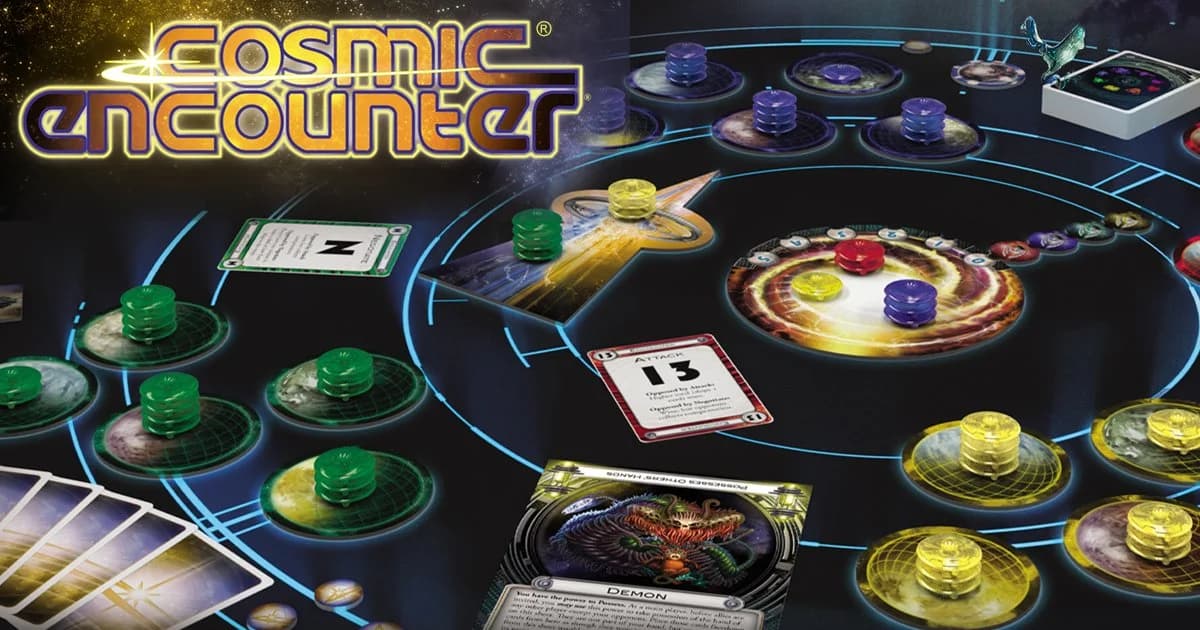
Cosmic Encounter
2008Cosmic Encounter is a legendary board game of galactic conquest where diplomacy is as crucial as military might. In this celebrated 2008 edition from Fantasy Flight Games, players assume the roles of bizarre and powerful alien species, each vying for control of the cosmos. The ultimate objective is simple yet challenging: establish five colonies on planets outside of your own home system. This goal is pursued through a series of 'encounters' with your rivals. The game masterfully blends straightforward rules with immense strategic depth, creating an environment where shifting alliances, cunning bluffs, and unexpected betrayals are not just possible, but are the very heart of the experience.
The gameplay revolves around a structured turn sequence where an active player, the 'offense', is directed by the Destiny Deck to engage another player, the 'defense'. The conflict begins as the offense commits ships to a target planet, but the situation quickly escalates as both sides can invite other players to join their cause as allies. The encounter's resolution hinges on the simultaneous reveal of a single card from each primary player's hand. These cards can be numbered Attack cards, which combine with ship counts to determine a victor, or a Negotiate card. Playing a Negotiate against an Attack results in an automatic loss, but the loser gets to demand compensation. If both players attempt to negotiate, they have a mere minute to strike a deal, such as trading cards or even allowing a peaceful colonization, before both suffer a penalty.
What elevates Cosmic Encounter to its classic status is the staggering variety of unique alien powers that each player wields. These abilities are designed to fundamentally break the game's core rules in some spectacular way, ensuring that no two games ever feel the same. One alien might be able to steal cards from the victor of a battle, another might always win tied conflicts, and a third might force players to play with their hands revealed. This asymmetry creates a dynamic and chaotic puzzle of interacting abilities, fostering immense replayability and forcing players to adapt their strategies on the fly. It is this brilliant combination of negotiation, tactical card play, and wildly unpredictable powers that makes Cosmic Encounter an enduring masterpiece of interactive tabletop gaming.
3-5 90m⚖️ 2.5
RANK #229
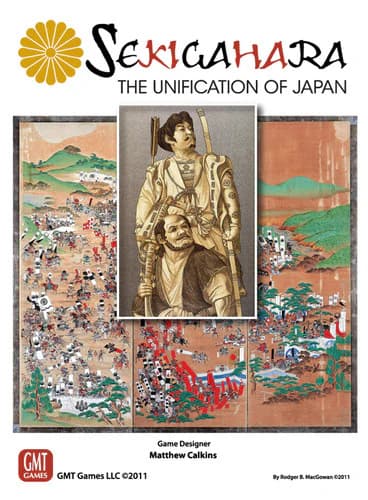
Sekigahara: The Unification of Japan transports two players back to the year 1600, placing them at the heart of a pivotal seven-week campaign that determined the nation's destiny. One player assumes command of Tokugawa Ieyasu's forces, while the other leads the armies of Ishida Mitsunari. The ultimate goal is to achieve supremacy and unify Japan under a single banner. Victory can be claimed in two ways: through a decisive military triumph by eliminating the opposing leader in battle, or by demonstrating superior strategic control at the end of the seventh week. The player who commands the most castles and valuable resource locations when the campaign concludes will be declared the winner, securing their place in history. This dual victory condition ensures that the conflict remains tense and dynamic from the first week to the last.
At its core, Sekigahara is a masterful blend of strategy and suspense, driven by a card-based system and the iconic 'fog of war' created by wooden blocks. These blocks represent armies, but their specific identity and strength remain hidden from the opponent, forcing players to rely on deduction, feints, and careful reconnaissance. You can see the size of an approaching force, but not its composition, creating palpable tension with every maneuver. Every action, from marching armies across the map to engaging in combat, requires the expenditure of cards from a player's unique deck. Each deck represents the various clans loyal to their cause. This creates a challenging resource management puzzle: do you spend cards to achieve a superior board position, or conserve them for the inevitable, decisive battles to come?
The game's combat system is a highlight, foregoing dice entirely in favor of a clever and thematic test of command. When armies clash, players commit their blocks to the fight, but a unit only contributes its strength if the player can play a matching clan card from their hand. An army, no matter how large, is rendered ineffective if its commander lacks the cards to inspire them to fight. This system emphasizes timing, bluffing, and shrewd hand management. Adding another layer of historical flavor are the 'loyalty challenge' cards, which allow players to attempt to sway an opponent's units to their side, reflecting the fragile and shifting allegiances of the period. Sekigahara is lauded for being an accessible entry into the wargaming hobby without sacrificing the tactical depth and high replayability that veteran strategists crave, making it a timeless classic.
2 180m⚖️ 2.8
RANK #236
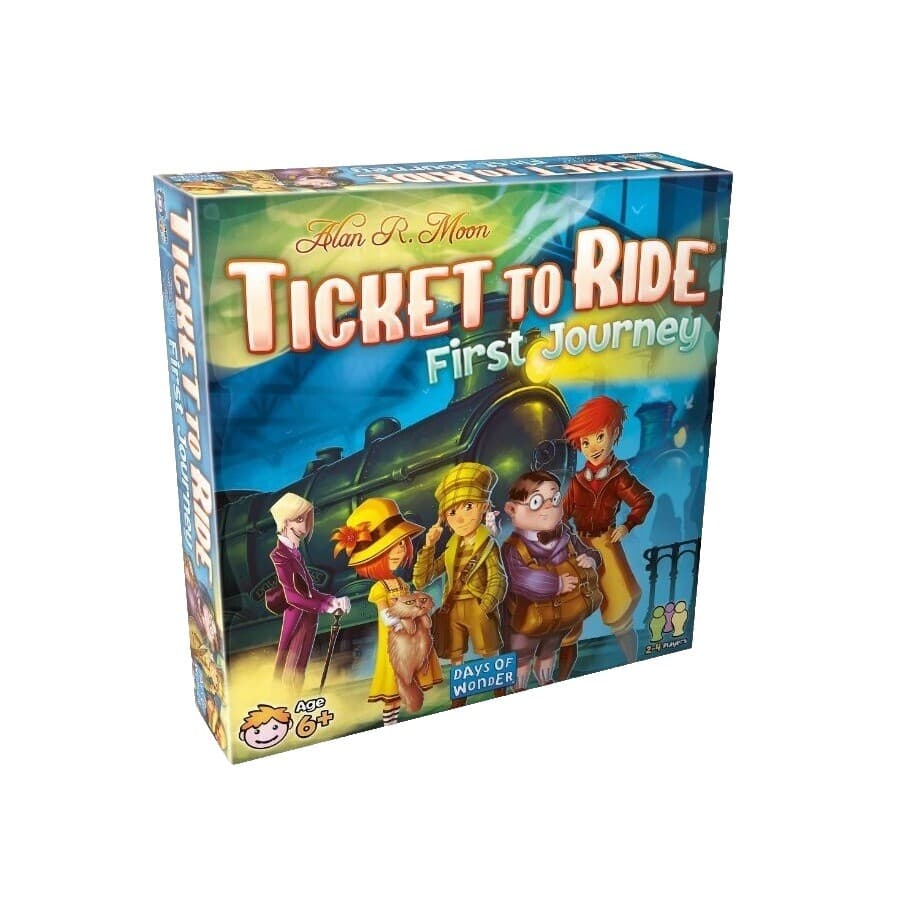
Embark on a frosty railway adventure with *Ticket to Ride: Nordic Countries*, a standalone installment in the award-winning series designed specifically for a more intimate and competitive experience. Set against the beautiful, snow-dusted backdrop of Denmark, Finland, Norway, and Sweden, this game challenges two or three players to become the region's greatest transportation magnate. The core objective remains familiar to fans of the series: collect colored train car cards to claim railway routes, strategically connecting cities across the map. Your primary source of points comes from fulfilling secret Destination Tickets, each one tasking you with linking two specific cities. Successfully completing these tickets adds to your score, but failure will cost you dearly. The player who has amassed the most points from their routes, completed tickets, and the coveted 'Globetrotter' bonus for the most tickets fulfilled, will be declared the winner.
The gameplay is elegantly simple yet rich with strategic choices. On your turn, you perform one of three actions: draw more train car cards, claim a route by discarding a matching set of cards, or draw new Destination Tickets to potentially increase your score. *Nordic Countries* introduces compelling twists on this classic formula with the inclusion of Ferries and Tunnels. Ferries are special sea routes that demand a specific number of powerful Locomotive wild cards to claim, making these cards exceptionally valuable. Tunnels add a thrilling element of risk; after committing your cards to a mountain route, you must reveal cards from the top of the deck, potentially forcing you to play extra cards to complete the connection. This version also uniquely alters the rules for Locomotives, restricting their use primarily to these special routes, which intensifies the strategic planning around their acquisition and use.
What makes *Ticket to Ride: Nordic Countries* a standout title is its brilliantly crafted map, which is significantly tighter and more constrained than its predecessors. This design choice inherently creates a high-stakes environment where player interaction is not just possible, but inevitable. Players must constantly watch their opponents, anticipate their moves, and decide whether to build their own network or defensively block a critical path. The scarcity of double-routes means competition for key connections is fierce from the very start. This heightened tension, combined with a brisk playtime of 30-60 minutes, makes it an exceptionally engaging and replayable game for couples, families, and anyone seeking a fast-paced, light-strategy experience with a healthy dose of direct competition.
2-3 45m⚖️ 1.9
RANK #248
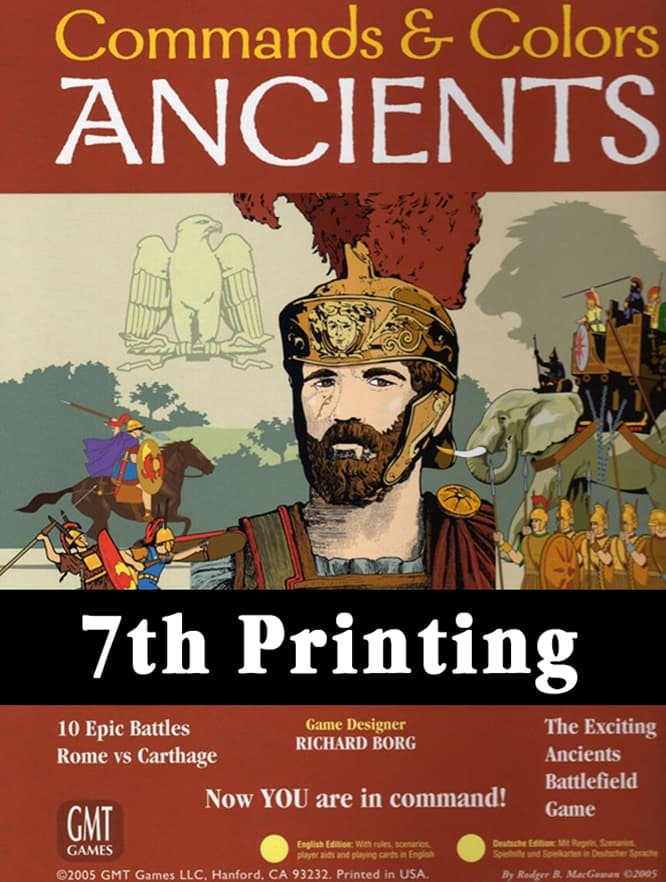
Commands & Colors: Ancients stands as a landmark title in historical wargaming, masterfully designed by the renowned Richard Borg. The game transports players back to the age of classical warfare, with the core set focusing on the titanic struggles between the Roman Republic and its rival, Carthage. It utilizes Borg's celebrated "Commands & Colors" system, which is lauded for its elegance and accessibility. The goal of the game is straightforward yet challenging: be the first player to accumulate a specific number of Victory Banners. These crucial banners are typically won by eliminating enemy units from the hexagonal battlefield or by achieving unique tactical objectives dictated by the chosen historical scenario, effectively capturing the key turning points and goals of ancient battles.
The gameplay is propelled by a unique card-driven mechanic that simulates the fog of war and the difficulties of command and control in large-scale battles. The board is divided into three distinct sections: a left flank, a center, and a right flank. On their turn, a player selects and plays a single Command Card from their hand. This card dictates which units can be ordered and in which of the three sectors they can operate, meaning a player may not always be able to activate the troops they most wish to. After issuing orders, units may move and then engage in combat. Battles are resolved quickly through the roll of custom dice, featuring symbols that determine hits, retreats, and other outcomes, ensuring a dynamic and fast-paced experience. Leaders are also a critical element, attaching to units to bolster their attacks and rally them from retreats.
What makes Commands & Colors: Ancients a beloved classic is its brilliant balance of strategic depth and streamlined play. It serves as a perfect entry point for newcomers to the wargaming hobby, offering intuitive rules that are easy to grasp. At the same time, it provides a deeply rewarding and nuanced strategic puzzle that continues to challenge veteran grognards. The Command Card system is the game's centerpiece, forcing players to adapt their strategies on the fly and make the most of the opportunities presented. This blend of luck and skill ensures that every game is a unique and memorable narrative of ancient conflict, cementing its reputation as a masterpiece of historical game design.
2 60m⚖️ 2.8
RANK #249
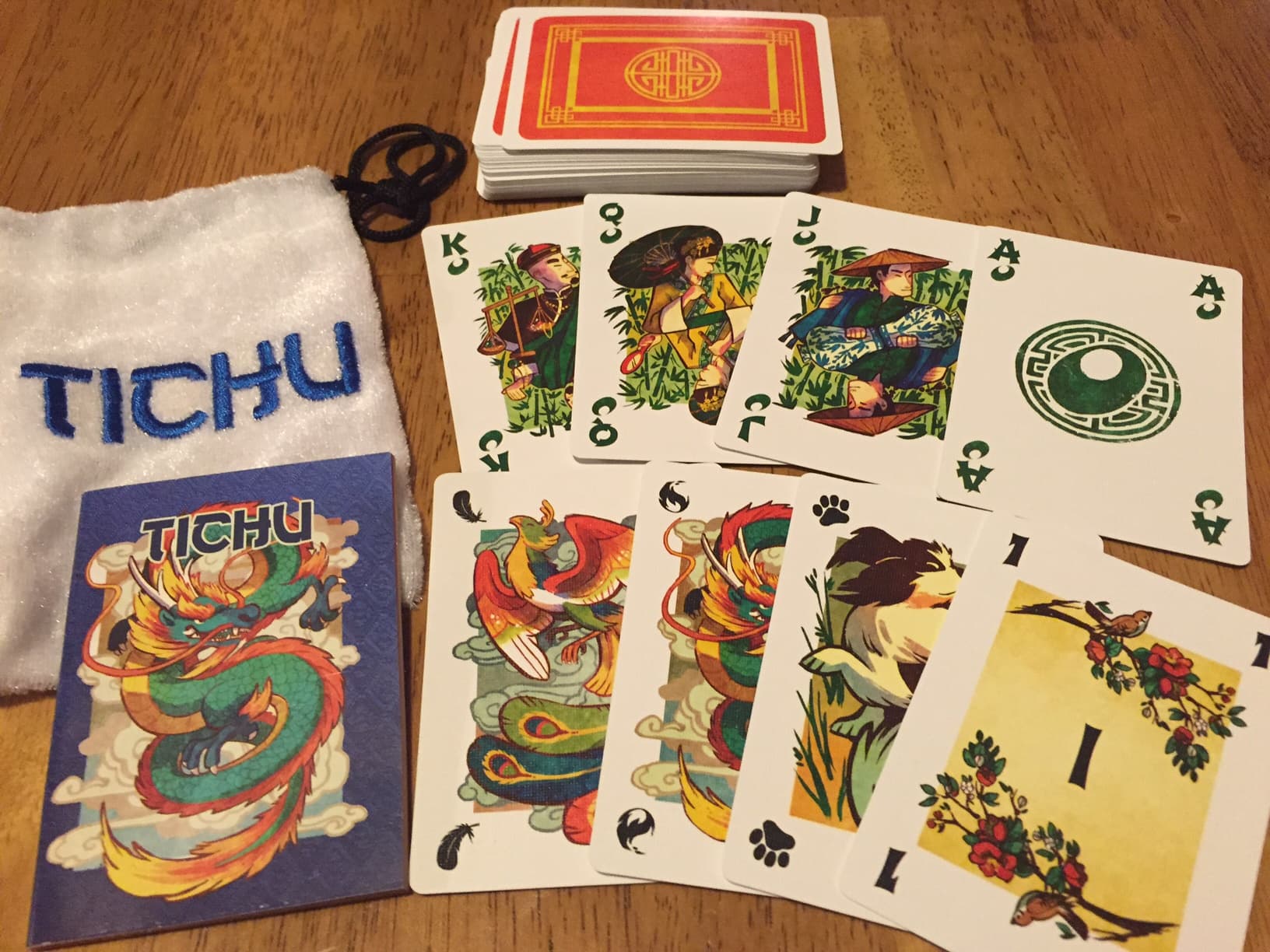
Tichu
1991Introduced to Western audiences in 1991 after its adaptation from traditional Chinese climbing games, Tichu stands as a highly revered partnership trick-taking and shedding card game. Players are split into two teams of two, with teammates sitting directly across from one another at the table. The primary objective is to empty your hand of cards as quickly as possible while simultaneously capturing tricks that contain high-value point cards. Teams race across multiple rounds to be the first to accumulate a total of 1,000 points, relying on both sharp tactical play and synchronized teamwork to outmaneuver their opponents.
The core gameplay revolves around a specialized 56-card deck consisting of a standard poker deck alongside four unique character cards: the Mah Jong, Hound, Phoenix, and Dragon. After a hand of fourteen cards is dealt, a strategic passing phase occurs where every player hands one face-down card to their partner and one to each opponent. Play then proceeds using climbing trick-taking rules. Whoever leads a trick can play a single card, a pair, consecutive pairs, or poker-style combinations like a full house or a straight. Subsequent players must lay down the exact same combination type, but at a strictly higher numerical value. If they cannot or choose not to, they must pass. This climbing continues until three players pass consecutively. The four special cards heavily disrupt this flow, offering abilities like demanding a specific rank, instantly passing the lead to a partner, acting as a wild card, or serving as an unbeatable single card. Additionally, players can deploy 'Bombs'—four-of-a-kind sets or straight flushes—which bypass standard restrictions and can be played out of turn to completely steal a trick.
What truly elevates the experience and fosters its legendary status within the board gaming community is the high-stakes betting mechanism. Before playing their first card, individuals can declare 'Tichu', wagering that they will be the absolute first to shed their entire hand for a massive 100-point bonus. Daring players can even call a 'Grand Tichu' during the initial deal for an astonishing 200-point swing. The tension between managing your hand for climbing combinations, supporting your partner's ambitious bets, and deciding when to drop a game-changing Bomb creates a highly addictive, narrative-rich experience. It is a brilliant blend of traditional card play and modern strategic depth that continues to captivate tabletops worldwide.
4 60m⚖️ 2.3
RANK #251
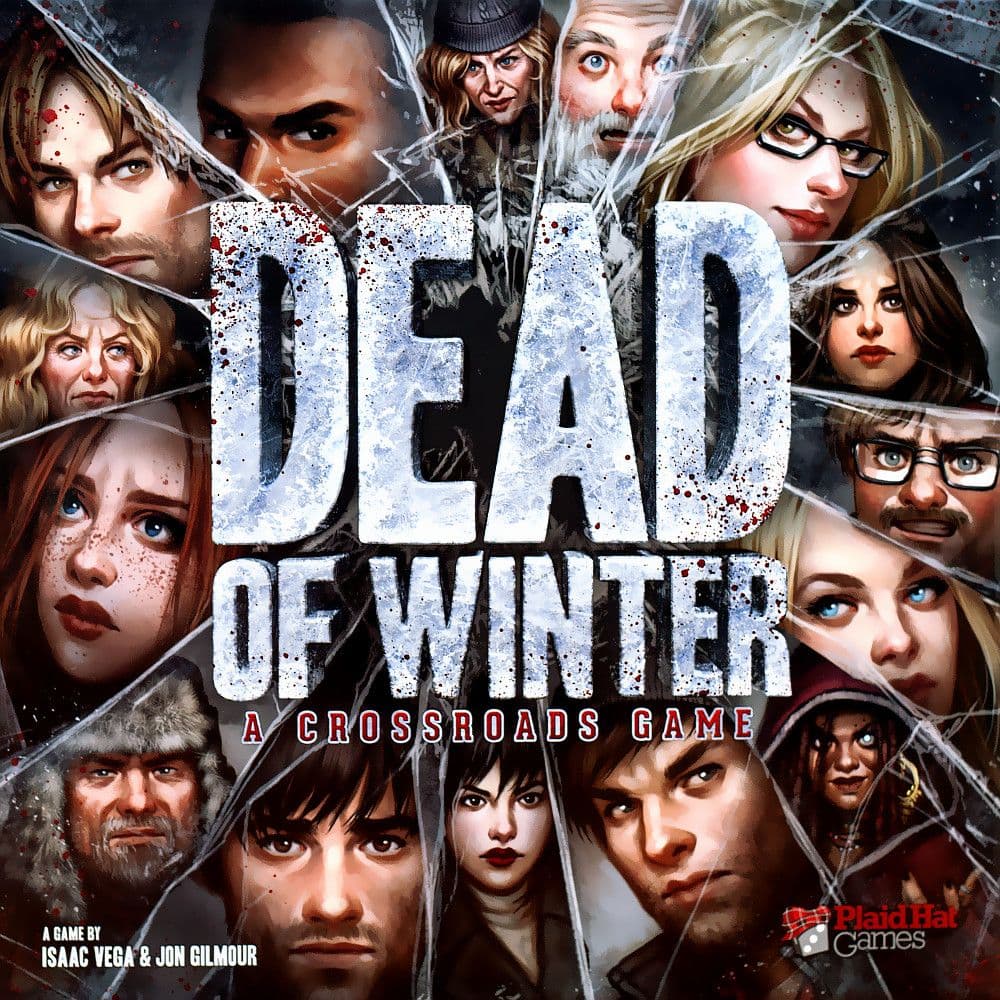
Dead of Winter: A Crossroads Game is a deeply thematic and psychological survival experience set in the harsh, unforgiving world of a zombie apocalypse. Players take on the roles of survivors in a struggling colony, forced to work together to fend off the undead, gather resources, and achieve a common objective to win the game. However, this is a 'meta-cooperative' game, meaning the group's success is only half the battle. Each player also harbors a secret personal objective they must fulfill to claim an individual victory. This dynamic masterfully creates an atmosphere of paranoia and suspense, as you can never be entirely sure of your fellow survivors' true intentions. The core conflict is a constant, tense negotiation between advancing the colony's welfare and pursuing your own self-interest, all while morale threatens to collapse.
The gameplay is structured into rounds, each containing a player turn phase followed by a colony phase. On your turn, you'll roll a set of action dice that dictate the tasks you can perform, such as scavenging for vital supplies like food and medicine, attacking zombies at various locations, constructing barricades for defense, or contributing to the ever-present crisis that threatens the colony each round. One of the game's most celebrated innovations is the Crossroads card system. At the start of each turn, another player draws a card that presents a narrative fork in the road, often forcing the active player to make a difficult, thematic choice with branching consequences. After all players have acted, the colony phase commences, during which survivors consume food, zombies press their attack, and the main objective's status is updated.
What makes Dead of Winter a modern classic is the powerful blend of strategic gameplay and emergent storytelling. The ever-present threat of a hidden traitor, a player whose secret objective is to sabotage the colony, fuels intense player interaction, accusation, and bluffing. Every decision is fraught with weight, not just for its mechanical impact but for how it is perceived by the other players. The Crossroads cards ensure no two games are ever alike, generating memorable, player-driven narratives of desperation, sacrifice, and betrayal. It is this focus on the human element and moral dilemmas, rather than just the zombies themselves, that provides a uniquely compelling and highly replayable experience, making it a perfect 'bridge' for players seeking deeper, more thematic board games.
2-5 90m⚖️ 3.4

RANK #255
Ticket to Ride
2004Ticket to Ride whisks players away on a grand cross-country train adventure, firmly establishing itself as one of the most beloved and accessible modern board games. In this competitive journey, players vie to become the most successful railroad magnate by the turn of the 20th century. The primary goal is to accumulate the highest number of points. Victory is achieved through a combination of strategically claiming railway routes between iconic cities, fulfilling the secret itineraries detailed on Destination Tickets, and constructing the longest continuous path of train cars on the map. It's a game of elegant design, where foresight and clever planning are rewarded, making every decision a crucial step toward dominating the rails and securing your legacy.
The gameplay is famously straightforward, with a set of rules that can be taught in mere minutes. Each turn, a player must choose one of three simple actions. They can draw two Train Car cards, which come in various colors needed to claim routes, either from a face-up display or blindly from the deck. Alternatively, a player can claim a route on the board by discarding a set of cards that match the route's color and length, immediately scoring points based on its size. The final option is to draw more Destination Tickets, which offer substantial bonus points for connecting distant cities but come with a risk—any uncompleted tickets at the game's end will count against your score. This simple action structure keeps the game moving at a brisk pace, while wild Locomotive cards add a layer of flexibility to players' plans. The end game is triggered when one player's stock of plastic trains dwindles to two or fewer, after which everyone gets one last turn to make their final moves.
The enduring appeal of Ticket to Ride lies in its perfect balance of simplicity and strategic depth. It serves as a quintessential 'gateway game', expertly bridging the gap for newcomers to the board gaming hobby without alienating veteran players. The tension quietly builds as the game progresses; the board becomes a crowded network of competing lines, and the routes you desperately need might be snatched up by an opponent just before your turn. This creates a subtle yet engaging form of player interaction that is more about opportunistic blocking than direct confrontation. The satisfaction of completing a long, coast-to-coast destination ticket is immense, and the combination of set collection, route building, and secret objectives provides a highly replayable experience. Its charming presentation and straightforward rules have made it a staple for family game nights and a celebrated classic worldwide.
2-5 60m⚖️ 1.8

RANK #259
Sea Salt & Paper
2022Sea Salt & Paper is a captivating card game that has enchanted players with its distinct and beautiful aesthetic, featuring photographs of actual origami sea creatures. Beneath its serene surface lies a surprisingly tactical game of set collection and calculated risks. The primary objective is to outscore opponents over several rounds by carefully curating a hand of cards with point-scoring combinations. Players aim to reach a specific point threshold, which varies by player count, to secure victory. However, a thrilling alternate path to triumph exists: collecting all four unique mermaid cards instantly wins the game, adding a layer of suspense to every draw. This elegant design packs a wealth of strategic depth into a small, portable box, making it an ideal travel companion.
The gameplay loop is deceptively simple yet full of meaningful decisions. On your turn, you must acquire a card by either drawing two from the top of the deck, keeping one and discarding the other, or by picking up the top card from one of two face-up discard piles. After adding a card, you can play pairs of identical "duo" cards from your hand to trigger powerful one-time effects. For instance, a pair of crabs allows you to steal a card from a discard pile, while two boats grant you an immediate extra turn. The round's tension culminates when a player amasses at least seven points. They can then declare "Stop," prompting all players to score their hands immediately. Alternatively, if they are feeling confident, they can declare "Last Chance." This gives every other player one final turn to improve their hand before the reveal, introducing a high-stakes push-your-luck element where the declarer risks losing their own card points for the chance at a significant bonus.
The game's immense appeal stems from this brilliant blend of accessibility and strategic depth. The rules can be taught in minutes, making it a perfect 'gateway' game for new players or a fantastic choice for a family game night. Yet, experienced gamers will appreciate the subtle tactics involved in managing their hand, tracking discard piles, and timing the end of the round. The "Last Chance" mechanic is a masterstroke, creating memorable moments of bluffing and suspense. Above all, the visual presentation is a standout feature; the origami art is not just beautiful but integral to the game's charming identity. This combination of fast-paced play, clever card-combo possibilities, and stunning artwork makes Sea Salt & Paper a modern classic that offers high replayability and joy in every hand.
2-4 30m⚖️ 1.5
RANK #260
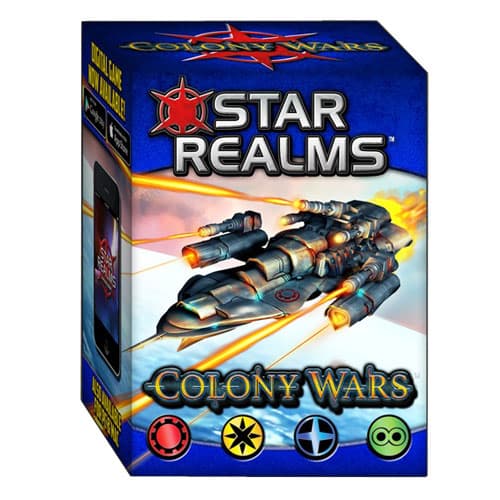
Star Realms: Colony Wars is a thrilling standalone expansion to the acclaimed deck-building game, Star Realms. Set in a newly discovered sector of the galaxy teeming with resources, players are thrust into a fast-paced conflict for interstellar dominance. The game can be enjoyed as a complete two-player experience right out of the box or seamlessly integrated with the original core set to support larger multiplayer battles. Each player assumes command of a fledgling star-fleet, represented by a personal deck of cards, and starts with 50 Authority points. The ultimate objective is straightforward yet challenging: amass a powerful armada, unleash devastating attacks, and reduce your opponent's Authority to zero to claim victory over the contested colonies.
The gameplay is quick to learn but offers deep strategic possibilities. Every turn, players draw a five-card hand from their deck, using these cards to generate Trade for acquiring new ships and bases, or Combat for attacking the enemy. The game's central marketplace, a five-card 'Trade Row', constantly presents new opportunities to enhance your fleet. Purchased cards are added to your discard pile, eventually cycling into your deck to strengthen future hands. This core deck-building mechanic is what drives the game's dynamic arc, as players evolve from their weak starting hands to commanding potent fleets. Cards are divided into four distinct factions—the militaristic Star Empire, the deck-culling Machine Cult, the prosperous Trade Federation, and the aggressive Blobs. Many cards feature powerful 'ally' abilities that trigger only when another card of the same faction is in play, rewarding players who build synergistic, faction-focused decks.
What makes Star Realms: Colony Wars so compelling is its perfect blend of accessibility and tactical depth. The simple ruleset allows new players to jump into the action within minutes, while the vast number of card combinations and strategic pathways ensures high replayability. The direct, head-to-head conflict creates constant tension and exciting, game-swinging turns. As an expansion, Colony Wars introduces a host of new ships and bases that add fresh strategies and powerful combos, including some cards that can be placed directly into a player's hand from the Trade Row, accelerating the game's tempo. Whether played as a self-contained duel or as part of a larger cosmic war, Colony Wars delivers a complete and satisfying sci-fi combat experience in a compact package.
2-4 20m⚖️ 1.9

RANK #270
Fantasy Realms
2017In Fantasy Realms, players are powerful rulers competing to forge the most legendary kingdom in the land. Your entire realm, with all its might and magic, is represented by a hand of just seven cards. The goal is to accumulate the highest score by the game's end by assembling a hand of cards that synergize in powerful and clever ways. You might build a mighty military force with Kings, Knights, and Armies, or perhaps you'll wield elemental magic with a Wildfire and a Wizard. The challenge is to find the most potent combination from the hundreds of possibilities, turning a simple hand of cards into a high-scoring epic.
The gameplay is deceptively simple and incredibly fast. On your turn, you perform just two steps: draw one card, then discard one card. The strategic tension comes from the draw; you can either take the unknown top card from the central deck or select any face-up card from the discard area. This shared discard pile creates a dynamic pool of options that all players are watching. Each unique card in the deck has a base strength and a crucial bonus or penalty text that dictates how it interacts with other cards in your hand. A single card can unlock a massive scoring chain, while another might blank the powers of several others. The game ends quickly and suddenly once the tenth card is placed in the discard area, at which point all players calculate their final scores.
Fantasy Realms is celebrated for its elegant design, perfectly balancing accessibility with profound strategic depth. It can be taught in a minute, making it an excellent gateway game, yet the puzzle it presents offers endless variety and challenge for veteran gamers. The true mastery of the game comes not from understanding complex rules, but from recognizing card synergies and adapting your strategy on the fly. You are constantly evaluating your hand, the tempting cards in the discard pile, and what your opponents might be collecting. This 'combo-licious' puzzle, combined with its brisk 20-minute playtime, makes it a highly replayable and addictive experience, perfect as a game night opener or a main event played over multiple rounds.
3-6 20m⚖️ 1.8

RANK #276
Century: Golem Edition is a beautifully crafted, fantasy-themed reimagining of the critically acclaimed board game Century: Spice Road. Transporting players from the historical Silk Road to the vibrant and magical realm of Caravania, the game tasks participants with becoming ambitious caravan leaders. Your ultimate objective is to carefully gather and trade mystical soul crystals to construct and awaken magnificent, towering golems. The game is celebrated as the definitive aesthetic version of the series, enchanting players with its stunning artwork, manga-inspired illustrations, and deeply satisfying tactile components, most notably the chunky, brightly colored plastic crystals that replace standard wooden cubes.
At its core, the game revolves around a highly streamlined and lightning-fast engine-building and hand-management system. Participants manage an economy based on four distinct tiers of soul crystals, ranging from the easily acquired yellow crystals to the incredibly rare and valuable pink ones. Turns are remarkably quick, allowing players to execute just one of four precise actions. You can play a merchant card from your hand to gain, upgrade, or trade specific combinations of crystals, or acquire a new merchant card from a central public market to expand your trading engine. Alternatively, if you have accumulated the exact crystals required, you can claim an awoken golem for valuable victory points and bonus coins. Finally, players can choose to rest, retrieving all previously played merchant cards back into their hand to restart their carefully constructed engine.
The endgame is swiftly triggered the moment a player secures their fifth golem card, creating a tense, thrilling race to the finish line where every single crystal and copper coin counts. Fans absolutely adore Century: Golem Edition because it perfectly balances accessibility with genuine tactical depth. It serves as an exceptional gateway game for newcomers, expertly teaching the fundamentals of resource conversion without overwhelming rules. Often compared favorably to modern classics like Splendor, it still provides enough strategic meat to keep veteran hobbyists fully engaged. The charming combination of Studio Ghibli-esque character designs, incredibly fluid gameplay, and a highly rewarding economic loop makes it a beloved staple for both casual family game nights and dedicated tabletop gatherings.
2-5 40m⚖️ 1.6