Strategy Games
Browse all Strategy board games in the Meeple Pulse database.
Styles
AbstractAbstract StrategyAdventureAnimalsCard GameChildren's GameCivilizationCo-operativeCompetitiveDiceEconomicEducationalEuroExpansion for Base-gameFamilyFantasyFightingHistoricalHorrorMedium HeavyPartyParty GamePrint & PlayPuzzle-LikeRacingReal-timeSpace ExplorationSportsStrategyTerritory BuildingThematicWargame
Themes
AbstractAdventureAncientAnimalsArtBusinessCard GameCo-operativeComic BookCooperativeCrimeEconomicEnvironmentalismExplorationFantasyHistoricalHorrorHumorIntrigueLiteraryMagicMarvelMedievalModernMuseumMysteryMythologyNatureNauticalPoliticalPress Your LuckSatireSci-FiSocial CommentarySocial InteractionSpaceSuperheroesThematicTravelWarWesternWord-Guessing
Mechanics
3D PlacementActingAction / DexterityAction DraftingAction Point AllowanceAction Point Allowance SystemAction Point SystemAction PointsAction ProgrammingAction QueueAction RetrievalAction SelectionAction/EventAlliancesAlternate ActivationApp-AssistedApp-DrivenArea ControlArea InfluenceArea MajorityArea Majority / InfluenceArea MovementArgumentationAsymmetricAsymmetric FactionsAsymmetric GameAsymmetric PowersAsymmetrical PowersAuction & BiddingAuction/BiddingAuctioningBag BuildingBettingBetting and BluffingBetting and WageringBetting and WagersBiddingBingoBlind BiddingBluffingCampaign / Battle Card DrivenCampaign / LegacyCampaign / Legacy GameCampaign / Mission-basedCampaign / ScenariosCampaign GameCampaign PlayCard DraftingCard DrawingCard DrivenCard Driven ActionCard Driven CombatCard Driven Dice AllocationCard Driven MovementCard ManagementCard PlayCard Play / Hand ManagementCard Play Conflict ResolutionCard SheddingCard-Driven MovementCharacter CreationCharacter ProgressionChit-Pull SystemCo-op PlayCo-operative GameCo-operative PlayCode-breakingCombat ResolutionCombo ChainCommand CardsCommodity SpeculationCommunication LimitsContract FulfillmentContractsCooperative GameCooperative GameplayCooperative PlayCooperative Trick-takingDebateDeck BuildingDeck ConstructionDeck, Bag, and Pool BuildingDeck-BuildingDeductionDexterityDice DraftingDice PlacementDice RollingDiplomatic InfluenceDraftingDynamic Battle SystemEnclosureEnd Game BonusesEngine BuildingEngine-BuildingEscape RoomEvent DrivenExplorationFarmingFlip and WriteFollowFollow ActionGrid CoverageGrid MovementHand ManagementHex-and-CounterHexagon GridHidden MovementHidden RolesI Cut You ChooseIncomeInfluence / Area MajorityLadder ClimbingLegacyLegacy ElementsLegacy GameLegacy SystemLimited CommunicationLine DrawingLine of SightMancalaMap AdditionMap MovementMarketMarket DraftingMarket ManipulationMarket MechanicMarket SpeculationMatchingMeasurement MovementMemoryMission ObjectivesModular BoardModular Board ConstructionMove Through DeckMovement PointsMovement TemplatesMulti-Use CardsMulti-use CardsMultiple ScenariosMust FollowNarrative ChoiceNarrative Choice / ParagraphNegotiationNegotiation MechanicsNetwork & Route BuildingNetwork BuildingNetwork and Route BuildingOne vs ManyOne vs. ManyOpen DraftingOwnershipPaper-and-PencilPartnershipsPattern BuildingPattern RecognitionPick-up and DeliverPlayer EliminationPlayer InteractionPlayer JudgePoint SaladPoint to Point MovementPolyominoesPush Your LuckPush-Your-LuckPuzzlePuzzle-LikePuzzle-SolvingRaceReal-TimeRecipe FulfillmentResource ManagementRole PlayingRole SelectionRoll / Spin and MoveRondelRoute BuildingRoute-BuildingRoute/Network BuildingSanity SystemScenario / Campaign PlayScenario / Mission / Campaign GameScenario / Mission FunctionSecret Unit DeploymentSemi-Cooperative GameSet CollectionSheddingSimulationSimultaneous ActionSimultaneous Action SelectionSimultaneous Hidden AllocationSocial DeductionSocial InteractionSolo / Solitaire GameSpace ExplorationStat Check / Skill CheckStock HoldingStorytellingStrategic PlanningTableau BuildingTactical Decision-MakingTake ThatTargeted CluesTeam PlayTeam-Based GameTeam-Based GuessingTeamworkTech TreesTech Trees / Tech TracksTechnology & Armament TracksTechnology TreeTension & Aggression TracksTile DraftingTile LayingTile PlacementTime TrackTime TravelTower DefenseTrack MovementTradingTrick-takingTug of WarTurn Order: PassTurn Order: Stat-BasedUnit PlacementVariable Phase OrderVariable Player PowersVariable Set-upVariable SetupVictory Point TracksVotingWord AssociationWord GameWord GuessingWord-GuessingWord-guessingWordplayWorker Placement
RANK #92
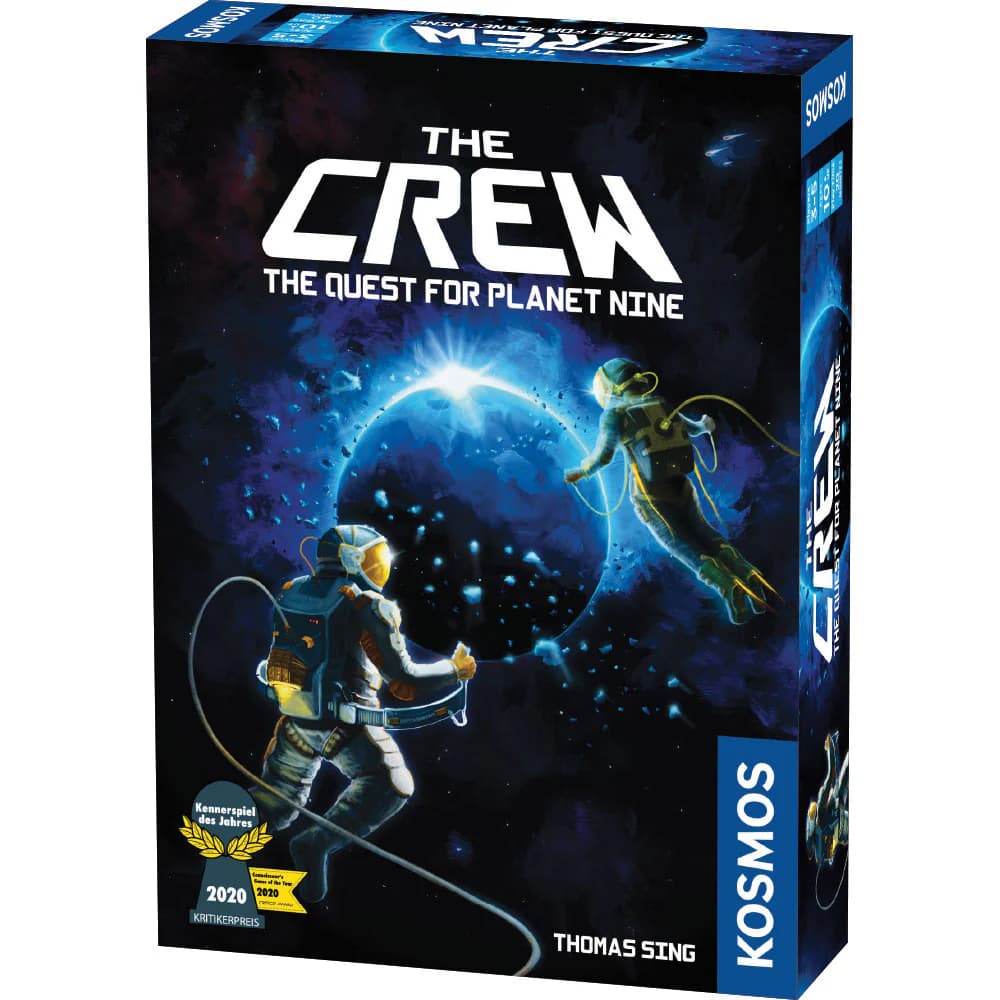
The Crew: The Quest for Planet Nine is a highly acclaimed, scenario-driven cooperative card game that takes players on a thrilling journey through the cosmos. Rather than competing against one another, participants must unite their intellect and strategy to complete a series of fifty progressive missions outlined in a captivating narrative logbook. The primary objective is to embark on a deep-space expedition to uncover the mysteries of an elusive ninth planet at the edge of our solar system. By working together as a unified team of astronauts, players navigate through increasingly difficult challenges, striving to achieve shared victories in a vacuum where every single decision matters.
At its core, the gameplay revolves around a brilliant twist on the classic trick-taking genre. In a traditional trick-taking game like Spades or Hearts, individuals vie to claim the most tricks. However, in this collaborative environment, the crew must meticulously orchestrate the gameplay so that specific team members win the exact tricks containing designated target cards. The deck consists of four colored suits alongside a special trump suit composed of powerful Rocket cards. At the start of a mission, a Captain is chosen by revealing the highest Rocket card, and players draft miniature Task Cards that dictate their personal objectives for that round. Because the game thematically represents the harsh, silent vacuum of space, strict communication limits are enforced. Players are entirely forbidden from openly discussing their hands. Instead, they must rely on a restricted token-based communication system, allowing them to reveal just one card per mission and signal whether it is their highest, lowest, or only card in a particular suit.
The unique appeal of this interstellar adventure lies in its extraordinary ability to blend accessible, easy-to-learn rules with profound strategic depth. Earning the prestigious 2020 Kennerspiel des Jahres award, it masterfully bridges the gap between casual family entertainment and intense, expert-level puzzle solving. Enthusiasts are endlessly captivated by the profound satisfaction that arises from executing a perfectly timed sequence of plays without ever uttering a single word. As the fifty-chapter campaign unfolds, the difficulty ramps up organically, ensuring that groups are continually tested and engaged. The modular, mission-based structure means that sessions can be as brief as twenty minutes or span several hours across multiple evenings. Ultimately, it transforms a familiar, age-old card mechanism into a masterclass of deductive reasoning, silent synergy, and cooperative triumph that keeps gaming groups returning to the table time and time again.
2-4 60m⚖️ 2.0

RANK #94
Race for the Galaxy stands as a landmark title in the world of card games, offering players the chance to construct a sprawling galactic civilization from the palm of their hand. The ultimate objective is to achieve the greatest prosperity, measured in victory points, by the time the game concludes. Players earn these points by strategically settling worlds, deploying powerful developments, and leveraging unique consumption abilities. The game is a race to build the most effective and synergistic tableau of cards, representing your empire's technological advancements and planetary holdings. It masterfully condenses the feel of a vast space-faring epic into a surprisingly swift and deeply engaging experience, where every decision can tip the scales of victory. The game ends either when one player builds their twelfth card or when the central pool of victory point tokens is exhausted, ensuring a consistently brisk pace.
The genius of Race for the Galaxy lies in its innovative simultaneous action selection mechanism. Each round, all players secretly choose one of several phase cards—such as Explore, Settle, or Produce—and reveal them at the same time. Only the selected phases are activated for that round, and every player gets to perform those actions. However, the player who originally chose a specific phase receives a significant bonus, creating a fascinating meta-game of anticipating your opponents' needs to maximize your own turn. Compounding this strategic layer is the brilliant multi-use card system. Every card in your hand is a potential world to settle, a technology to develop, or, crucially, the currency needed to pay for other cards. This forces constant, compelling trade-offs: is that high-value world better in your empire or better used as payment for two smaller, more synergistic cards right now? This core loop of managing your hand and building your tableau forms a satisfying and challenging puzzle.
What has given Race for the Galaxy its enduring appeal is the immense strategic depth packed into its short playtime. While notorious for its dense iconography, this visual language, once mastered, allows for remarkably fluid and fast-paced turns with minimal downtime. The vast deck of cards ensures that no two games are ever alike, providing near-infinite replayability as players discover new card combinations and powerful synergies. The tension of building your own engine while trying to benefit from your opponents' phase choices makes for a highly interactive, albeit indirect, experience. It’s a game that rewards clever planning, tactical flexibility, and a deep understanding of the card pool. For players who love building intricate engines and executing powerful combos, Race for the Galaxy offers a rich and rewarding journey to the stars that remains a benchmark for the genre.
2-4 45m⚖️ 3.0
BoxNo Cover Art
RANK #102
Concordia Venus
2018Concordia Venus invites players to a strategic journey across the ancient Roman world, where they will build an economic empire and expand their influence. The ultimate goal is to achieve prosperity and earn the most victory points by carefully establishing colonies, producing valuable goods, trading efficiently, and satisfying the favor of various Roman deities. This standalone expansion or module elevates the critically acclaimed Concordia experience with new challenges and opportunities for both competitive and cooperative play.
At its heart, Concordia Venus is an elegantly designed economic strategy game driven by clever hand management and an action point allowance system. Players use a limited hand of persona cards, each granting a specific action such as moving colonists across the point-to-point map, producing resources in their cities, or constructing new outposts. Mastering the timing of card play and the strategic use of the Tribune card to retrieve all spent actions is crucial for efficiency. The game beautifully blends set collection for resources and a subtle form of contract fulfillment through its diverse scoring criteria, rewarding thoughtful long-term planning over immediate gains.
Fans adore Concordia Venus for its profound strategic depth encased in remarkably straightforward rules, making it easy to learn yet challenging to master. Its unique appeal lies in the low-aggression yet highly interactive gameplay, where indirect competition for optimal city locations and resources keeps players engaged. With high replayability across different maps and a dynamic scoring system that rewards balanced development, Concordia Venus offers an intellectually stimulating and deeply satisfying experience for strategists seeking an economic engine-building game without excessive luck or complexity, now with added flexibility for team play.
2-6 120m⚖️ 2.8

RANK #103
SCOUT
2019SCOUT is a brilliantly distilled card game where players take on the role of circus ringmasters competing to create the most impressive show. Underneath its charming and minimalist circus theme lies a deeply strategic experience centered around a single, game-changing constraint: you cannot rearrange the cards in your hand. Each card features two different numbers, one on the top and one on the bottom. At the very start of a round, you must make a critical decision to orient your entire hand one way or the other, locking in the sequence of values you'll have to work with. The goal is to skillfully play sets of cards to earn victory points and be the first to empty your hand, avoiding the penalty for leftover cards. This simple premise forces players to think several turns ahead, evaluating the potential of their current card order and planning how to turn a seemingly chaotic hand into a winning performance.
The gameplay elegantly alternates between two core actions: 'Show' and 'Scout'. To 'Show', a player plays a set of one or more cards from their hand to the table. The catch is that these cards must be physically adjacent in their hand. These sets can either be a run of consecutive numbers (like 4-5-6) or a group of matching numbers (like 7-7-7). A newly played show must be more powerful than the set currently on the table, following a clear hierarchy—more cards are better, and sets of a kind beat runs of the same length. If you can't, or strategically choose not to, play a better show, you must 'Scout'. This involves taking one of the end cards from the active show on the table and adding it anywhere into your own hand, in whichever orientation you prefer. This clever mechanism allows you to break up your rigid hand order, bridging gaps to form more powerful sets for future turns. The player whose show was scouted from receives a point token as compensation, creating a fascinating push-and-pull dynamic.
The genius of SCOUT lies in the constant, delightful tension between these two simple actions. Do you play a weak set now just to get cards out of your hand, or do you patiently 'Scout' to build towards an unbeatable combo that could win you the round? This decision-making process makes every turn engaging and consequential. Its fast-paced rounds, which end when a player empties their hand or a show makes it all the way around the table unchallenged, ensure the game never overstays its welcome. Its blend of easy-to-learn rules and surprising strategic depth has earned it widespread acclaim, including a prestigious Spiel des Jahres nomination. SCOUT is the quintessential 'filler' game that packs the punch of a much heavier experience, offering immense replayability and proving that the most compelling designs are often the most elegantly constrained.
1-4 60m⚖️ 1.4
RANK #109
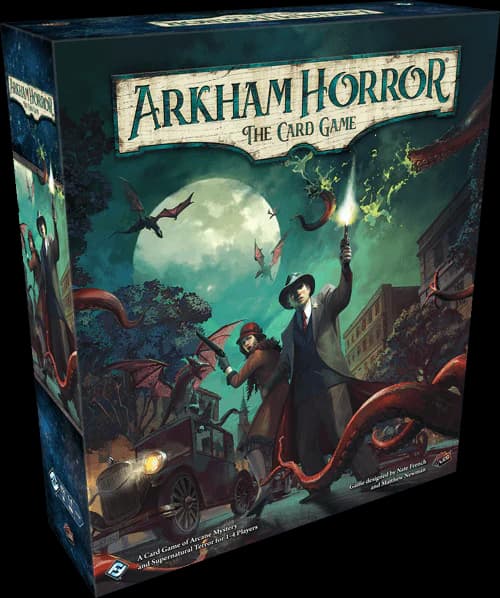
Arkham Horror: The Card Game is a cooperative Living Card Game that plunges one to four players into the eerie, Lovecraftian world of the 1920s. Assuming the roles of unique investigators in Arkham, Massachusetts, players work together to unravel sinister conspiracies, confront otherworldly beings, and prevent ancient evils from devouring the world. Each investigator comes with their own strengths, weaknesses, and customizable deck of cards representing their assets, skills, and resources. The goal is to successfully navigate a series of interconnected narrative scenarios, forming a larger campaign where choices and outcomes in one chapter have lasting consequences on the next. This Revised Core Set provides the definitive entry point, containing everything needed for a full group of four to begin their harrowing adventures right out of the box.
The gameplay unfolds over a series of rounds, each composed of four distinct phases that create a tense and challenging rhythm. In the Mythos Phase, the forces of darkness advance as doom accumulates and each player draws a random card from the encounter deck, introducing new enemies, treacherous obstacles, or reality-bending effects. During the Investigation Phase, players take turns performing up to three actions, which can include playing cards, moving between locations, battling monsters, or most importantly, investigating to find clues. These clues are essential for advancing the 'act' deck, which propels the story forward. The Enemy Phase sees any engaged monsters attack the investigators, while others hunt across the board. Finally, the Upkeep Phase allows players to refresh their assets, draw a new card, and gain a resource, preparing them for the horrors of the next round.
What makes Arkham Horror: The Card Game so compelling is its profound fusion of rich narrative storytelling with strategic card play and deck customization. The game is celebrated for its deep thematic immersion, where the unfolding story feels personal and impactful. Failure doesn't necessarily end the game, but it can scar an investigator or alter the campaign's trajectory, creating a truly dynamic and replayable experience. The challenge is significant, demanding careful cooperation and clever resource management to overcome the relentless odds. For players who crave a deep, story-driven hobby game they can expand over time, its campaign structure and character progression provide an unparalleled cooperative adventure into the heart of cosmic dread.
1-4 120m⚖️ 3.5
RANK #121
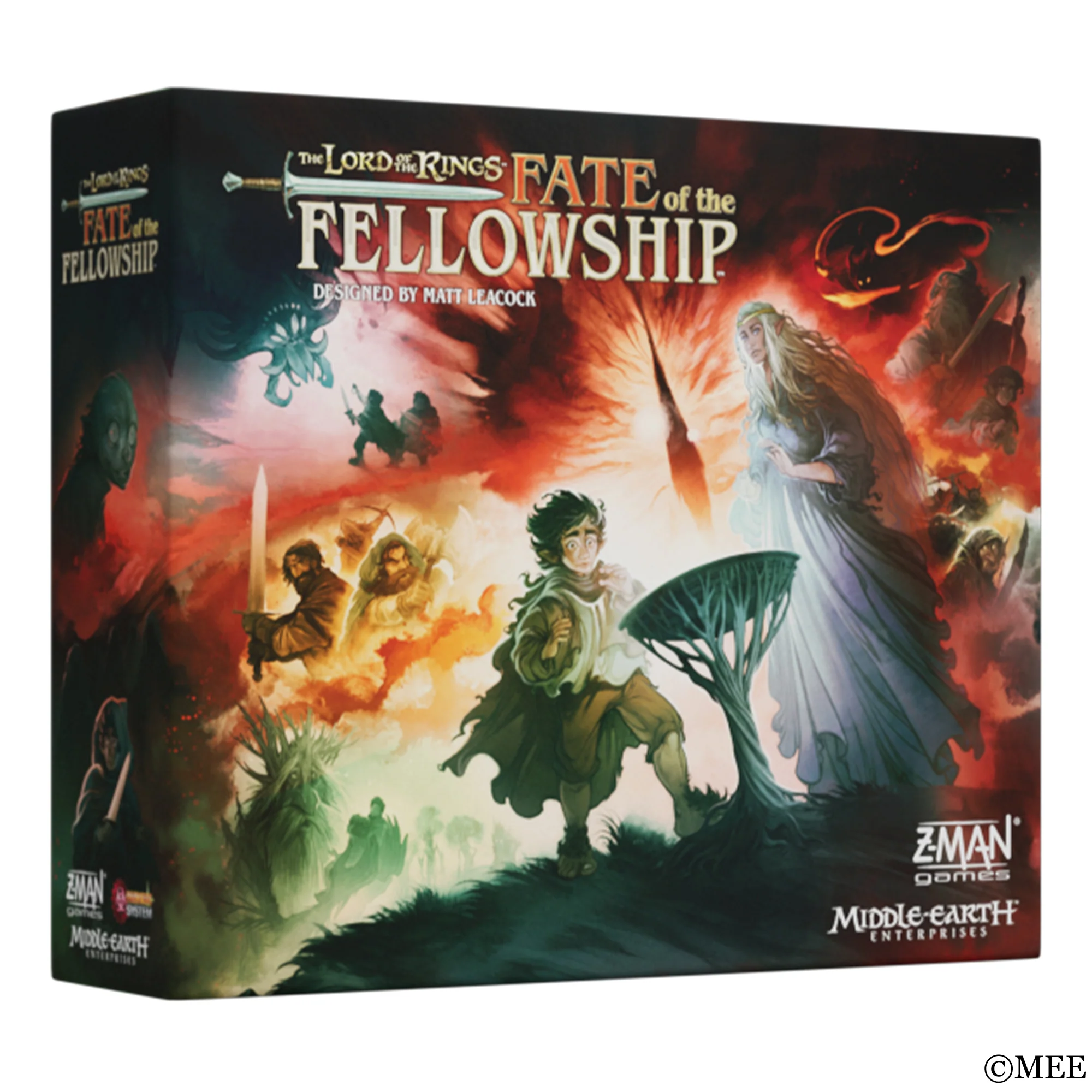
The Lord of the Rings: Fate of the Fellowship immerses one to five players in a desperate, cooperative journey across Middle-earth. In this new narrative-driven adventure from acclaimed designer Matt Leacock, players embody the heroes of Tolkien's epic saga, working together to ensure the One Ring reaches the fires of Mount Doom. The ultimate objective is the Ring's destruction, but this final confrontation can only be attempted after the fellowship successfully navigates three randomly assigned objectives. Players take on the roles of the Fellowship's members and their trusted allies, with each player uniquely controlling a pair of characters from a roster of thirteen, each boasting distinct abilities. The path to victory is fraught with peril, as failure looms if the collective 'Hope' of the fellowship is extinguished. This crucial resource dwindles when safe havens are overrun by darkness, if the Ringbearer is discovered by Sauron's minions, or if the heroes exhaust their resources. It is a race against the encroaching shadow to fulfill their destiny before all hope is lost.
The game's engine is a sophisticated adaptation of the celebrated "Pandemic" system, promising a familiar yet richer mechanical experience. The core gameplay loop involves players strategically spending action points to maneuver friendly forces and their heroes across a detailed map of Middle-earth. These actions are vital for completing the prerequisite missions and pushing back the ever-advancing armies of the Dark Lord. A central element of tension is the constant need to protect Frodo, keeping him concealed from the relentless pursuit of the Nazgûl and the piercing gaze of the Eye of Sauron. This threat is manifested through the 'Shadow Card' deck, a mechanism that functions much like its counterpart in "Pandemic," dictating where Sauron's influence will spread and escalating the danger with each draw. Players must carefully manage their character abilities and card resources to overcome these challenges and clear a path for the Ringbearer.
"Fate of the Fellowship" offers a compelling synthesis of a proven cooperative game system with one of fantasy's most beloved narratives. Its appeal lies in this seamless integration, creating an experience that feels both innovative and deeply thematic. The design has been hailed as Matt Leacock's most mechanically intricate take on the Pandemic framework to date, offering a significant and rewarding challenge for veteran strategy gamers. The unique system of each player managing two distinct heroes introduces a fascinating layer of tactical decision-making and enhances replayability. This constant balancing act—completing grand objectives while simultaneously managing the stealthy, perilous journey of the Ringbearer—generates a persistent sense of urgency and suspense, making it an essential title for fans of cooperative board games and Tolkien's timeless world.
1-5 m⚖️ 3.1

RANK #124
Wyrmspan
2024In Wyrmspan, you step into the role of an amateur dracologist, tasked with creating a magnificent sanctuary for dragons of all shapes and sizes. As a standalone game inspired by the mechanics of the critically acclaimed Wingspan, your goal is to build the most welcoming haven by excavating a labyrinthine network of caves and enticing a wide variety of dragons to make it their home. Over four rounds, you will compete to earn the most victory points by populating your caves, hatching new dragons, fulfilling public objectives, and climbing the ranks of the esteemed Dragon Guild. The player who proves to be the most adept dragon enthusiast by accumulating the most points will be declared the winner.
The gameplay revolves around a card-driven, engine-building system where players manage resources to take one of three primary actions. Using coins received at the start of each round, you can 'Excavate' to play a cave card, preparing a new space in your Crimson Cavern, Golden Grotto, or Amethyst Abyss and often gaining an immediate bonus. The 'Entice' action allows you to play one of the 183 unique dragon cards from your hand into an excavated space, adding its power to your growing engine. Finally, you can 'Explore' a cave, sending your adventurer meeple to activate a chain of abilities from the dragons residing within. Unlike its predecessor, Wyrmspan provides a consistent number of actions each round, challenging players to maximize their efficiency from start to finish.
Wyrmspan's appeal lies in its satisfying strategic depth and stunning presentation. Fans of engine-building will delight in discovering powerful synergies between dragon abilities and cave bonuses, creating a cascade of benefits with a single action. The game offers a slightly more complex and involved experience than Wingspan, introducing new elements like the Dragon Guild tracks and the need to manage cave space, which provides a fresh challenge for veteran players. With a huge variety of dragons illustrated by Clémentine Campardou, multiple paths to victory, and a robust solo mode, Wyrmspan delivers immense replayability and a captivating thematic experience for anyone who has ever dreamed of befriending dragons.
1-5 90m⚖️ 2.9
RANK #125
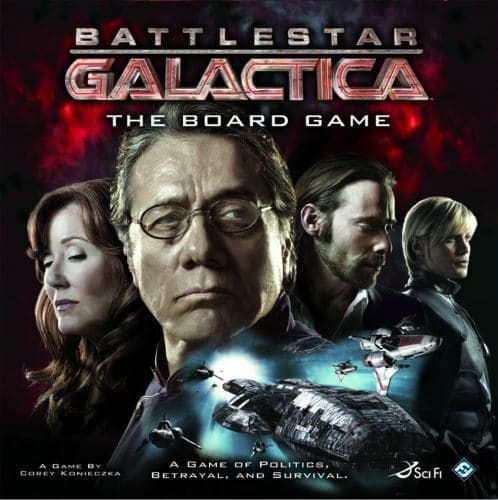
Battlestar Galactica: The Board Game plunges players into the desperate flight of the last vestiges of humanity. It is a deeply thematic, semi-cooperative experience where survival is paramount, but the greatest threat may be sitting right next to you. In this game of hidden allegiances, most players assume the roles of iconic human characters from the television series, working collectively to guide the fleet to its fabled destination, Kobol. To succeed, they must carefully manage four critical resources—fuel, food, morale, and population—and execute a series of faster-than-light jumps to outrun their pursuers. If any resource is fully depleted, or the Galactica itself is destroyed, humanity is lost forever. However, amongst the crew are Cylon traitors, secretly working to ensure this very outcome through subtle sabotage and outright betrayal.
The gameplay masterfully cultivates this atmosphere of paranoia. Each turn, a player draws skill cards representing their character's expertise, moves to a location on the fleet's ships, and performs an action. The turn culminates in drawing a Crisis card, which presents a new challenge the crew must overcome, often through a skill check. This is where the core tension lies. To pass a check, players secretly contribute skill cards to a shared pool. While human players try to contribute cards of the required type to meet a target number, Cylon players can covertly add unhelpful cards to cause a failure. The resulting blame-game and accusations are central to the experience. Further intensifying the suspense is the "Sleeper Agent" phase halfway through the game, where a second loyalty card is dealt, potentially turning a trusted ally into a new enemy.
What elevates Battlestar Galactica to legendary status is its unmatched ability to translate the show's core themes of paranoia and desperation into compelling gameplay. The mechanics are not just abstract puzzles; they are engines for storytelling and intense player interaction. The constant suspicion, the debates over who played which card during a failed skill check, and the dramatic moments when a player reveals themselves as a Cylon are what create unforgettable gaming sessions. It's more than a resource management game; it's a social deduction crucible where your ability to read people, build trust, and sow discord is just as important as your strategic card play. This blend of cooperative survival and hidden traitor mechanics makes every decision fraught with weight and every game a unique narrative of survival and betrayal.
3-6 180m⚖️ 3.3
RANK #128
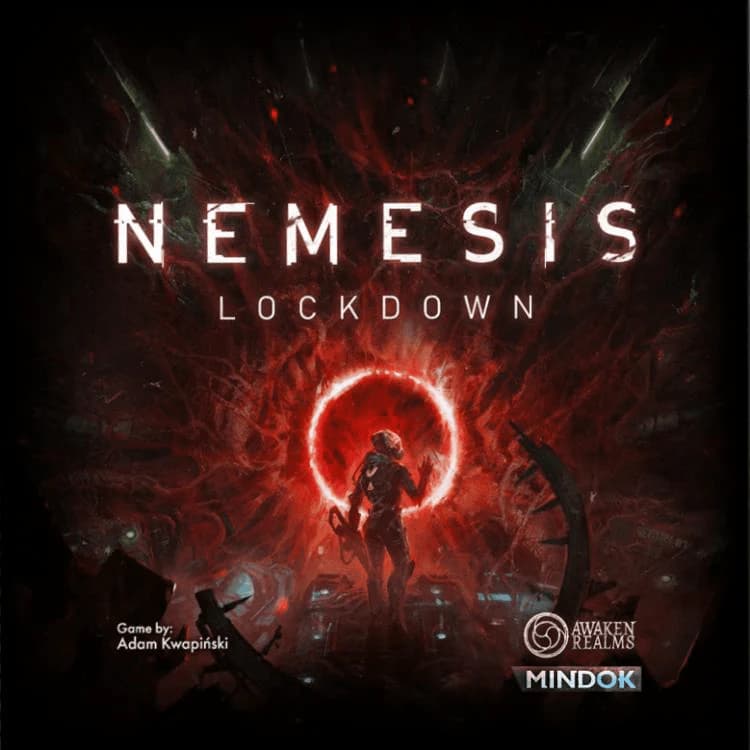
Nemesis: Lockdown is a cinematic, standalone survival-horror experience set on a secret multi-level base on Mars. It is a semi-cooperative game where players, as survivors of an unknown incident, must navigate a hostile facility infested with terrifying alien organisms known as Night Stalkers. While cooperation is essential to overcome the immediate dangers of the base and its predatory inhabitants, each player holds a secret objective that may conflict with the goals of the group. To achieve victory, a player must not only survive the ordeal but also successfully complete their private mission before escaping, creating a deeply tense atmosphere where trust is a scarce and valuable resource.
The gameplay unfolds through a series of rounds, each divided into a Player Phase and an Event Phase. During the Player Phase, individuals take turns performing two actions, the cost of which is paid by discarding action cards from their hand. Actions are varied and crucial, including moving through the labyrinthine base, exploring new rooms, searching for useful items, crafting equipment, and engaging in desperate combat with the aliens. A critical element is managing noise; actions can place noise markers in adjacent corridors, and a second marker in the same location triggers a deadly alien encounter. Lockdown introduces new challenges, most notably the management of the base's power, which can fail and plunge sectors into darkness, adding another layer of strategic depth and terror.
The immense appeal of Nemesis: Lockdown lies in its ability to generate powerful, emergent narratives. The combination of hidden agendas, a modular board, and unpredictable event cards ensures that no two sessions are ever alike, producing unique and memorable stories of heroism, desperation, and betrayal. The core semi-cooperative mechanic is the heart of the game, forcing a delicate balance between teamwork and self-preservation. You need your crewmates to fend off the relentless alien threat, yet you can never be certain of their true intentions. This constant psychological tension, coupled with the game's rich thematic immersion, makes it a premium, high-stakes adventure for players who crave a challenging and deeply engaging tabletop experience.
1-5 120m⚖️ 4.2
RANK #133
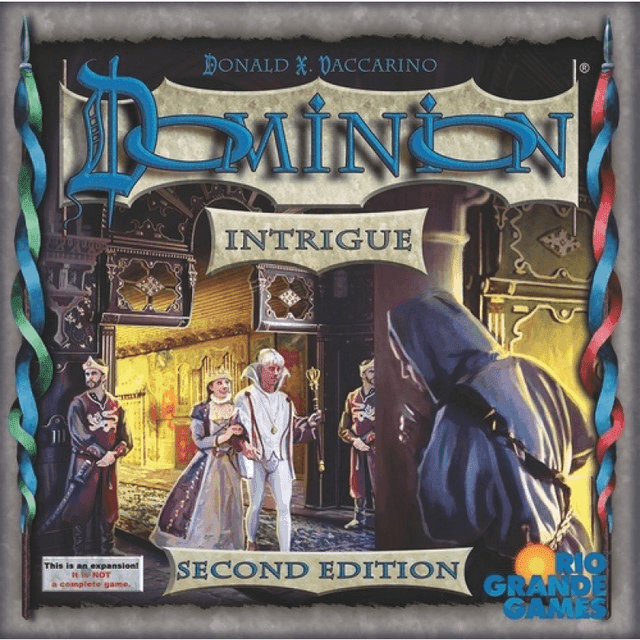
Dominion: Intrigue stands as the celebrated first expansion to the game that defined a genre. It can be played entirely on its own or seamlessly combined with the original base game and other expansions for endless variety. The objective remains the same: players compete to build the most prosperous and powerful kingdom, represented by the accumulation of Victory Point cards in their personal deck by the game's end. Starting with a meager and identical set of cards, each participant must strategically purchase cards from a shared central supply, crafting a unique deck that functions as their engine. This engine must be carefully balanced, generating wealth to acquire valuable provinces while simultaneously defending against the nefarious schemes of rival monarchs.
Gameplay in Intrigue retains the elegant 'ABC' turn structure of its predecessor: perform an Action, Buy a card, and Cleanup your hand to draw a new one. Where Intrigue carves its own identity is in its thematic focus on player choice and interaction. Many of its 26 new Kingdom cards present players with a dilemma, forcing a tactical decision between two powerful effects. The 'Steward' card, for example, lets a player choose to draw more cards, gain extra currency, or remove unwanted cards from their deck. This expansion also cleverly introduces hybrid-type cards, such as the 'Harem', which serves as both a Treasure card for buying power and a Victory card for end-game scoring. These dual-purpose cards help to solve the classic Dominion puzzle of when to start adding 'useless' Victory cards that can otherwise clog up a finely tuned deck.
What makes Intrigue an enduring favorite is the dramatic increase in direct player interaction and strategic depth it introduces. While the original game had attack cards, Intrigue's are often more subtle and choice-driven, leading to more engaging and dynamic confrontations. The constant decision-making required by the new card effects ensures that every turn is meaningful and no two games ever feel the same. It masterfully expands upon the core concepts of Dominion without adding burdensome rules, making it an ideal next step for players who have mastered the base set and a perfect, albeit slightly more complex, entry point for new players seeking a richer, more interactive deck-building experience.
2-4 30m⚖️ 2.4
RANK #145
Dominion
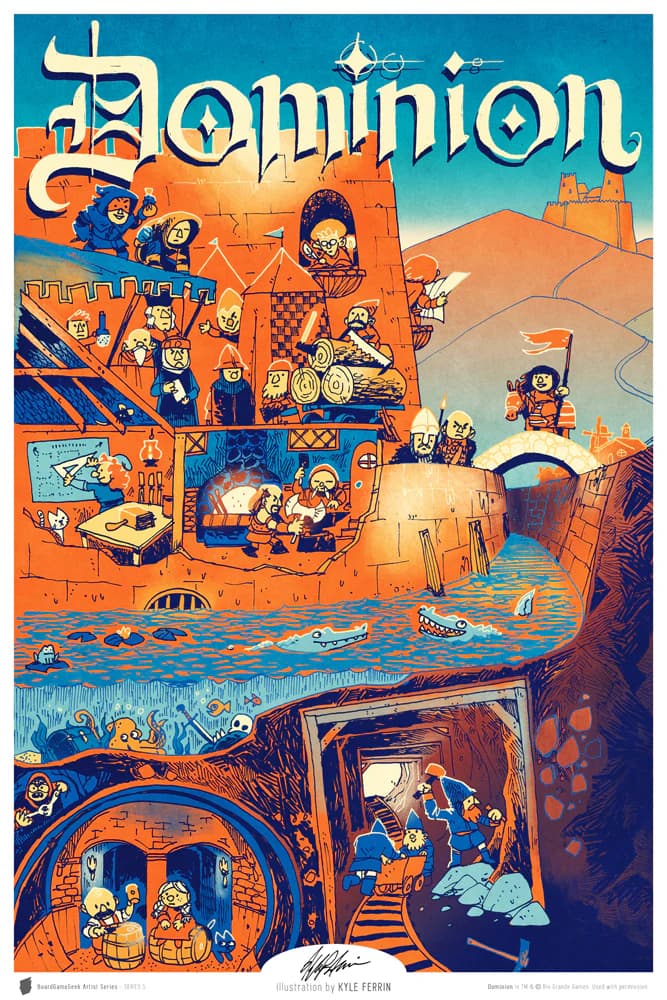
2008Step into the role of a monarch in Dominion, the revolutionary 2008 title that single-handedly created the deck-building genre. In this game, you are a ruler, like your parents before you, of a quaint and peaceful kingdom filled with rivers and evergreens. However, unlike them, you have aspirations of grandeur! You seek to expand your influence and forge the largest and most prosperous dominion of all. Players compete to accumulate the most victory points by the end of the game, which are primarily acquired by purchasing Estate, Duchy, and Province cards. Each player begins with an identical, humble deck of ten cards containing a few low-value Treasures and Estates. Your objective is to skillfully build upon this foundation, creating a well-oiled machine of a deck that can generate wealth and secure victory.
The gameplay is famously elegant, following a simple turn structure often called the 'A-B-C' loop: Action, Buy, and Cleanup. During your Action phase, you can play one Action card from your hand to perform special abilities, such as drawing more cards, gaining extra buys, or even attacking your opponents. In the Buy phase, you use the Treasure cards you've drawn to purchase new cards from a shared central supply. This supply, known as the Kingdom, consists of ten unique stacks of Action cards that are randomized each game, ensuring no two sessions are ever alike. Finally, in the Cleanup phase, you discard your entire hand and all cards played, then draw a fresh hand of five. When your draw pile is empty, your discard pile is shuffled to form a new one, now enriched with the powerful cards you recently acquired.
Dominion's enduring appeal lies in its brilliant fusion of simplicity and strategic depth. The game is celebrated for its immense replayability; the vast number of possible Kingdom card combinations creates an endless puzzle to solve. Players relish the challenge of discovering powerful synergies and building efficient 'engines' within their decks. A core tension drives every decision: do you acquire more powerful Action cards to improve your deck's function, or do you start buying Victory cards to secure your win? These victory cards are crucial for scoring but provide no abilities, effectively clogging your hand and slowing your engine down. This constant strategic trade-off, combined with its accessible rules and quick playtime, has cemented Dominion's status as a timeless classic and an essential gateway into the world of modern board games.
2-4 30m⚖️ 2.4

RANK #152
Forest Shuffle
2023In Forest Shuffle, players take on the role of naturalists competing to cultivate the most thriving and ecologically harmonious woodland. This strategic card game challenges you to build a personal forest tableau that scores the most points by the game's end. The core objective is to strategically play cards representing a diverse array of trees, animals, plants, and fungi. Each card contributes to your ecosystem's overall value, with different species scoring in unique ways based on their placement and proximity to others. Success requires careful planning and an understanding of the intricate relationships within your burgeoning forest, as the player with the most valuable collection of flora and fauna is declared the winner.
The gameplay is driven by a simple yet elegant set of actions. On your turn, you must choose between drawing two new cards—either from a central deck or a shared face-up market called the 'clearing'—or playing a single card into your forest. Playing a card requires paying a cost by discarding other cards from your hand into the clearing, creating a constant tension of hand management. The game's foundation is built upon tree cards. All other species are played by 'tucking' them under one of the four sides of an existing tree. A key mechanical twist is that most non-tree cards are split, depicting two different species. When you tuck a card, you must choose which half becomes active in your tableau, a decision that has cascading effects on your scoring potential and future plays. This multi-use card system is the strategic heart of the game, forcing difficult choices with every placement.
Forest Shuffle's appeal lies in its masterful blend of accessibility and strategic depth. While the turn structure is remarkably easy to grasp, the "complex web of considerations" that arises from the tucking and scoring mechanics provides a deeply engaging puzzle for experienced gamers. The interactions between cards create countless scoring combinations, ensuring high replayability as you discover new synergies with each game. The beautiful and detailed artwork brings the vibrant ecosystem to life, enhancing the thematic experience. Furthermore, the game's production is environmentally conscious as part of Lookout Games' "Greenline" series. The game ends when the third 'winter' card is revealed, adding a layer of suspense as the deck thins. It’s this combination of straightforward rules, rich decision-making, and a compelling natural theme that makes Forest Shuffle a standout title for a wide range of players.
2-5 60m⚖️ 2.4