Family Games
Browse all Family board games in the Meeple Pulse database.
Styles
Themes
AbstractAdventureAncientAnimalsArtBusinessCard GameCo-operativeComic BookCooperativeCrimeEconomicEnvironmentalismExplorationFantasyHistoricalHorrorHumorIntrigueLiteraryMagicMarvelMedievalModernMuseumMysteryMythologyNatureNauticalPoliticalPress Your LuckSatireSci-FiSocial CommentarySocial InteractionSpaceSuperheroesThematicTravelWarWesternWord-Guessing
Mechanics
3D PlacementActingAction / DexterityAction DraftingAction Point AllowanceAction Point Allowance SystemAction Point SystemAction PointsAction ProgrammingAction QueueAction RetrievalAction SelectionAction/EventAlliancesAlternate ActivationApp-AssistedApp-DrivenArea ControlArea InfluenceArea MajorityArea Majority / InfluenceArea MovementArgumentationAsymmetricAsymmetric FactionsAsymmetric GameAsymmetric PowersAsymmetrical PowersAuction & BiddingAuction/BiddingAuctioningBag BuildingBettingBetting and BluffingBetting and WageringBetting and WagersBiddingBingoBlind BiddingBluffingCampaign / Battle Card DrivenCampaign / LegacyCampaign / Legacy GameCampaign / Mission-basedCampaign / ScenariosCampaign GameCampaign PlayCard DraftingCard DrawingCard DrivenCard Driven ActionCard Driven CombatCard Driven Dice AllocationCard Driven MovementCard ManagementCard PlayCard Play / Hand ManagementCard Play Conflict ResolutionCard SheddingCard-Driven MovementCharacter CreationCharacter ProgressionChit-Pull SystemCo-op PlayCo-operative GameCo-operative PlayCode-breakingCombat ResolutionCombo ChainCommand CardsCommodity SpeculationCommunication LimitsContract FulfillmentContractsCooperative GameCooperative GameplayCooperative PlayCooperative Trick-takingDebateDeck BuildingDeck ConstructionDeck, Bag, and Pool BuildingDeck-BuildingDeductionDexterityDice DraftingDice PlacementDice RollingDiplomatic InfluenceDraftingDynamic Battle SystemEnclosureEnd Game BonusesEngine BuildingEngine-BuildingEscape RoomEvent DrivenExplorationFarmingFlip and WriteFollowFollow ActionGrid CoverageGrid MovementHand ManagementHex-and-CounterHexagon GridHidden MovementHidden RolesI Cut You ChooseIncomeInfluence / Area MajorityLadder ClimbingLegacyLegacy ElementsLegacy GameLegacy SystemLimited CommunicationLine DrawingLine of SightMancalaMap MovementMarketMarket DraftingMarket ManipulationMarket MechanicMarket SpeculationMatchingMeasurement MovementMemoryMission ObjectivesModular BoardModular Board ConstructionMovement TemplatesMulti-Use CardsMulti-use CardsMultiple ScenariosMust FollowNarrative ChoiceNarrative Choice / ParagraphNegotiationNegotiation MechanicsNetwork & Route BuildingNetwork BuildingNetwork and Route BuildingOne vs ManyOne vs. ManyOpen DraftingPaper-and-PencilPartnershipsPattern BuildingPattern RecognitionPick-up and DeliverPlayer EliminationPlayer InteractionPlayer JudgePoint SaladPoint to Point MovementPolyominoesPush Your LuckPush-Your-LuckPuzzlePuzzle-LikePuzzle-SolvingRaceReal-TimeRecipe FulfillmentResource ManagementRole PlayingRole SelectionRoll / Spin and MoveRondelRoute BuildingRoute-BuildingRoute/Network BuildingSanity SystemScenario / Campaign PlayScenario / Mission / Campaign GameScenario / Mission FunctionSecret Unit DeploymentSemi-Cooperative GameSet CollectionSheddingSimulationSimultaneous ActionSimultaneous Action SelectionSimultaneous Hidden AllocationSocial DeductionSocial InteractionSolo / Solitaire GameSpace ExplorationStat Check / Skill CheckStock HoldingStorytellingStrategic PlanningTableau BuildingTactical Decision-MakingTake ThatTargeted CluesTeam PlayTeam-Based GameTeam-Based GuessingTeamworkTech TreesTech Trees / Tech TracksTechnology & Armament TracksTechnology TreeTension & Aggression TracksTile DraftingTile LayingTile PlacementTime TrackTime TravelTower DefenseTrack MovementTradingTrick-takingTug of WarTurn Order: PassTurn Order: Stat-BasedUnit PlacementVariable Phase OrderVariable Player PowersVariable Set-upVariable SetupVictory Point TracksVotingWord AssociationWord GameWord GuessingWord-GuessingWord-guessingWordplayWorker Placement

RANK #47
Set in the roaring 1960s, Heat: Pedal to the Metal places players behind the wheel of high-powered vintage race cars. The primary objective is simple: be the first to cross the finish line after a grueling series of laps around iconic circuits. However, achieving victory requires more than just flooring the accelerator; it demands a delicate balance of aggression and technical precision. As you navigate these tracks, you must manage your car's internal temperature, represented by a specific deck of cards. One wrong move or an overly ambitious turn can lead to your engine overheating, forcing a spin-out that could cost you the entire race.
The core gameplay revolves around a sophisticated card-driven movement system seamlessly integrated with deck management. Each round, drivers decide which gear to engage, which dictates the number of speed cards they must play from their hand. Notable mechanics include the handling of 'Heat' cards, which are added to your discard pile whenever you push the car beyond its natural limits—such as boosting for extra movement, taking a corner too fast, or downshifting rapidly. These cards eventually cycle into your hand, where they act as dead weight, limiting your options until you find a way to cool the engine. This push-your-luck element is complemented by drafting mechanics and slipstreaming, allowing trailing cars to catch up by utilizing the aerodynamic wake of those in front.
What truly sets this title apart and fuels its critical acclaim is the genuine sense of breakneck speed it creates on the tabletop. The game avoids the dryness often found in technical simulations by focusing on the emotional highs and lows of competitive racing. It offers immense replayability through various modular expansions included in the base box, such as variable weather conditions that change track grip and a deep 'Legends' system for solo play or filling out the grid with automated opponents. With vibrant, era-appropriate artwork by Vincent Dutrait, the game captures the romanticized danger and glamor of mid-century motorsport. It is a masterclass in modern board game design, offering a perfect blend of high-speed thrills and calculated strategy that keeps players returning to the starting grid lap after lap.
3-4 30m⚖️ 2.5

RANK #89
Wingspan Asia
2022Wingspan Asia is a multifaceted and beautifully crafted entry in the celebrated Wingspan series, offering several distinct experiences within a single box. It serves as a complete, self-contained game perfectly tailored for one or two players, making it an ideal introduction to the franchise. Simultaneously, it functions as a rich expansion for owners of the original game, introducing 90 new, stunningly illustrated Asian bird cards and 14 new bonus cards to enhance variety and replayability. The ultimate goal remains the same: to become the most successful ornithologist by attracting a diverse collection of birds to your personal wildlife preserve. Players achieve this by creating a powerful and synergistic 'engine' of bird abilities that generates points from the birds themselves, the eggs they lay, the food they cache, and specific end-of-round objectives.
The game preserves the elegant core mechanics that made the original a phenomenon. On their turn, a player chooses one of four actions: gain food tokens from a birdfeeder dice tower, lay miniature eggs on their bird cards, draw new bird cards, or pay food costs to play a bird card into one of three habitats on their player mat. Each bird played not only adds its own unique abilities but also strengthens the action associated with its habitat. A major innovation in this title is the two-player 'Duet Mode', which introduces a shared map of Asia. When playing a bird, players also place a token on this map, competing for area control bonuses at the game's end by creating the largest contiguous group of their tokens. This map adds a delightful layer of direct, strategic interaction. For larger gatherings, the all-new 'Flock Mode' components allow the base game to accommodate six or seven players, cleverly resolving downtime by having two groups of players take their turns simultaneously.
The appeal of "Wingspan Asia" lies in its remarkable flexibility and thoughtful design. For couples or solo gamers, it stands as a complete and deeply satisfying experience right out of the box. For established fans, it is an essential purchase that breathes new life into their collection and finally provides an elegant solution for playing with a large group. The Duet Mode, in particular, has been lauded for adding a compelling, interactive puzzle that enhances the two-player dynamic without overcomplicating the core gameplay. Continuing the series' high standards, the production quality is exceptional, featuring gorgeous new avian art from Natalia Rojas and Ana Maria Martinez Jaramillo. This combination of accessible yet strategically deep engine-building, modular design that caters to different player counts, and stunning visual presentation makes "Wingspan Asia" a universally acclaimed addition to any board game collection.
1-7 60m⚖️ 2.5
RANK #92
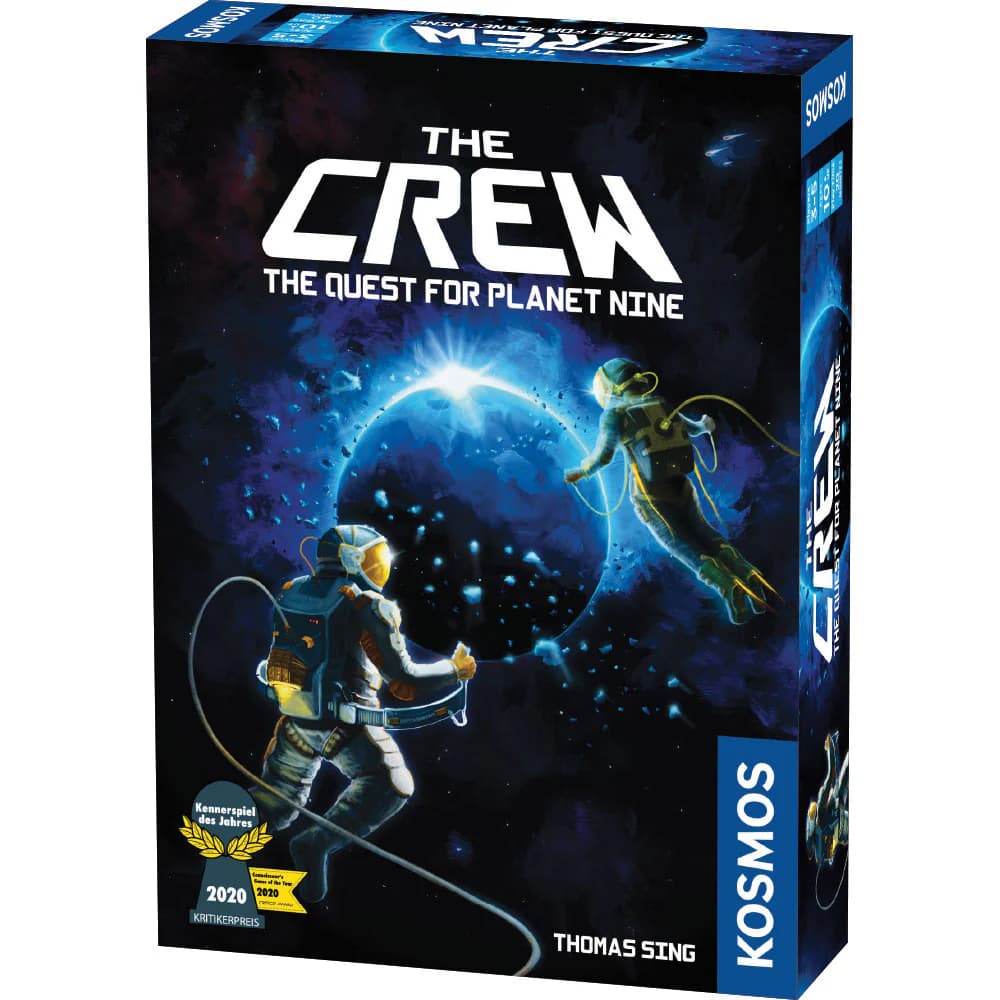
The Crew: The Quest for Planet Nine is a highly acclaimed, scenario-driven cooperative card game that takes players on a thrilling journey through the cosmos. Rather than competing against one another, participants must unite their intellect and strategy to complete a series of fifty progressive missions outlined in a captivating narrative logbook. The primary objective is to embark on a deep-space expedition to uncover the mysteries of an elusive ninth planet at the edge of our solar system. By working together as a unified team of astronauts, players navigate through increasingly difficult challenges, striving to achieve shared victories in a vacuum where every single decision matters.
At its core, the gameplay revolves around a brilliant twist on the classic trick-taking genre. In a traditional trick-taking game like Spades or Hearts, individuals vie to claim the most tricks. However, in this collaborative environment, the crew must meticulously orchestrate the gameplay so that specific team members win the exact tricks containing designated target cards. The deck consists of four colored suits alongside a special trump suit composed of powerful Rocket cards. At the start of a mission, a Captain is chosen by revealing the highest Rocket card, and players draft miniature Task Cards that dictate their personal objectives for that round. Because the game thematically represents the harsh, silent vacuum of space, strict communication limits are enforced. Players are entirely forbidden from openly discussing their hands. Instead, they must rely on a restricted token-based communication system, allowing them to reveal just one card per mission and signal whether it is their highest, lowest, or only card in a particular suit.
The unique appeal of this interstellar adventure lies in its extraordinary ability to blend accessible, easy-to-learn rules with profound strategic depth. Earning the prestigious 2020 Kennerspiel des Jahres award, it masterfully bridges the gap between casual family entertainment and intense, expert-level puzzle solving. Enthusiasts are endlessly captivated by the profound satisfaction that arises from executing a perfectly timed sequence of plays without ever uttering a single word. As the fifty-chapter campaign unfolds, the difficulty ramps up organically, ensuring that groups are continually tested and engaged. The modular, mission-based structure means that sessions can be as brief as twenty minutes or span several hours across multiple evenings. Ultimately, it transforms a familiar, age-old card mechanism into a masterclass of deductive reasoning, silent synergy, and cooperative triumph that keeps gaming groups returning to the table time and time again.
2-4 60m⚖️ 2.0

RANK #103
SCOUT
2019SCOUT is a brilliantly distilled card game where players take on the role of circus ringmasters competing to create the most impressive show. Underneath its charming and minimalist circus theme lies a deeply strategic experience centered around a single, game-changing constraint: you cannot rearrange the cards in your hand. Each card features two different numbers, one on the top and one on the bottom. At the very start of a round, you must make a critical decision to orient your entire hand one way or the other, locking in the sequence of values you'll have to work with. The goal is to skillfully play sets of cards to earn victory points and be the first to empty your hand, avoiding the penalty for leftover cards. This simple premise forces players to think several turns ahead, evaluating the potential of their current card order and planning how to turn a seemingly chaotic hand into a winning performance.
The gameplay elegantly alternates between two core actions: 'Show' and 'Scout'. To 'Show', a player plays a set of one or more cards from their hand to the table. The catch is that these cards must be physically adjacent in their hand. These sets can either be a run of consecutive numbers (like 4-5-6) or a group of matching numbers (like 7-7-7). A newly played show must be more powerful than the set currently on the table, following a clear hierarchy—more cards are better, and sets of a kind beat runs of the same length. If you can't, or strategically choose not to, play a better show, you must 'Scout'. This involves taking one of the end cards from the active show on the table and adding it anywhere into your own hand, in whichever orientation you prefer. This clever mechanism allows you to break up your rigid hand order, bridging gaps to form more powerful sets for future turns. The player whose show was scouted from receives a point token as compensation, creating a fascinating push-and-pull dynamic.
The genius of SCOUT lies in the constant, delightful tension between these two simple actions. Do you play a weak set now just to get cards out of your hand, or do you patiently 'Scout' to build towards an unbeatable combo that could win you the round? This decision-making process makes every turn engaging and consequential. Its fast-paced rounds, which end when a player empties their hand or a show makes it all the way around the table unchallenged, ensure the game never overstays its welcome. Its blend of easy-to-learn rules and surprising strategic depth has earned it widespread acclaim, including a prestigious Spiel des Jahres nomination. SCOUT is the quintessential 'filler' game that packs the punch of a much heavier experience, offering immense replayability and proving that the most compelling designs are often the most elegantly constrained.
1-4 60m⚖️ 1.4
RANK #145
Dominion
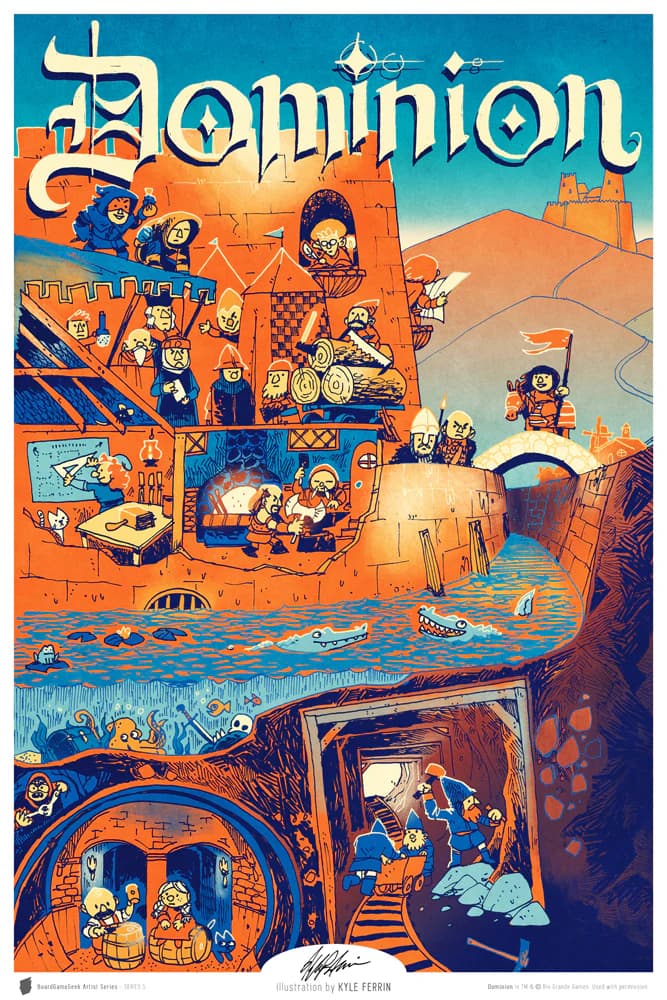
2008Step into the role of a monarch in Dominion, the revolutionary 2008 title that single-handedly created the deck-building genre. In this game, you are a ruler, like your parents before you, of a quaint and peaceful kingdom filled with rivers and evergreens. However, unlike them, you have aspirations of grandeur! You seek to expand your influence and forge the largest and most prosperous dominion of all. Players compete to accumulate the most victory points by the end of the game, which are primarily acquired by purchasing Estate, Duchy, and Province cards. Each player begins with an identical, humble deck of ten cards containing a few low-value Treasures and Estates. Your objective is to skillfully build upon this foundation, creating a well-oiled machine of a deck that can generate wealth and secure victory.
The gameplay is famously elegant, following a simple turn structure often called the 'A-B-C' loop: Action, Buy, and Cleanup. During your Action phase, you can play one Action card from your hand to perform special abilities, such as drawing more cards, gaining extra buys, or even attacking your opponents. In the Buy phase, you use the Treasure cards you've drawn to purchase new cards from a shared central supply. This supply, known as the Kingdom, consists of ten unique stacks of Action cards that are randomized each game, ensuring no two sessions are ever alike. Finally, in the Cleanup phase, you discard your entire hand and all cards played, then draw a fresh hand of five. When your draw pile is empty, your discard pile is shuffled to form a new one, now enriched with the powerful cards you recently acquired.
Dominion's enduring appeal lies in its brilliant fusion of simplicity and strategic depth. The game is celebrated for its immense replayability; the vast number of possible Kingdom card combinations creates an endless puzzle to solve. Players relish the challenge of discovering powerful synergies and building efficient 'engines' within their decks. A core tension drives every decision: do you acquire more powerful Action cards to improve your deck's function, or do you start buying Victory cards to secure your win? These victory cards are crucial for scoring but provide no abilities, effectively clogging your hand and slowing your engine down. This constant strategic trade-off, combined with its accessible rules and quick playtime, has cemented Dominion's status as a timeless classic and an essential gateway into the world of modern board games.
2-4 30m⚖️ 2.4

RANK #152
Forest Shuffle
2023In Forest Shuffle, players take on the role of naturalists competing to cultivate the most thriving and ecologically harmonious woodland. This strategic card game challenges you to build a personal forest tableau that scores the most points by the game's end. The core objective is to strategically play cards representing a diverse array of trees, animals, plants, and fungi. Each card contributes to your ecosystem's overall value, with different species scoring in unique ways based on their placement and proximity to others. Success requires careful planning and an understanding of the intricate relationships within your burgeoning forest, as the player with the most valuable collection of flora and fauna is declared the winner.
The gameplay is driven by a simple yet elegant set of actions. On your turn, you must choose between drawing two new cards—either from a central deck or a shared face-up market called the 'clearing'—or playing a single card into your forest. Playing a card requires paying a cost by discarding other cards from your hand into the clearing, creating a constant tension of hand management. The game's foundation is built upon tree cards. All other species are played by 'tucking' them under one of the four sides of an existing tree. A key mechanical twist is that most non-tree cards are split, depicting two different species. When you tuck a card, you must choose which half becomes active in your tableau, a decision that has cascading effects on your scoring potential and future plays. This multi-use card system is the strategic heart of the game, forcing difficult choices with every placement.
Forest Shuffle's appeal lies in its masterful blend of accessibility and strategic depth. While the turn structure is remarkably easy to grasp, the "complex web of considerations" that arises from the tucking and scoring mechanics provides a deeply engaging puzzle for experienced gamers. The interactions between cards create countless scoring combinations, ensuring high replayability as you discover new synergies with each game. The beautiful and detailed artwork brings the vibrant ecosystem to life, enhancing the thematic experience. Furthermore, the game's production is environmentally conscious as part of Lookout Games' "Greenline" series. The game ends when the third 'winter' card is revealed, adding a layer of suspense as the deck thins. It’s this combination of straightforward rules, rich decision-making, and a compelling natural theme that makes Forest Shuffle a standout title for a wide range of players.
2-5 60m⚖️ 2.4
RANK #177
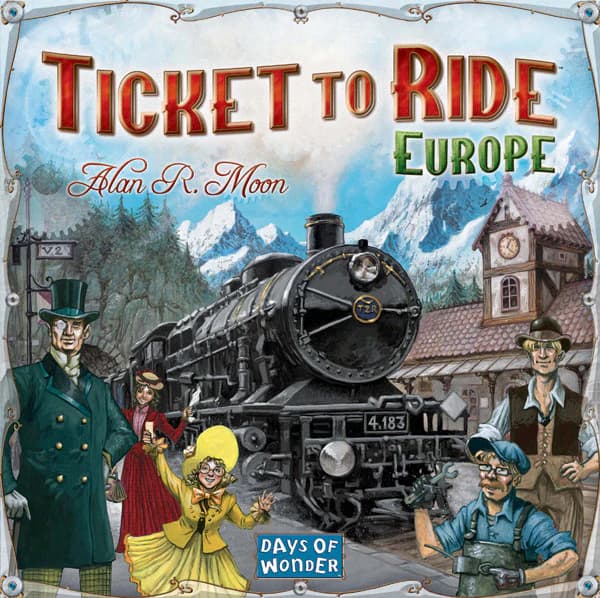
Ticket to Ride: Europe transports players to the golden age of steam travel at the turn of the 20th century. In this standalone installment of the beloved train adventure series, you are not just a passenger but a budding railway tycoon, competing to build the most impressive rail network across the continent. The ultimate goal is to amass the most points by the end of the game. This is achieved through a combination of strategically claiming routes between iconic European cities, successfully connecting distant destinations specified on secret ticket cards, and constructing the longest continuous path of trains for a substantial end-game bonus. Each decision matters as you race against your rivals to dominate the railways, from the misty hills of Edinburgh to the sun-drenched shores of Constantinople.
The game is celebrated for its elegant and accessible ruleset. On your turn, you choose one of four simple actions: draw more train car cards, claim a route on the board, draw new destination tickets, or build a train station. Claiming a route involves collecting and playing a set of train car cards that match the color and length of the desired path, earning you immediate points. This Europe-centric version introduces several clever mechanics that add new layers of strategy. Ferries are special sea routes that require powerful locomotive (wild) cards to claim. Tunnels introduce a thrilling push-your-luck element; when you try to build through a mountain, you must draw extra cards from the deck, potentially increasing the cost of the route unexpectedly. Finally, the introduction of Train Stations provides a strategic safety net, allowing you to use a single route segment owned by an opponent to help complete one of your own destination tickets, though at the cost of end-game points for unused stations.
Ticket to Ride: Europe has earned its place as a cornerstone of modern board gaming, largely due to its status as a premier 'gateway' game. It's incredibly easy to teach to newcomers and families, with games often concluding in under an hour, yet it offers enough strategic depth to keep veteran gamers engaged. The core tension between building your own network and inadvertently blocking opponents creates a compelling and interactive experience without direct confrontation. The additions of tunnels, ferries, and stations subtly enhance the original's formula, providing more varied decisions and reducing the frustration of being completely cut off from a critical city. This perfect balance of simplicity, strategy, and high replayability makes it a timeless classic that continues to bring people to the table for another journey across Europe.
2-5 60m⚖️ 1.9
RANK #200
Jaipur
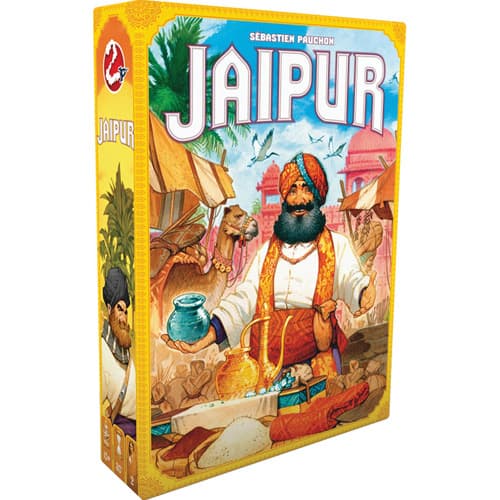
2009Jaipur is a celebrated fast-paced card game that immerses two players in the vibrant and competitive world of Rajasthani commerce. In this strategic duel, opponents take on the roles of powerful merchants, vying for an invitation to the Maharaja's court. The ultimate goal is to become the city's most prosperous trader by accumulating more wealth than your rival. Victory isn't achieved in a single transaction but over a series of rounds; the first player to demonstrate superior business acumen by winning two rounds and earning two 'Seals of Excellence' claims the prestigious title and wins the game. It is a brilliant mix of calculated risk, tactical timing, and astute market awareness.
The gameplay revolves around the core mechanics of set collection and hand management. During their turn, a player must make one crucial decision: acquire new cards or sell goods they have already collected. Acquiring cards presents several tactical paths: a player can take a single good from the central market, claim all the available camels to bolster their caravan for future large-scale exchanges, or swap multiple cards from their hand and herd to acquire a selection of goods from the market. Selling is how players earn the rupees that determine the winner. Tokens for each of the six goods are limited and decrease in value as they are claimed, creating a tense race to sell valuable wares early. However, the game cleverly rewards patience, as selling large sets of three, four, or five identical goods grants lucrative bonus tokens, forcing a constant, compelling dilemma between speed and scale.
Jaipur’s enduring charm comes from its perfect balance of elegant simplicity and engaging strategic depth. The rules are straightforward enough to be taught and understood within minutes, making it an exceptionally accessible game for newcomers and families. Yet, beneath this simplicity lies a rich decision space that keeps experienced players captivated. The tension of whether to build your hand or sell your goods, the strategic value of camels, and the race for diminishing resources create a highly interactive and dynamic experience where every choice matters. This seamless blend of accessibility, quick playtime, and rewarding tactics has established Jaipur as a modern classic and a quintessential two-player game, perfect for any pair seeking a quick but satisfying strategic challenge.
2 30m⚖️ 1.5
RANK #236
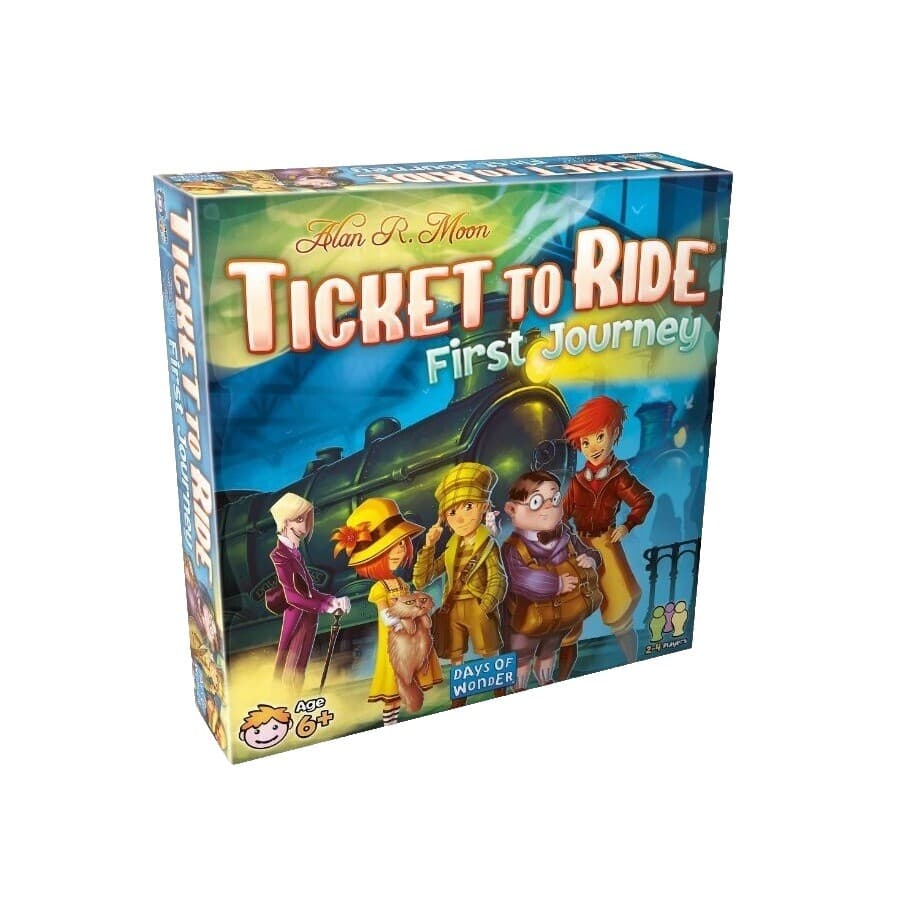
Embark on a frosty railway adventure with *Ticket to Ride: Nordic Countries*, a standalone installment in the award-winning series designed specifically for a more intimate and competitive experience. Set against the beautiful, snow-dusted backdrop of Denmark, Finland, Norway, and Sweden, this game challenges two or three players to become the region's greatest transportation magnate. The core objective remains familiar to fans of the series: collect colored train car cards to claim railway routes, strategically connecting cities across the map. Your primary source of points comes from fulfilling secret Destination Tickets, each one tasking you with linking two specific cities. Successfully completing these tickets adds to your score, but failure will cost you dearly. The player who has amassed the most points from their routes, completed tickets, and the coveted 'Globetrotter' bonus for the most tickets fulfilled, will be declared the winner.
The gameplay is elegantly simple yet rich with strategic choices. On your turn, you perform one of three actions: draw more train car cards, claim a route by discarding a matching set of cards, or draw new Destination Tickets to potentially increase your score. *Nordic Countries* introduces compelling twists on this classic formula with the inclusion of Ferries and Tunnels. Ferries are special sea routes that demand a specific number of powerful Locomotive wild cards to claim, making these cards exceptionally valuable. Tunnels add a thrilling element of risk; after committing your cards to a mountain route, you must reveal cards from the top of the deck, potentially forcing you to play extra cards to complete the connection. This version also uniquely alters the rules for Locomotives, restricting their use primarily to these special routes, which intensifies the strategic planning around their acquisition and use.
What makes *Ticket to Ride: Nordic Countries* a standout title is its brilliantly crafted map, which is significantly tighter and more constrained than its predecessors. This design choice inherently creates a high-stakes environment where player interaction is not just possible, but inevitable. Players must constantly watch their opponents, anticipate their moves, and decide whether to build their own network or defensively block a critical path. The scarcity of double-routes means competition for key connections is fierce from the very start. This heightened tension, combined with a brisk playtime of 30-60 minutes, makes it an exceptionally engaging and replayable game for couples, families, and anyone seeking a fast-paced, light-strategy experience with a healthy dose of direct competition.
2-3 45m⚖️ 1.9
RANK #249
Tichu
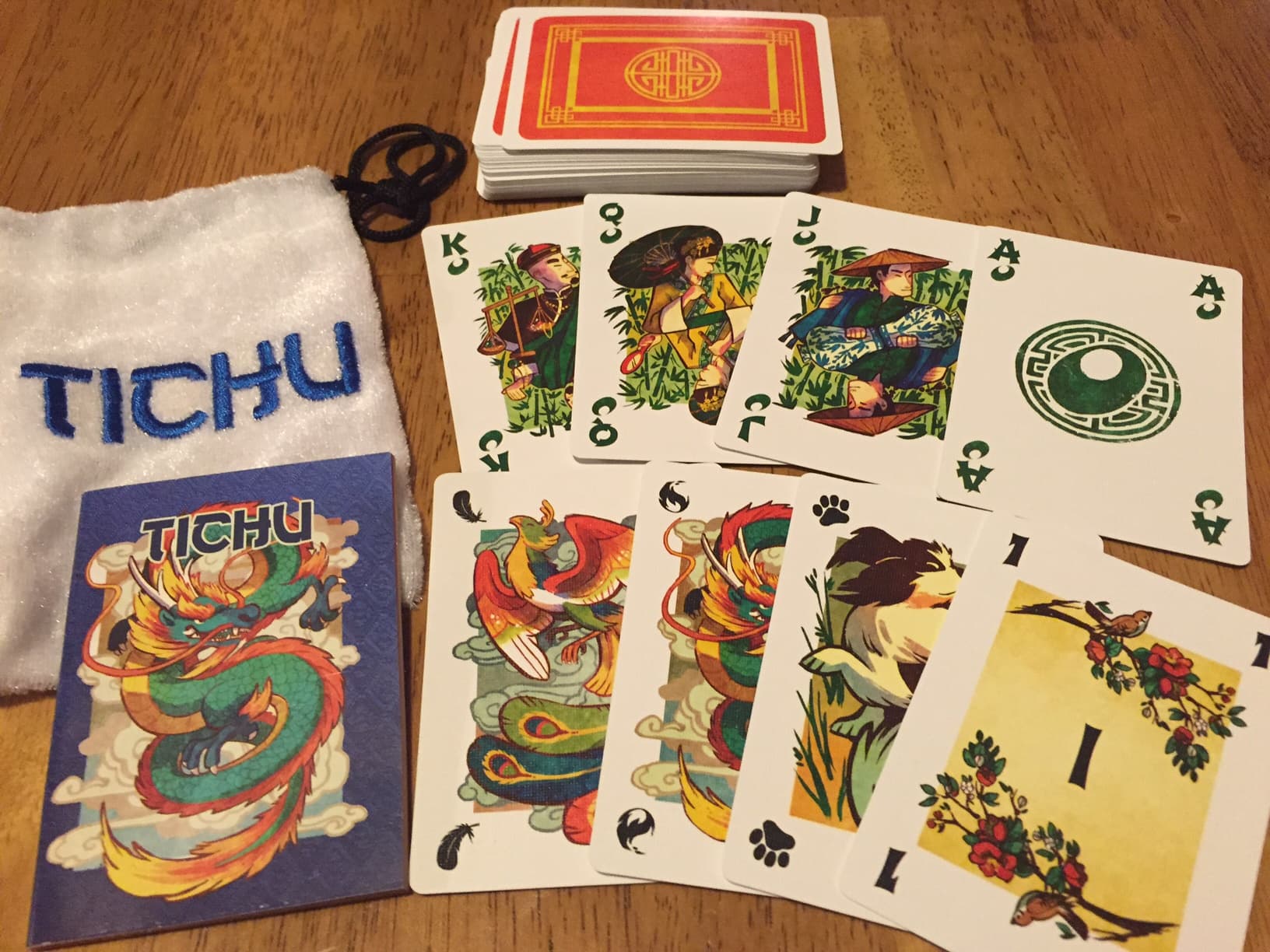
1991Introduced to Western audiences in 1991 after its adaptation from traditional Chinese climbing games, Tichu stands as a highly revered partnership trick-taking and shedding card game. Players are split into two teams of two, with teammates sitting directly across from one another at the table. The primary objective is to empty your hand of cards as quickly as possible while simultaneously capturing tricks that contain high-value point cards. Teams race across multiple rounds to be the first to accumulate a total of 1,000 points, relying on both sharp tactical play and synchronized teamwork to outmaneuver their opponents.
The core gameplay revolves around a specialized 56-card deck consisting of a standard poker deck alongside four unique character cards: the Mah Jong, Hound, Phoenix, and Dragon. After a hand of fourteen cards is dealt, a strategic passing phase occurs where every player hands one face-down card to their partner and one to each opponent. Play then proceeds using climbing trick-taking rules. Whoever leads a trick can play a single card, a pair, consecutive pairs, or poker-style combinations like a full house or a straight. Subsequent players must lay down the exact same combination type, but at a strictly higher numerical value. If they cannot or choose not to, they must pass. This climbing continues until three players pass consecutively. The four special cards heavily disrupt this flow, offering abilities like demanding a specific rank, instantly passing the lead to a partner, acting as a wild card, or serving as an unbeatable single card. Additionally, players can deploy 'Bombs'—four-of-a-kind sets or straight flushes—which bypass standard restrictions and can be played out of turn to completely steal a trick.
What truly elevates the experience and fosters its legendary status within the board gaming community is the high-stakes betting mechanism. Before playing their first card, individuals can declare 'Tichu', wagering that they will be the absolute first to shed their entire hand for a massive 100-point bonus. Daring players can even call a 'Grand Tichu' during the initial deal for an astonishing 200-point swing. The tension between managing your hand for climbing combinations, supporting your partner's ambitious bets, and deciding when to drop a game-changing Bomb creates a highly addictive, narrative-rich experience. It is a brilliant blend of traditional card play and modern strategic depth that continues to captivate tabletops worldwide.
4 60m⚖️ 2.3

RANK #255
Ticket to Ride
2004Ticket to Ride whisks players away on a grand cross-country train adventure, firmly establishing itself as one of the most beloved and accessible modern board games. In this competitive journey, players vie to become the most successful railroad magnate by the turn of the 20th century. The primary goal is to accumulate the highest number of points. Victory is achieved through a combination of strategically claiming railway routes between iconic cities, fulfilling the secret itineraries detailed on Destination Tickets, and constructing the longest continuous path of train cars on the map. It's a game of elegant design, where foresight and clever planning are rewarded, making every decision a crucial step toward dominating the rails and securing your legacy.
The gameplay is famously straightforward, with a set of rules that can be taught in mere minutes. Each turn, a player must choose one of three simple actions. They can draw two Train Car cards, which come in various colors needed to claim routes, either from a face-up display or blindly from the deck. Alternatively, a player can claim a route on the board by discarding a set of cards that match the route's color and length, immediately scoring points based on its size. The final option is to draw more Destination Tickets, which offer substantial bonus points for connecting distant cities but come with a risk—any uncompleted tickets at the game's end will count against your score. This simple action structure keeps the game moving at a brisk pace, while wild Locomotive cards add a layer of flexibility to players' plans. The end game is triggered when one player's stock of plastic trains dwindles to two or fewer, after which everyone gets one last turn to make their final moves.
The enduring appeal of Ticket to Ride lies in its perfect balance of simplicity and strategic depth. It serves as a quintessential 'gateway game', expertly bridging the gap for newcomers to the board gaming hobby without alienating veteran players. The tension quietly builds as the game progresses; the board becomes a crowded network of competing lines, and the routes you desperately need might be snatched up by an opponent just before your turn. This creates a subtle yet engaging form of player interaction that is more about opportunistic blocking than direct confrontation. The satisfaction of completing a long, coast-to-coast destination ticket is immense, and the combination of set collection, route building, and secret objectives provides a highly replayable experience. Its charming presentation and straightforward rules have made it a staple for family game nights and a celebrated classic worldwide.
2-5 60m⚖️ 1.8

RANK #259
Sea Salt & Paper
2022Sea Salt & Paper is a captivating card game that has enchanted players with its distinct and beautiful aesthetic, featuring photographs of actual origami sea creatures. Beneath its serene surface lies a surprisingly tactical game of set collection and calculated risks. The primary objective is to outscore opponents over several rounds by carefully curating a hand of cards with point-scoring combinations. Players aim to reach a specific point threshold, which varies by player count, to secure victory. However, a thrilling alternate path to triumph exists: collecting all four unique mermaid cards instantly wins the game, adding a layer of suspense to every draw. This elegant design packs a wealth of strategic depth into a small, portable box, making it an ideal travel companion.
The gameplay loop is deceptively simple yet full of meaningful decisions. On your turn, you must acquire a card by either drawing two from the top of the deck, keeping one and discarding the other, or by picking up the top card from one of two face-up discard piles. After adding a card, you can play pairs of identical "duo" cards from your hand to trigger powerful one-time effects. For instance, a pair of crabs allows you to steal a card from a discard pile, while two boats grant you an immediate extra turn. The round's tension culminates when a player amasses at least seven points. They can then declare "Stop," prompting all players to score their hands immediately. Alternatively, if they are feeling confident, they can declare "Last Chance." This gives every other player one final turn to improve their hand before the reveal, introducing a high-stakes push-your-luck element where the declarer risks losing their own card points for the chance at a significant bonus.
The game's immense appeal stems from this brilliant blend of accessibility and strategic depth. The rules can be taught in minutes, making it a perfect 'gateway' game for new players or a fantastic choice for a family game night. Yet, experienced gamers will appreciate the subtle tactics involved in managing their hand, tracking discard piles, and timing the end of the round. The "Last Chance" mechanic is a masterstroke, creating memorable moments of bluffing and suspense. Above all, the visual presentation is a standout feature; the origami art is not just beautiful but integral to the game's charming identity. This combination of fast-paced play, clever card-combo possibilities, and stunning artwork makes Sea Salt & Paper a modern classic that offers high replayability and joy in every hand.
2-4 30m⚖️ 1.5
Showing 1 to 12 of 22 games