Ancient Games
Browse all Ancient board games in the Meeple Pulse database.
Styles
Themes
AbstractAdventureAncientAnimalsArtBusinessCard GameCo-operativeComic BookCooperativeCrimeEconomicEnvironmentalismExplorationFantasyHistoricalHorrorHumorIntrigueLiteraryMagicMarvelMedievalModernMuseumMysteryMythologyNatureNauticalPoliticalPress Your LuckSatireSci-FiSocial CommentarySocial InteractionSpaceSuperheroesThematicTravelWarWesternWord-Guessing
Mechanics
3D PlacementActingAction / DexterityAction DraftingAction Point AllowanceAction Point Allowance SystemAction Point SystemAction PointsAction ProgrammingAction QueueAction RetrievalAction SelectionAction/EventAlliancesAlternate ActivationApp-AssistedApp-DrivenArea ControlArea InfluenceArea MajorityArea Majority / InfluenceArea MovementArgumentationAsymmetricAsymmetric FactionsAsymmetric GameAsymmetric PowersAsymmetrical PowersAuction & BiddingAuction/BiddingAuctioningBag BuildingBettingBetting and BluffingBetting and WageringBetting and WagersBiddingBingoBlind BiddingBluffingCampaign / Battle Card DrivenCampaign / LegacyCampaign / Legacy GameCampaign / Mission-basedCampaign / ScenariosCampaign GameCampaign PlayCard DraftingCard DrawingCard DrivenCard Driven ActionCard Driven CombatCard Driven Dice AllocationCard Driven MovementCard ManagementCard PlayCard Play / Hand ManagementCard Play Conflict ResolutionCard SheddingCard-Driven MovementCharacter CreationCharacter ProgressionChit-Pull SystemCo-op PlayCo-operative GameCo-operative PlayCode-breakingCombat ResolutionCombo ChainCommand CardsCommodity SpeculationCommunication LimitsContract FulfillmentContractsCooperative GameCooperative GameplayCooperative PlayCooperative Trick-takingDebateDeck BuildingDeck ConstructionDeck, Bag, and Pool BuildingDeck-BuildingDeductionDexterityDice DraftingDice PlacementDice RollingDiplomatic InfluenceDraftingDynamic Battle SystemEnclosureEnd Game BonusesEngine BuildingEngine-BuildingEscape RoomEvent DrivenExplorationFarmingFlip and WriteFollowFollow ActionGrid CoverageGrid MovementHand ManagementHex-and-CounterHexagon GridHidden MovementHidden RolesI Cut You ChooseIncomeInfluence / Area MajorityLadder ClimbingLegacyLegacy ElementsLegacy GameLegacy SystemLimited CommunicationLine DrawingLine of SightMancalaMap MovementMarketMarket DraftingMarket ManipulationMarket MechanicMarket SpeculationMatchingMeasurement MovementMemoryMission ObjectivesModular BoardModular Board ConstructionMovement TemplatesMulti-Use CardsMulti-use CardsMultiple ScenariosMust FollowNarrative ChoiceNarrative Choice / ParagraphNegotiationNegotiation MechanicsNetwork & Route BuildingNetwork BuildingNetwork and Route BuildingOne vs ManyOne vs. ManyOpen DraftingPaper-and-PencilPartnershipsPattern BuildingPattern RecognitionPick-up and DeliverPlayer EliminationPlayer InteractionPlayer JudgePoint SaladPoint to Point MovementPolyominoesPush Your LuckPush-Your-LuckPuzzlePuzzle-LikePuzzle-SolvingRaceReal-TimeRecipe FulfillmentResource ManagementRole PlayingRole SelectionRoll / Spin and MoveRondelRoute BuildingRoute-BuildingRoute/Network BuildingSanity SystemScenario / Campaign PlayScenario / Mission / Campaign GameScenario / Mission FunctionSecret Unit DeploymentSemi-Cooperative GameSet CollectionSheddingSimulationSimultaneous ActionSimultaneous Action SelectionSimultaneous Hidden AllocationSocial DeductionSocial InteractionSolo / Solitaire GameSpace ExplorationStat Check / Skill CheckStock HoldingStorytellingStrategic PlanningTableau BuildingTactical Decision-MakingTake ThatTargeted CluesTeam PlayTeam-Based GameTeam-Based GuessingTeamworkTech TreesTech Trees / Tech TracksTechnology & Armament TracksTechnology TreeTension & Aggression TracksTile DraftingTile LayingTile PlacementTime TrackTime TravelTower DefenseTrack MovementTradingTrick-takingTug of WarTurn Order: PassTurn Order: Stat-BasedUnit PlacementVariable Phase OrderVariable Player PowersVariable Set-upVariable SetupVictory Point TracksVotingWord AssociationWord GameWord GuessingWord-GuessingWord-guessingWordplayWorker Placement
RANK #114
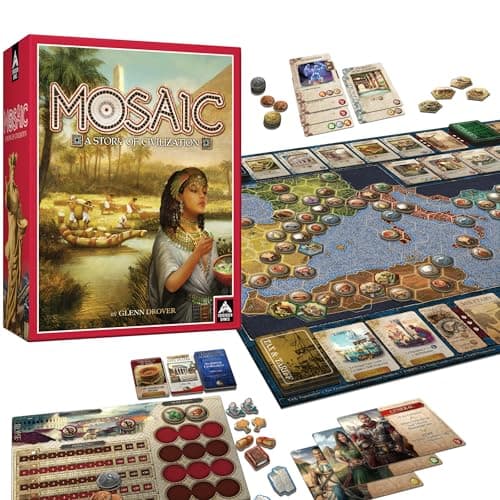
"Through the Ages: A Story of Civilization" is a monumental board game that tasks players with one of the grandest challenges imaginable: guiding a civilization from its humble beginnings in antiquity through to the complexities of the modern era. It's a game of epic scope where military might is just one tool among many. The ultimate objective is not world domination, but the creation of a lasting legacy. Victory is determined by the accumulation of culture points, a measure of your society's artistic, philosophical, and technological contributions to history. Players strive to build a civilization that will be remembered and celebrated for its profound impact, leaving an indelible mark on the annals of time.
The game's engine is driven by a clever card drafting mechanism. A central 'card row' displays a constantly shifting array of potential advancements, from new technologies and political systems to great leaders and world wonders. The cost to acquire these cards decreases the longer they remain unchosen, creating a tense and dynamic market of opportunities. On their turn, players spend a set number of civil and military actions to execute their grand strategy. These actions allow them to draft cards, increase their population, construct or upgrade buildings, and bolster their military forces. Success hinges on a delicate balancing act. You must carefully manage your production of food and resources, your investment in science to unlock new possibilities, and the strength of your army, as rivals can exploit any weakness through aggression or outright war to seize resources and disrupt your progress.
Players are drawn to "Through the Ages" for its profound strategic depth and the immensely rewarding experience of nurturing a civilization from a single settlement into a sprawling empire. It presents an intricate and fascinating puzzle, forcing players to make crucial long-term decisions while adapting to the tactical opportunities presented by the card row. The game's unique appeal lies in this synthesis of grand strategy and tactical execution. While player interaction can be direct and confrontational through the military system, the core conflict is often a race for efficiency and cultural prestige. This focus on building a superior internal engine, rather than simply conquering territory, has cemented its reputation as an essential title for serious hobbyists seeking a challenging, engrossing, and highly replayable masterpiece of game design.
2-4 180m⚖️ 4.2
RANK #169
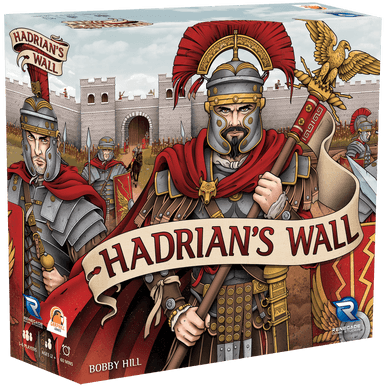
Hadrian's Wall
2021In Hadrian's Wall, you assume the demanding role of a Roman General charged with a monumental task: the construction and defense of a critical segment of the wall that separates Roman Britannia from the unconquered north. This is a deeply strategic 'flip-and-write' game where your ultimate objective is to prove your superior command by amassing the most victory points. Your final score is a reflection of your overall success, tallied across four distinct paths to glory: Renown for your grand constructions, Piety for honoring the gods, Valour for your military prowess, and Discipline earned by managing your domain efficiently. The player who best balances civic development with unwavering defense against the relentless Picts will be celebrated as the most distinguished general in the Empire.
The game unfolds over six years, each a tense round of planning, building, and fighting. Each year begins with a shared 'Fate' card that provides a foundation of resources and workers for all players. You then supplement these supplies by drawing from your personal deck, strategically choosing one card for its immediate resources and another for its potential end-game scoring objectives. The heart of each round is the simultaneous action phase, where you allocate your workers—Soldiers, Builders, Citizens, and Slaves—and spend resources to fill in spaces on your two intricate player sheets. One sheet tracks the progress of your wall, forts, and defenses, while the other maps out the growth of your civilian settlements. Marking off boxes often triggers powerful combos, unlocking additional resources or actions in a satisfying cascade, allowing for clever and explosive turns. The year culminates in a climactic attack by the Picts, where your carefully built defenses are put to the test.
Hadrian's Wall stands out for its remarkable depth and complexity, offering a 'crunchy', thinky experience that elevates the flip-and-write genre. While players act simultaneously, the gameplay is a focused 'multi-player solitaire' puzzle, where the primary challenge is optimizing your own engine of progress. The true magic lies in discovering the intricate synergies on your player sheets and engineering powerful chain reactions where a single action can fuel a dozen more. This engine-building element, combined with the constant pressure to erect sufficient defenses before the annual Pict assault, creates a compelling and highly rewarding strategic challenge. It’s a game that appeals to players who relish complex decision-making, meticulous planning, and the immense satisfaction of watching their personal section of the Roman frontier flourish under their command.
1-6 60m⚖️ 3.0
RANK #198
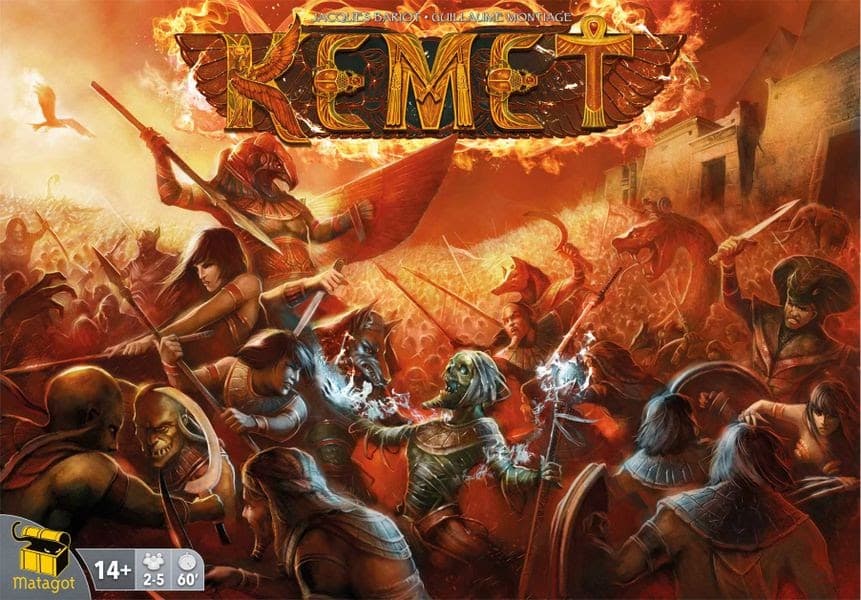
Kemet
2012In the mythological landscape of ancient Egypt, Kemet casts players as powerful gods vying for dominance. This is a game of aggressive territorial control where you command divine armies, clashing in the desert sands to prove your supremacy. The ultimate objective is to be the first to achieve a set number of Victory Points, which are earned through a combination of successful conquests, controlling sacred temples, and constructing magnificent pyramids. Victory is a dynamic affair; points gained from territory can be lost just as quickly, ensuring a relentless struggle until the very end, where only the most cunning and powerful deity will prevail.
Gameplay unfolds over a series of rounds, each divided into Day and Night phases. The Day is where the primary action occurs, as players take turns performing single actions from their personal player boards. This fast-paced, turn-by-turn structure forces critical decisions: will you recruit more soldiers, move your forces to initiate an attack, pray to the gods for more Prayer Points (the game's currency), or invest in upgrading your pyramids? These pyramids are key, as their color and level dictate which powerful Power Tiles you can purchase. These tiles grant unique abilities, creatures, and advantages, forming the core of the game's engine-building and strategic customization, allowing you to tailor your faction's strengths as the game progresses.
Kemet's unique appeal lies in its relentless focus on player interaction and its elegant combat system. The map is designed to push players into conflict from the start, making combat not just an option, but an inevitability. Battles are resolved not by the luck of dice rolls, but through a deterministic card-based system. Each player uses an identical deck of combat cards, secretly choosing one to play alongside a disposable Divine Intervention card. This transforms each battle into a tense sub-game of bluffing, hand management, and anticipating your opponent's moves. The vast array of Power Tiles ensures immense replayability, as each game offers new combinations and strategies to explore, making every session a unique struggle for divine ascendancy.
2-5 120m⚖️ 3.2
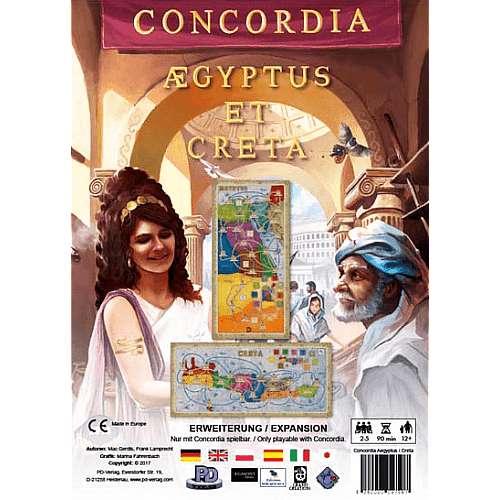
Concordia: Aegyptus / Creta is a highly anticipated expansion for the critically acclaimed strategy board game, Concordia, offering players exciting new maps and strategic challenges. In this elegant eurogame, aspiring Roman merchants vie to establish prosperous trade networks across the ancient Mediterranean. The ultimate goal is to accumulate the most victory points by efficiently colonizing provinces, producing valuable goods, and wisely managing your hand of personality cards to expand your influence and wealth. This expansion introduces two distinct maps: Aegyptus, designed for 2-4 players, and Creta, tailored for a more intimate 2-3 player experience, each presenting unique geographical layouts and strategic considerations.
Gameplay in Concordia is renowned for its streamlined yet deep card-driven action system. Players start with an identical hand of seven personality cards, each allowing a specific action like moving colonists, producing resources in cities, trading goods, or purchasing new, more powerful cards. The core loop involves playing a card, executing its action, and eventually using a 'Tribune' card to recall all previously played cards, including any new ones acquired. This deck management combined with clever area control, resource management, and economic engine building creates a constantly evolving strategic puzzle, where every decision about card play, colonist placement, and resource production has significant long-term implications for your burgeoning empire.
Concordia is beloved by strategy enthusiasts for its remarkable elegance, minimal luck, and profound strategic depth, making it a cornerstone of modern eurogame design. The Aegyptus / Creta expansion significantly enhances replayability by providing fresh geographical canvases and varying player count dynamics, forcing seasoned players to adapt their strategies and offering new tactical puzzles to solve. Its unique appeal lies in the absence of direct conflict, focusing instead on efficient economic growth and indirect competition, rewarding forward planning and clever card optimization. Discover new pathways to victory and solidify your legacy as the most influential merchant of the ancient world.
2-4 120m⚖️ 2.9

Towers of Sifnos
2026In "Towers of Sifnos," players are transported to the ancient Aegean, where they take on the roles of Greek commanders on the titular island. Sifnos, renowned for its rich gold, silver, and lead mines, has become a target for relentless pirate raids. Your charge is not merely to survive, but to thrive amidst the chaos, developing the island's defenses and securing its resources for your own legacy. This is a deeply strategic experience where the primary objective is to accumulate the most victory points. Victory is achieved by shrewdly expanding your influence over the island's lucrative mining regions, constructing a formidable network of defensive towers, and proving your military prowess by successfully fending off the waves of pirate invaders. Every decision contributes to your standing, and only the commander with the greatest foresight and influence will be remembered as the true protector of Sifnos.
The gameplay is a masterful blend of card-driven action selection, hand management, and engine building. Each round challenges players to carefully manage their resources and plan their strategy. A turn begins with a 'prepare' step, where you can play cards into your personal action columns. This crucial phase requires you to pay for these cards by discarding other cards of a matching resource type, creating a compelling engine-building puzzle as you permanently upgrade your future actions. Following this, you must choose two of three distinct main actions: 'Invest' allows you to place dice onto the board's provinces to establish influence, with forts providing greater placement flexibility; 'Construct' lets you erect towers, gaining immediate rewards and bolstering your control; and 'Muster' involves deploying and maneuvering soldiers to build up military 'might'. This might becomes critical when three dice occupy a province, triggering a 'defend' phase where players compare their combined strength from dice, towers, and soldiers to repel the invasion and earn valuable bonuses.
"Towers of Sifnos" distinguishes itself with its tight, interactive design and the multi-faceted nature of its strategic puzzles. The constant tension between long-term engine building and immediate territorial contention creates a highly engaging dynamic. Do you invest in cards that will power up your actions for the rest of the game, or do you seize a critical location on the board right now? The ability to build on top of an opponent’s tower, albeit at a cost, ensures that no position is ever completely secure, fostering a healthy level of player interaction without being overly confrontational. The game’s appeal lies in this rewarding strategic depth, offering a significant step up from gateway games without becoming overwhelmingly complex. It’s a compelling challenge for players who relish seeing a plan come together, combining clever hand management with tactical board presence to outwit their rivals and secure victory over the riches of the ancient isles.
1-4 90m⚖️ 2.9