Strategy Games
Browse all Strategy board games in the Meeple Pulse database.
Styles
Themes
AbstractAdventureAncientAnimalsArtBusinessCard GameCo-operativeComic BookCooperativeCrimeEconomicEnvironmentalismExplorationFantasyHistoricalHorrorHumorIntrigueLiteraryMagicMarvelMedievalModernMuseumMysteryMythologyNatureNauticalPoliticalPress Your LuckSatireSci-FiSocial CommentarySocial InteractionSpaceSuperheroesThematicTravelWarWesternWord-Guessing
Mechanics
3D PlacementActingAction / DexterityAction DraftingAction Point AllowanceAction Point Allowance SystemAction Point SystemAction PointsAction ProgrammingAction QueueAction RetrievalAction SelectionAction/EventAlliancesAlternate ActivationApp-AssistedApp-DrivenArea ControlArea InfluenceArea MajorityArea Majority / InfluenceArea MovementArgumentationAsymmetricAsymmetric FactionsAsymmetric GameAsymmetric PowersAsymmetrical PowersAuction & BiddingAuction/BiddingAuctioningBag BuildingBettingBetting and BluffingBetting and WageringBetting and WagersBiddingBingoBlind BiddingBluffingCampaign / Battle Card DrivenCampaign / LegacyCampaign / Legacy GameCampaign / Mission-basedCampaign / ScenariosCampaign GameCampaign PlayCard DraftingCard DrawingCard DrivenCard Driven ActionCard Driven CombatCard Driven Dice AllocationCard Driven MovementCard ManagementCard PlayCard Play / Hand ManagementCard Play Conflict ResolutionCard SheddingCard-Driven MovementCharacter CreationCharacter ProgressionChit-Pull SystemCo-op PlayCo-operative GameCo-operative PlayCode-breakingCombat ResolutionCombo ChainCommand CardsCommodity SpeculationCommunication LimitsContract FulfillmentContractsCooperative GameCooperative GameplayCooperative PlayCooperative Trick-takingDebateDeck BuildingDeck ConstructionDeck, Bag, and Pool BuildingDeck-BuildingDeductionDexterityDice DraftingDice PlacementDice RollingDiplomatic InfluenceDraftingDynamic Battle SystemEnclosureEnd Game BonusesEngine BuildingEngine-BuildingEscape RoomEvent DrivenExplorationFarmingFlip and WriteFollowFollow ActionGrid CoverageGrid MovementHand ManagementHex-and-CounterHexagon GridHidden MovementHidden RolesI Cut You ChooseIncomeInfluence / Area MajorityLadder ClimbingLegacyLegacy ElementsLegacy GameLegacy SystemLimited CommunicationLine DrawingLine of SightMancalaMap MovementMarketMarket DraftingMarket ManipulationMarket MechanicMarket SpeculationMatchingMeasurement MovementMemoryMission ObjectivesModular BoardModular Board ConstructionMovement TemplatesMulti-Use CardsMulti-use CardsMultiple ScenariosMust FollowNarrative ChoiceNarrative Choice / ParagraphNegotiationNegotiation MechanicsNetwork & Route BuildingNetwork BuildingNetwork and Route BuildingOne vs ManyOne vs. ManyOpen DraftingPaper-and-PencilPartnershipsPattern BuildingPattern RecognitionPick-up and DeliverPlayer EliminationPlayer InteractionPlayer JudgePoint SaladPoint to Point MovementPolyominoesPush Your LuckPush-Your-LuckPuzzlePuzzle-LikePuzzle-SolvingRaceReal-TimeRecipe FulfillmentResource ManagementRole PlayingRole SelectionRoll / Spin and MoveRondelRoute BuildingRoute-BuildingRoute/Network BuildingSanity SystemScenario / Campaign PlayScenario / Mission / Campaign GameScenario / Mission FunctionSecret Unit DeploymentSemi-Cooperative GameSet CollectionSheddingSimulationSimultaneous ActionSimultaneous Action SelectionSimultaneous Hidden AllocationSocial DeductionSocial InteractionSolo / Solitaire GameSpace ExplorationStat Check / Skill CheckStock HoldingStorytellingStrategic PlanningTableau BuildingTactical Decision-MakingTake ThatTargeted CluesTeam PlayTeam-Based GameTeam-Based GuessingTeamworkTech TreesTech Trees / Tech TracksTechnology & Armament TracksTechnology TreeTension & Aggression TracksTile DraftingTile LayingTile PlacementTime TrackTime TravelTower DefenseTrack MovementTradingTrick-takingTug of WarTurn Order: PassTurn Order: Stat-BasedUnit PlacementVariable Phase OrderVariable Player PowersVariable Set-upVariable SetupVictory Point TracksVotingWord AssociationWord GameWord GuessingWord-GuessingWord-guessingWordplayWorker Placement
RANK #171
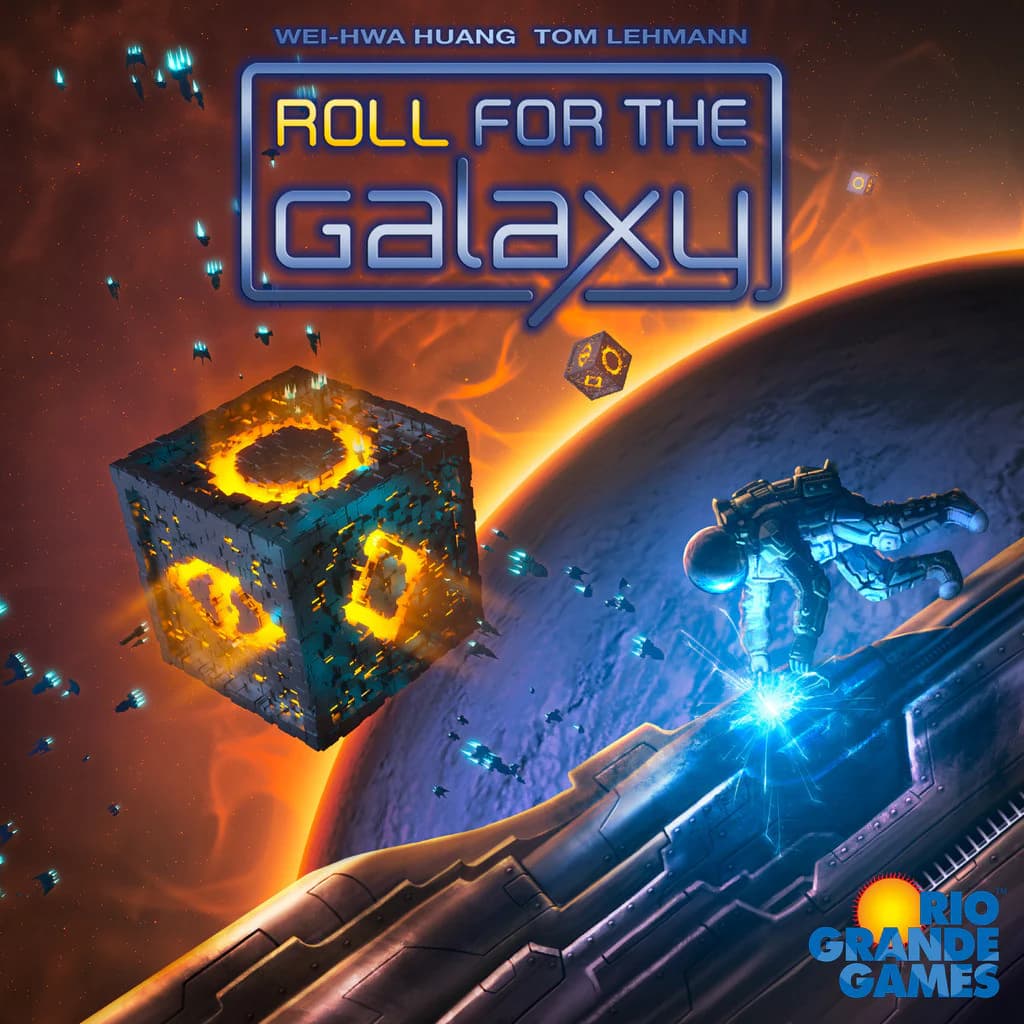
Roll for the Galaxy is a dice-based engine-building game where players compete to create the most prosperous and powerful space empire. As the leader of a fledgling galactic faction, your goal is to accumulate the most victory points by strategically developing new technologies and settling valuable worlds. The game is a spiritual successor to the acclaimed card game, Race for the Galaxy, translating its core concepts into a dynamic and tactile experience driven by custom dice. Each player manages their own domain, striving to build an efficient engine that generates credits, new tiles, and ultimately, victory points. The game concludes when one player constructs their twelfth tile or when the central pool of victory points is depleted, at which point the player with the highest score is declared the victor.
The gameplay revolves around a clever simultaneous action mechanic. Each round, all players roll their dice behind a screen. These dice, with faces representing different actions, are your workforce. Players secretly assign their dice to one of five possible phases: Explore, Develop, Settle, Produce, or Ship. Crucially, each player also selects one of their dice to lock in a specific phase for the round. Only the phases selected by at least one player will activate for everyone, creating a tense game of prediction and priority. Once revealed, players use their assigned dice as workers to perform actions in the active phases, such as drawing new world and development tiles, paying to build them into their tableau, producing goods on worlds, and shipping those goods for either credits or victory points. The tiles you build grant powerful abilities, special dice, and new scoring opportunities, creating a satisfying loop of escalating power.
What makes Roll for the Galaxy a fan favorite is its brilliant combination of tactical dice management and strategic planning, all wrapped in a package with virtually no downtime. The simultaneous play keeps every player constantly engaged, as you're always rolling, assigning, and acting. While the dice introduce an element of luck, the game provides numerous ways to mitigate it, from reassigning dice to leveraging special tile powers. This creates a compelling puzzle each round as you adapt your strategy to what you roll. It captures the strategic depth of its card game predecessor but in a more accessible and faster-playing format, offering immense replayability through its vast array of worlds, developments, and starting factions. It's a masterclass in design that feels both grand in scope and remarkably streamlined.
2-5 45m⚖️ 2.8

RANK #186
Andromeda's Edge
2024Andromeda's Edge invites players to command a unique faction in a newly discovered, resource-rich sector of the galaxy. As a spiritual successor to the acclaimed fantasy game 'Dwellings of Eldervale', this title trades swords and sorcery for starships and advanced technology. Your objective is to establish dominance over your rivals by earning the most victory points. This is achieved through a combination of territorial expansion, technological advancement, commercial savvy, and military might, creating a grand-scale struggle for supremacy in the unexplored frontiers of space.
The gameplay is centered around a compelling blend of worker placement and engine building, driven by a simple but strategically deep choice each turn: either launch a starship or recall your entire fleet. Launching your ships sends them to various regions to gather resources from planets, claim moons for special abilities, trigger powerful actions at Alliance Bases, or engage rivals and non-player raiders in combat. The dice-based combat system includes an innovative 'targeting' mechanic that lets you mitigate luck by re-rolling dice below your ship's targeting value. Recalling your ships is a pivotal move, allowing you to activate the custom engine of module cards you've assembled on your personal space station, generating a cascade of resources and special actions to power future turns.
What makes Andromeda's Edge so engaging is the satisfying puzzle of building an efficient engine while competing for control on an interactive board. Players must constantly weigh the benefits of expanding their presence against the need to pull back and upgrade their capabilities. Success demands careful planning and advancement along five distinct progress tracks: Science, Industry, Commerce, Civilization, and Supremacy. Each track provides crucial rewards and contributes significantly to your final score. As a medium-to-heavyweight Eurogame, it offers substantial strategic depth and replayability, appealing to gamers who relish intricate systems and multiple, interlocking paths to victory.
1-5 120m⚖️ 3.9
RANK #187
Stone Age
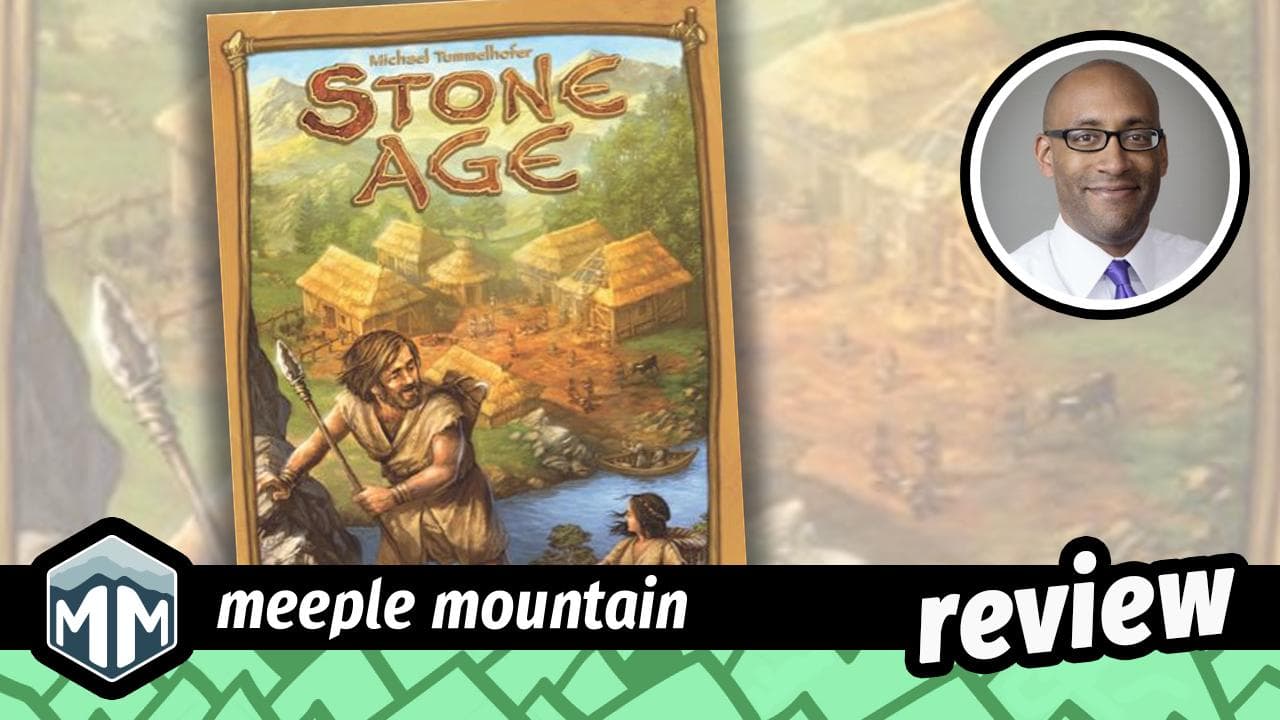
2008Stone Age invites players to the dawn of civilization, casting them as leaders of a burgeoning tribe. This quintessential "gateway" game, first released in 2008, serves as a perfect introduction to the worker placement genre. Your goal is to guide your people to prosperity by strategically gathering resources, developing new technologies, and expanding your village. The ultimate path to victory lies in accumulating the most victory points, which are earned primarily by constructing useful buildings and acquiring valuable civilization cards. These cards reward players for achieving specific long-term goals, such as building a diverse village or growing a large tribe. The player who best balances the immediate needs of their people with the foresight required for a thriving society will be crowned the winner.
The core gameplay is structured around a simple, repeating cycle: placing workers, taking actions, and feeding your tribe. In turn order, players assign their tribe members to various action spaces on the board. These locations allow for hunting, gathering resources (wood, clay, stone, gold), expanding your family, improving agriculture, or crafting helpful tools. Competition for limited spots creates engaging player interaction. Once all workers are placed, their actions are resolved. Resource gathering introduces a clever dice-rolling mechanism: the number of workers sent determines the number of dice you roll. The total is then divided by a specific value for each resource type to determine your yield, creating a fun risk-reward system. Finally, each round concludes with the critical feeding phase, where every tribe member requires food, pushing players to maintain a sustainable food supply or risk penalties.
The enduring appeal of Stone Age lies in its masterful blend of accessibility and satisfying strategic depth. Its rules are easy to grasp, making it an excellent choice for families and those new to the hobby. Yet, the game offers a wealth of meaningful choices that keep experienced players engaged. Do you prioritize increasing your population for more actions, or focus on agriculture to ease the constant demand for food? Do you pursue immediate points from buildings or invest in civilization cards for a big payoff at the end? The element of luck from the dice rolls adds just enough unpredictability to keep the game exciting and prevent it from becoming a purely deterministic puzzle. This elegant design, combined with Michael Menzel's charming and thematic artwork, creates a warm, inviting, and highly replayable experience that remains a staple in the board gaming world.
2-4 75m⚖️ 2.4
RANK #193
Civolution
2024Civolution transports players into the role of celestial students attending the prestigious Technical Academy of Creation. As divine candidates undergoing their final examination in Civilization Design, players are tasked with managing the growth and prosperity of a humanoid civilization on a secluded, randomly generated continent. Over the course of four distinct eras, you must guide your subjects through cultural shifts, technological breakthroughs, and physical evolutionary adaptations. The overarching goal is to accumulate the most success points, proving your worthiness to join the cosmic faculty and securing a promotion within the celestial hierarchy. It is a grand-scale endeavor where every choice shapes the destiny of your unique tribe.
The heart of Civolution lies in its sophisticated dice selection system, which serves as the primary engine for triggering actions within an intricate, ever-shifting technology matrix. Players must strategically allocate their dice to navigate a vast tech tree, unlocking new possibilities from a deck of 160 unique research cards. The game demands careful management across multiple disciplines, including exploration of the physical map, gathering vital food and resources, and constructing enduring structures. Each era brings new challenges as you evolve your tribe's capabilities—deciding between fundamental inventions like the wheel or radical biological changes like wings. This multi-layered approach ensures that the 'civilization console' remains a complex puzzle of optimization and foresight.
What distinguishes Civolution from other heavy Euro-style games is its staggering depth and thematic immersion. Designed by the legendary Stefan Feld, the game offers a 'delightfully epic' scope where players will only ever see a fraction of the possible combinations in a single session. This creates immense replayability, as the massive variety of research cards and the modular nature of the continent ensure no two 'exams' are ever the same. Enthusiasts of heavy strategy will appreciate the high complexity and the rewarding feeling of building a highly specialized engine. Whether you are focusing on technical dominance or biological marvels, the path to victory is wide and varied, making it a definitive title for those who love deep, system-driven civilization builders.
1-4 135m⚖️ 4.2
RANK #196
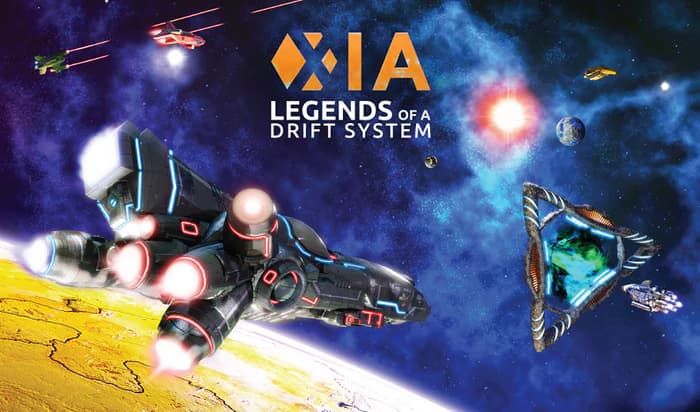
Xia: Legends of a Drift System invites you to stake your claim in a sprawling, open-world space adventure. This is a true 'sandbox' experience where you take the helm of your own starship with a singular goal: to become a legend. Fame is the ultimate currency, and players compete to be the first to reach a predetermined number of Fame Points. How you achieve this status is entirely your decision. Will you become a shrewd interstellar merchant, a daring explorer charting the unknown, a feared pirate preying on others, or a dependable contractor completing vital missions? The galaxy is a vast canvas, and your actions will paint the story of your rise to legendary status.
The gameplay is dynamic and driven by player choice, set against the backdrop of a modular galaxy that is built as you play. The game board begins with just a few sectors, and as captains venture into the unknown, they draw and place new hexagonal tiles, revealing planets, asteroid fields, nebulae, and other celestial phenomena. This ensures that no two games ever feel the same. A player's turn is an active affair, involving actions like moving via a 'roll and move' mechanic determined by your ship's engine power, exploring new tiles, buying and selling goods between planets, mining resources, and engaging in dice-driven combat with NPCs or other players. Central to the experience is the deep ship customization, allowing you to purchase new ship models and outfit them with a tangible array of upgraded engines, shields, and weapons that slot directly onto your ship mat.
What makes Xia a beloved classic is the profound sense of freedom and the powerful emergent narratives it creates. The game doesn't funnel you down a specific path; it provides the tools and the universe, then steps back to let your story unfold. One moment you might be hauling cargo for a modest profit, and the next you could be ambushed by a rival, forcing a desperate escape or a thrilling dogfight. This blend of strategic planning, resource management, and press-your-luck risk creates a highly thematic and immersive journey. Players don't just play a game; they live out a unique sci-fi adventure, making Xia a pinnacle of the sandbox board game genre.
3-5 120m⚖️ 3.2
RANK #197
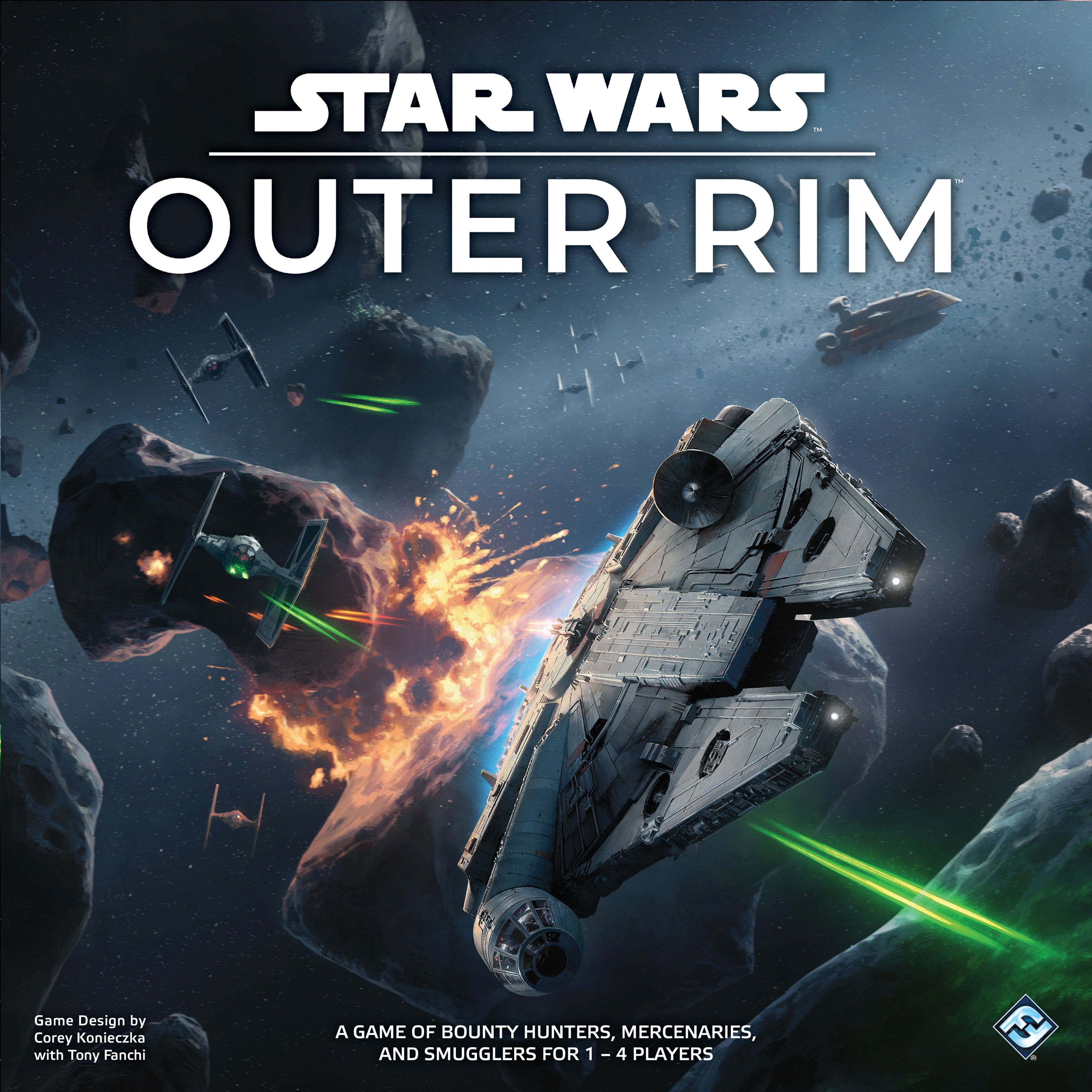
In Star Wars: Outer Rim, you step into the worn boots of a scoundrel, smuggler, or bounty hunter trying to make your name in the lawless fringes of the galaxy. This is a competitive sandbox adventure game where 1 to 4 players take on the roles of iconic characters like Han Solo, Boba Fett, and Doctor Aphra. The ultimate goal is to become a living legend, a status achieved by being the first to accumulate 10 Fame points. You'll earn this prestige by completing dangerous jobs, delivering illicit cargo, successfully hunting down bounties for powerful syndicates, upgrading your iconic starship, and achieving unique personal goals. It's a race to galactic notoriety where your reputation with the galaxy's major factions—the Galactic Empire, the Rebel Alliance, the Hutts, and the Syndicates—will either open doors or put a target on your back.
The gameplay loop is structured to give players significant freedom in how they approach their path to fame. Each turn consists of three key steps. In the Planning Step, you make a crucial decision: move your ship across the modular map of planetary systems, take a moment to repair your ship and heal your character, or take an odd job for a quick infusion of 2,000 credits. The Action Step is where you execute your grand plans, which can involve buying and selling goods at the dynamic market, trading with other players, and turning in completed jobs or bounties. Finally, the Encounter Step immerses you in the world, as you either investigate mysterious contacts on a planet, clash with patrolling faction ships, or draw a narrative card that presents a unique story-driven challenge or opportunity based on your location.
What makes Outer Rim a beloved experience is its profound sense of freedom and emergent storytelling. It's less a game about finding the single most 'optimal' move and more about crafting your own personal Star Wars saga. You can pivot your strategy at any moment: one turn you might be smuggling illegal goods for the Hutts, and the next you could be hunting a bounty issued by the Imperials. Success and failure in these endeavors are often determined by skill checks resolved with custom eight-sided dice, adding moments of thrilling uncertainty. The combination of a pick-up-and-deliver core, robust character progression, and a rich narrative deck ensures that no two games feel the same, offering a highly replayable and deeply thematic journey through the galaxy's most infamous spacelanes.
1-4 150m⚖️ 2.6
RANK #214
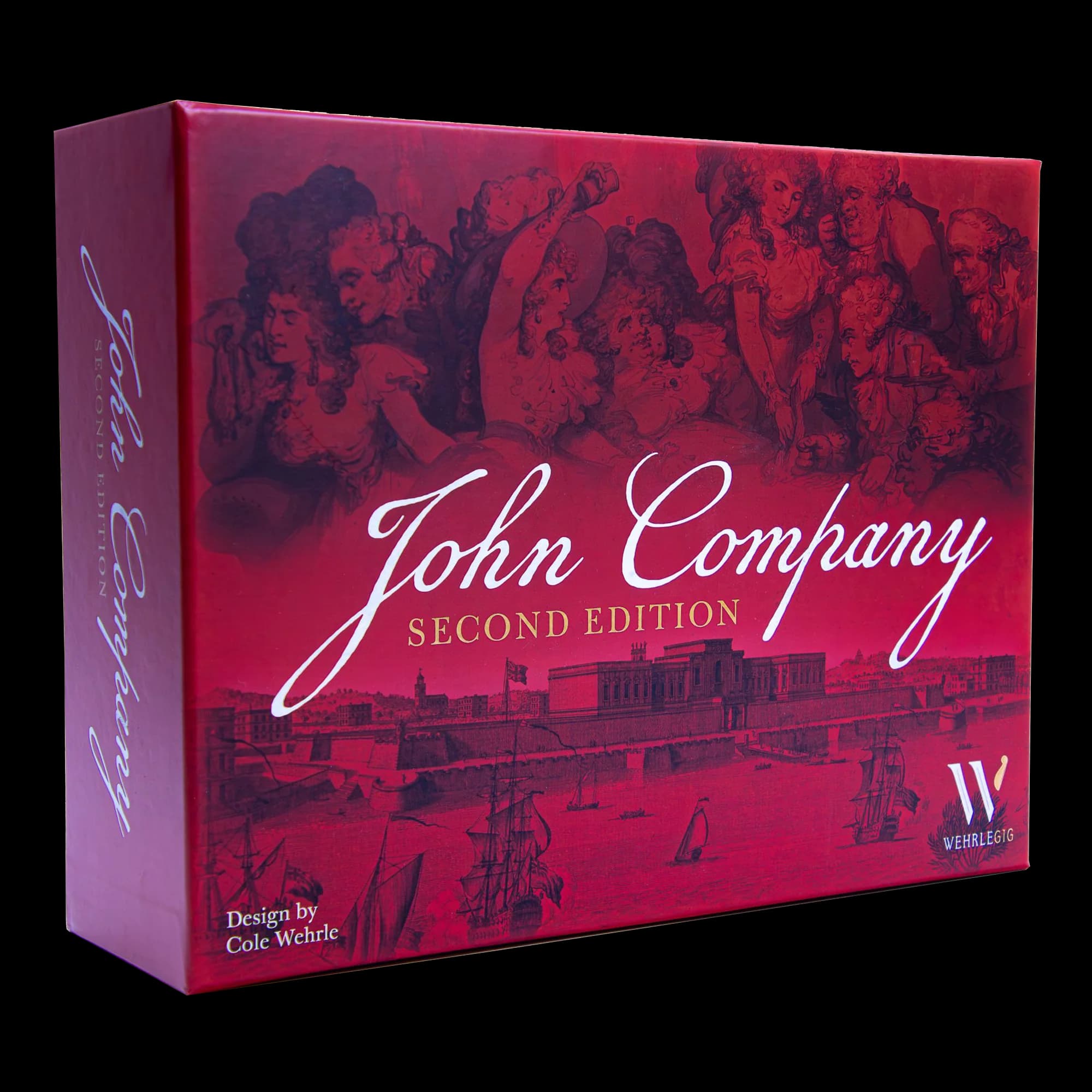
John Company: Second Edition is a deeply immersive and interactive simulation of the British East India Company, a historically powerful but notoriously dysfunctional trading corporation. Players represent ambitious British families seeking to exploit the Company for their own gain. The ultimate goal is not necessarily the Company's success, but rather amassing the greatest personal wealth and prestige for one's dynasty. This is achieved by securing lucrative positions, making shrewd investments, and ultimately retiring family members in a blaze of glory. This second edition is a significant redesign of the 2017 original, featuring a lavish production and refined rules that heighten the strategic depth and political maneuvering.
The gameplay is a masterful blend of semi-cooperative action and cutthroat individualism. On one hand, players must work together to keep the Company financially solvent, as its collapse brings ruin to all. On the other hand, victory is entirely individual. The game's structure revolves around players gaining control of key offices—from the prestigious Chairman to regional Presidents in India—often through tense auctions and brokered deals. In these roles, players execute Company actions like trade, shipping, and military campaigns, where success is often subject to the whims of dice rolls. The game progresses through distinct rounds that include managing private family affairs, voting on transformative laws in Parliament, and navigating the crucial London Season, where prestige is scored and legacies are made.
What truly distinguishes John Company is its unparalleled focus on negotiation and emergent narrative. Success is nearly impossible without engaging in constant deal-making, forming temporary alliances, and even resorting to bribery. The game is a political sandbox where the most memorable moments arise not from scripted events, but from the players' own schemes and betrayals. It brilliantly models a complex bureaucracy where individual ambition clashes with collective responsibility, creating a challenging and unforgettable experience. It appeals to players who relish high interaction, complex systems, and the thrill of turning a sprawling, failing institution into an engine for their own personal triumph.
1-6 180m⚖️ 4.4

RANK #215
Chaos in the Old World plunges players into the dark and gritty Warhammer Fantasy universe, casting them not as heroes, but as one of four malevolent Chaos Gods. Each player embodies either Khorne, the god of war; Nurgle, the lord of decay; Tzeentch, the master of magic; or Slaanesh, the prince of pleasure. The objective is to spread your ruinous influence across the land and be the first to corrupt it entirely. Victory is a two-pronged path: either be the first to accumulate 50 victory points by dominating regions and fulfilling objectives, or achieve a unique, thematic victory by advancing your god's threat dial to its final space. This dual-condition system creates a constant tension, as players must pursue their own goals while simultaneously thwarting the different, and often conflicting, ambitions of their rivals.
Gameplay unfolds in a series of structured rounds, each beginning with an Old World event card that introduces new variables, such as meddling heroes or political shifts. Players then draw from their god-specific Chaos decks, gaining access to powerful, unique abilities. The core of the game lies in the Summoning Phase, where players expend power points to place their forces—from lowly cultists to formidable Greater Daemons—onto the map and play their cards to manipulate the board state. Combat erupts wherever opposing forces meet, resolved through brutal dice rolls. Following the battles, players with a presence in a region can place corruption tokens. Once a region is fully corrupted, it is despoiled, rewarding the most influential god and permanently scarring the world. This cycle of summoning, fighting, and corrupting drives the engine of this highly interactive conflict.
The game's enduring appeal stems directly from its profound and masterfully implemented asymmetry. No two gods play alike; Khorne revels in bloodshed and advances by killing enemy units, while the insidious Nurgle corrupts populous regions and spreads his plagues. Tzeentch manipulates the game state with magic from the shadows, and Slaanesh tempts heroes and nobles to their downfall. This deep strategic diversity means that players must not only master the intricacies of their chosen deity but also deeply understand the capabilities and victory paths of their opponents. This creates a highly dynamic and replayable experience, widely considered to be at its peak with a full complement of four players, where the delicate, brutal dance of the Chaos Gods is on full display, making it a celebrated classic in the area control genre.
3-4 90m⚖️ 3.6
RANK #217
War of the Ring
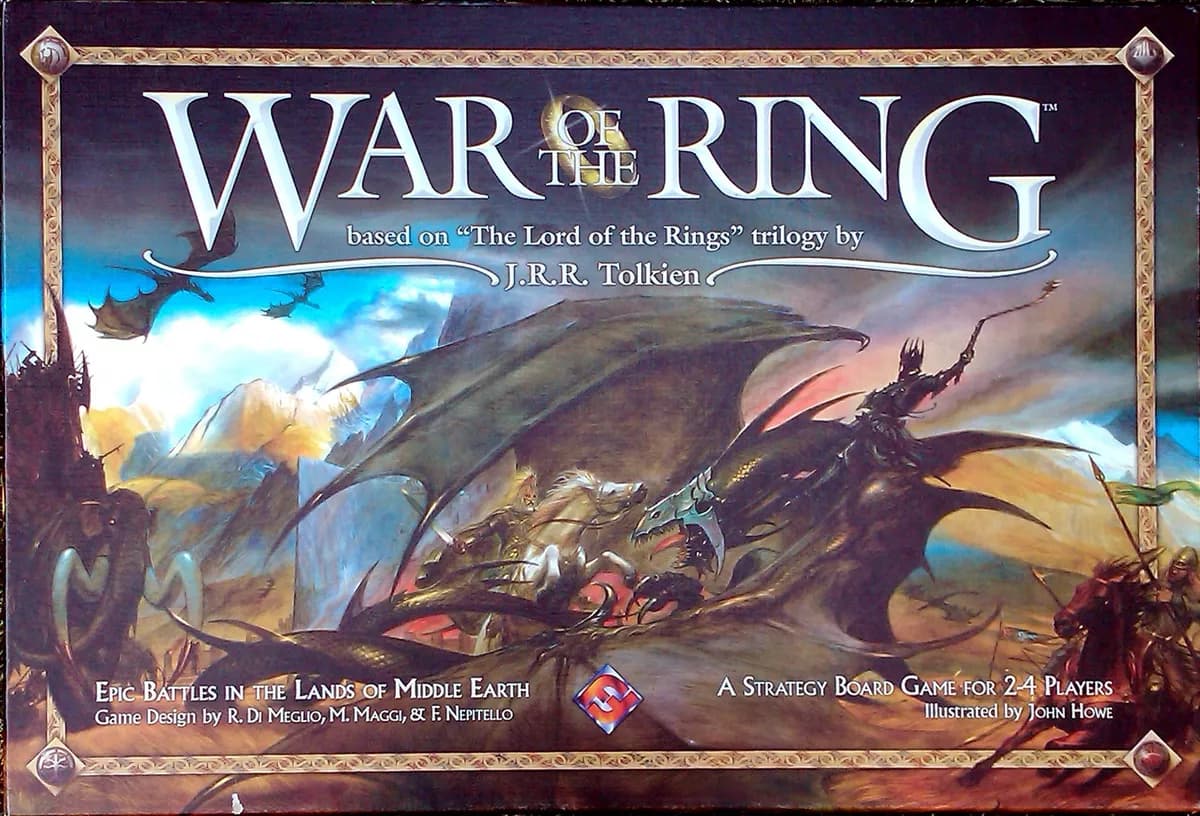
2004War of the Ring is a monumental, asymmetrical strategy game that masterfully translates the epic scope of J.R.R. Tolkien's 'The Lord of the Rings' trilogy into a captivating tabletop experience. In this grand conflict for Middle-earth, one player commands the heroic Free Peoples, while the other marshals the overwhelming forces of the Shadow. The game presents two distinct paths to victory for each side, creating a constant strategic tension. The Free Peoples player must desperately defend their last strongholds against a relentless onslaught, all while secretly guiding the Fellowship of the Ring on its perilous quest to destroy the One Ring in the fires of Mount Doom. Conversely, the Shadow player seeks to crush their enemies through sheer military might, conquering key cities and fortresses. However, they must also divert resources to hunt for the Ring-bearer, as corrupting Frodo before he reaches his destination offers an alternative, insidious path to triumph.
Gameplay is driven by a clever action dice system and a rich deck of event cards that evoke pivotal moments from the books. At the start of each round, players roll their unique set of dice, with the Shadow player receiving more to represent their vast power. The symbols rolled dictate the actions available, such as maneuvering armies, initiating sieges, recruiting reinforcements, advancing the Fellowship, or playing powerful character and strategy cards. A core element of the game is the hidden movement of the Fellowship. The Free Peoples player tracks its progress secretly, only revealing its location when the Shadow's hunt is successful or when they choose to do so strategically. This forces the Shadow player into a difficult balancing act: they must decide how many dice to commit to the military campaign versus the all-important Hunt for the Ring, which, if successful, can reveal the Fellowship and inflict corrupting damage upon the Ring-bearer.
The enduring appeal of War of the Ring lies in its profound thematic immersion and the compelling, narrative-driven experience it generates. Every roll of the dice and every card played feels consequential, echoing the high stakes of Tolkien's saga. The game brilliantly captures the asymmetry of the conflict; the Free Peoples player often feels outmatched and on the defensive, fighting a desperate war of attrition while pinning their hopes on a single Hobbit's stealth and resilience. Meanwhile, the Shadow player wields immense power but must remain vigilant, as a military victory can be snatched away at the last moment by the Fellowship's success. This blend of grand-scale wargaming with a tense, hidden quest creates a deeply strategic and emotionally resonant experience that is widely considered one of the greatest thematic board games ever made.
2-4 150m⚖️ 4.4
RANK #218
Memoir '44
2004Memoir '44 invites players to step into the role of commanders during the pivotal moments of World War II. Created by esteemed designer Richard Borg, this historically-themed board game, published by Days of Wonder, offers a streamlined and accessible entry into the wargaming genre. Players recreate iconic battles from the D-Day landings and other significant engagements of the war. The primary goal is to be the first to achieve a predetermined number of Victory Medals. These medals are typically awarded for eliminating enemy units from the hexagonal battlefield, but specific scenarios often introduce unique objectives, such as capturing and holding key terrain features or breaking through enemy lines, which also grant these crucial tokens of success. The game successfully abstracts the complexities of war into a fast-paced and engaging system, making historical conflict both approachable and exciting.
At the heart of Memoir '44 lies the innovative "Commands & Colors" game system, which elegantly blends strategy with an element of chance. A player's turn is driven by the playing of a single Command Card from their hand. These cards dictate which units can be activated and, crucially, in which of the three distinct sections of the board—left flank, center, or right flank—those orders can be given. Once a card is played, the player orders their chosen units, which can be infantry, armor, or artillery, to move and/or engage in combat. Combat is resolved through a quick and intuitive dice roll, using custom dice whose symbols determine hits, force retreats, or result in misses. The terrain itself is a critical tactical element, with hills, forests, and towns providing defensive cover, impeding movement, and blocking line of sight, forcing commanders to carefully consider their positioning and approach. After all actions are completed, the player draws a new Command Card, concluding their turn and setting the stage for their opponent's response.
The enduring appeal of Memoir '44 stems from its masterful balance of tactical depth and straightforward gameplay. It serves as a perfect 'gateway' wargame, welcoming players who might be intimidated by more complex simulations while still offering satisfying strategic decisions for veteran gamers. The scenario-driven design provides immense replayability; with over a dozen historical scenarios in the base game alone, each with a unique map layout, force composition, and victory conditions, no two games feel quite the same. The combination of strategic card management—knowing when to play a powerful card or when to hold back—and the luck inherent in dice rolls and card draws creates a constant and engaging tension. It brilliantly captures the narrative and drama of a WWII skirmish, delivering a complete and compelling experience in about an hour, securing its place as a classic in the world of historical board gaming.
2-8 45m⚖️ 2.0
RANK #223
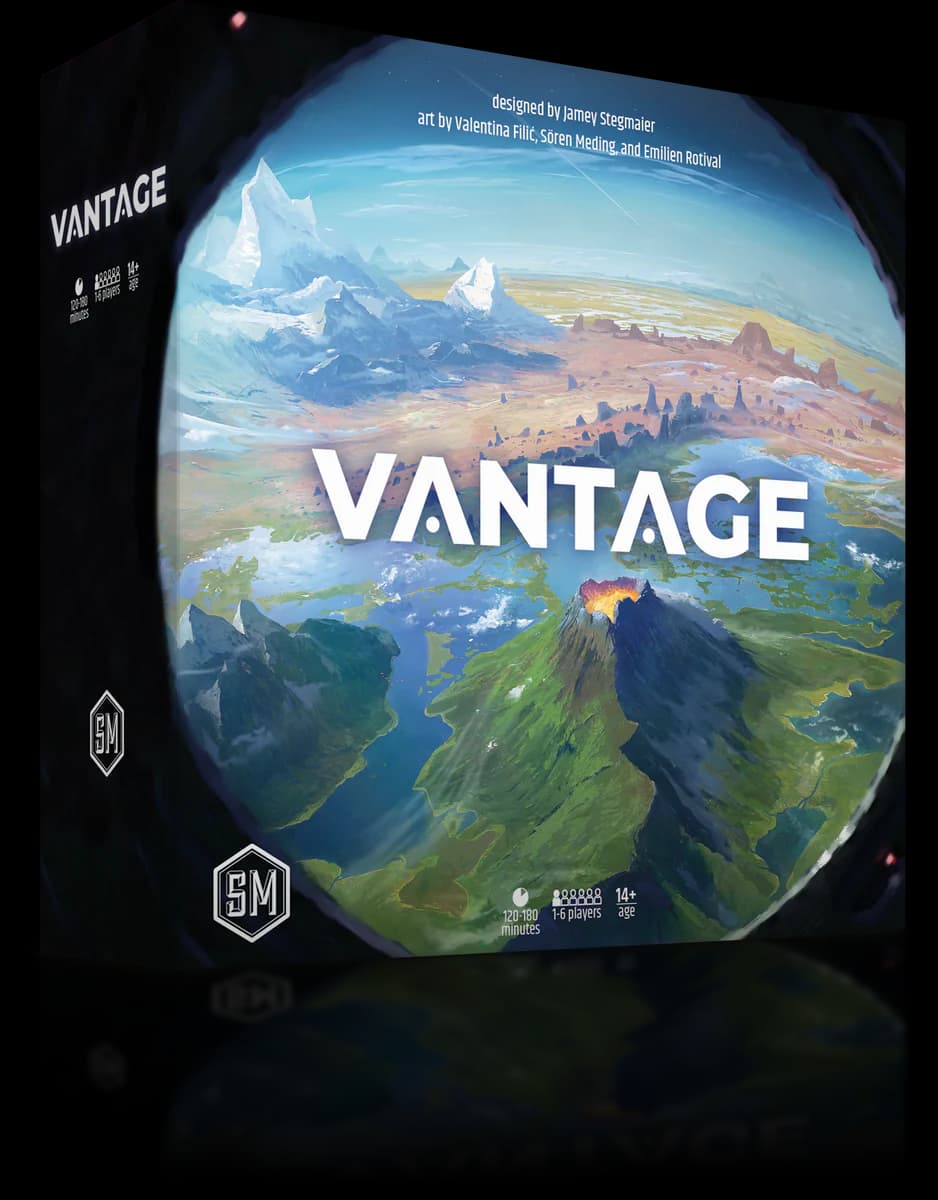
Vantage
2025In Vantage, players take on the roles of explorers who have survived a crash landing on a mysterious, uncharted planet. This is a cooperative, narrative-driven game of adventure where survival depends on teamwork, intuition, and a willingness to face the unknown. The primary goal is to navigate and understand this new world together, but victory can be achieved in multiple ways. The group might succeed by completing a challenging shared mission, or an individual player could achieve a personal destiny hidden from the others. For the ultimate triumph, a team can strive for an epic victory by accomplishing both their collective and private objectives in a single, memorable session. Each game is a complete, standalone story; while players' knowledge of the world will grow with each playthrough, there are no persistent campaign elements, making every game a fresh expedition.
The gameplay of Vantage is built around a truly unique core mechanic that emphasizes a first-person perspective and shared storytelling. On their turn, a player can only see their current location card, forcing them to rely on the descriptions and guidance of their teammates to build a mental map of the world. The action system introduces a fascinating layer of risk and reward: players choose a basic action—such as move, look, engage, or help—without knowing the specific costs or challenges involved. Another player then reads the outcome from one of eight expansive storybooks, revealing the consequences of the chosen action. Success is determined through dice rolls, where players must strategically manage their challenge dice, mitigating negative results by placing them onto a 3x3 grid on their character and equipment cards. This creates a compelling loop of making intuitive choices, facing unexpected narrative twists, and collaboratively solving the problems that arise.
Vantage's appeal lies in its massive, open world and the genuine sense of discovery it fosters. With over 400 double-sided location cards creating more than 800 interconnected places to visit and over 900 other cards to uncover, the game promises immense replayability. No two journeys will ever be the same. The innovative first-person viewpoint and the blind action-selection mechanic create a tense and immersive experience that is different from typical exploration games. It's not just about moving a pawn on a map; it's about communicating effectively, trusting your teammates, and making gut decisions that have real, story-altering consequences. Designed by Jamey Stegmaier, the game skillfully balances accessible rules with deep strategic choices, offering a rich, thematic adventure that is both a compelling puzzle and an unforgettable story you create together.
1-6 150m⚖️ 3.3
RANK #225
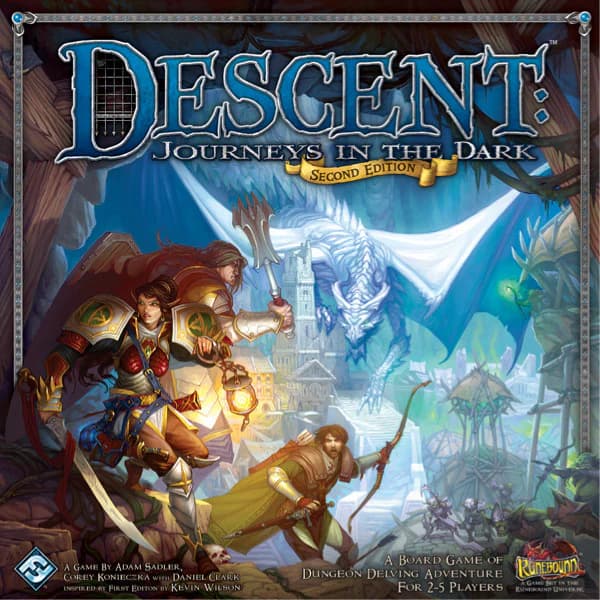
Descent: Journeys in the Dark (Second Edition) is a seminal board game that immerses players in the high-fantasy world of Terrinoth for an epic, one-versus-many dungeon-crawling adventure. In this asymmetrical contest, one player assumes the role of the treacherous Overlord, commanding an army of monsters and springing deadly traps from the shadows. The other players (up to four) form a courageous band of heroes, each with unique skills and abilities, who must work together to complete the objectives of a given quest. The game is scenario-driven, with each quest forming a chapter in a larger, branching campaign narrative. Success or failure in one encounter can have tangible consequences on the next, creating a dynamic and evolving story where the heroes strive for victory against the Overlord's nefarious plans.
The gameplay unfolds over a series of rounds, with heroes taking their turns first. Each hero can perform two actions, such as moving across the modular, tile-based map, attacking a monster, or using a special skill. Combat is a highlight of the experience, resolved through a custom dice-pool system. Players roll dice determined by their character's equipment and abilities, looking for symbols representing damage, range, and special 'surges.' These surges can be spent to trigger powerful effects, adding a layer of tactical decision-making to every attack. After the heroes have acted, the Overlord takes their turn, playing cards from a unique deck to activate monster groups, summon reinforcements, and unleash unexpected events to wear down the heroes and achieve their own secret objectives.
What makes Descent a beloved classic is its deep sense of progression and the escalating arms race that develops over a campaign. Between quests, both sides grow stronger. Heroes earn experience to learn new skills and spend gold on powerful new weapons and armor, customizing their characters to fit their playstyle. Simultaneously, the Overlord also gains experience, which is used to purchase more potent Overlord cards, unlocking deadlier plots and monsters. This persistent development ensures that the challenge constantly escalates, making each session feel meaningful. The combination of tactical combat, rich character customization, and an emergent, player-driven narrative provides a highly replayable and deeply engaging experience for any group that loves adventure and strategy.
2-5 120m⚖️ 3.2