Strategy Games
Browse all Strategy board games in the Meeple Pulse database.
Styles
Themes
AbstractAdventureAncientAnimalsArtBusinessCard GameCo-operativeComic BookCooperativeCrimeEconomicEnvironmentalismExplorationFantasyHistoricalHorrorHumorIntrigueLiteraryMagicMarvelMedievalModernMuseumMysteryMythologyNatureNauticalPoliticalPress Your LuckSatireSci-FiSocial CommentarySocial InteractionSpaceSuperheroesThematicTravelWarWesternWord-Guessing
Mechanics
3D PlacementActingAction / DexterityAction DraftingAction Point AllowanceAction Point Allowance SystemAction Point SystemAction PointsAction ProgrammingAction QueueAction RetrievalAction SelectionAction/EventAlliancesAlternate ActivationApp-AssistedApp-DrivenArea ControlArea InfluenceArea MajorityArea Majority / InfluenceArea MovementArgumentationAsymmetricAsymmetric FactionsAsymmetric GameAsymmetric PowersAsymmetrical PowersAuction & BiddingAuction/BiddingAuctioningBag BuildingBettingBetting and BluffingBetting and WageringBetting and WagersBiddingBingoBlind BiddingBluffingCampaign / Battle Card DrivenCampaign / LegacyCampaign / Legacy GameCampaign / Mission-basedCampaign / ScenariosCampaign GameCampaign PlayCard DraftingCard DrawingCard DrivenCard Driven ActionCard Driven CombatCard Driven Dice AllocationCard Driven MovementCard ManagementCard PlayCard Play / Hand ManagementCard Play Conflict ResolutionCard SheddingCard-Driven MovementCharacter CreationCharacter ProgressionChit-Pull SystemCo-op PlayCo-operative GameCo-operative PlayCode-breakingCombat ResolutionCombo ChainCommand CardsCommodity SpeculationCommunication LimitsContract FulfillmentContractsCooperative GameCooperative GameplayCooperative PlayCooperative Trick-takingDebateDeck BuildingDeck ConstructionDeck, Bag, and Pool BuildingDeck-BuildingDeductionDexterityDice DraftingDice PlacementDice RollingDiplomatic InfluenceDraftingDynamic Battle SystemEnclosureEnd Game BonusesEngine BuildingEngine-BuildingEscape RoomEvent DrivenExplorationFarmingFlip and WriteFollowFollow ActionGrid CoverageGrid MovementHand ManagementHex-and-CounterHexagon GridHidden MovementHidden RolesI Cut You ChooseIncomeInfluence / Area MajorityLadder ClimbingLegacyLegacy ElementsLegacy GameLegacy SystemLimited CommunicationLine DrawingLine of SightMancalaMap MovementMarketMarket DraftingMarket ManipulationMarket MechanicMarket SpeculationMatchingMeasurement MovementMemoryMission ObjectivesModular BoardModular Board ConstructionMovement TemplatesMulti-Use CardsMulti-use CardsMultiple ScenariosMust FollowNarrative ChoiceNarrative Choice / ParagraphNegotiationNegotiation MechanicsNetwork & Route BuildingNetwork BuildingNetwork and Route BuildingOne vs ManyOne vs. ManyOpen DraftingPaper-and-PencilPartnershipsPattern BuildingPattern RecognitionPick-up and DeliverPlayer EliminationPlayer InteractionPlayer JudgePoint SaladPoint to Point MovementPolyominoesPush Your LuckPush-Your-LuckPuzzlePuzzle-LikePuzzle-SolvingRaceReal-TimeRecipe FulfillmentResource ManagementRole PlayingRole SelectionRoll / Spin and MoveRondelRoute BuildingRoute-BuildingRoute/Network BuildingSanity SystemScenario / Campaign PlayScenario / Mission / Campaign GameScenario / Mission FunctionSecret Unit DeploymentSemi-Cooperative GameSet CollectionSheddingSimulationSimultaneous ActionSimultaneous Action SelectionSimultaneous Hidden AllocationSocial DeductionSocial InteractionSolo / Solitaire GameSpace ExplorationStat Check / Skill CheckStock HoldingStorytellingStrategic PlanningTableau BuildingTactical Decision-MakingTake ThatTargeted CluesTeam PlayTeam-Based GameTeam-Based GuessingTeamworkTech TreesTech Trees / Tech TracksTechnology & Armament TracksTechnology TreeTension & Aggression TracksTile DraftingTile LayingTile PlacementTime TrackTime TravelTower DefenseTrack MovementTradingTrick-takingTug of WarTurn Order: PassTurn Order: Stat-BasedUnit PlacementVariable Phase OrderVariable Player PowersVariable Set-upVariable SetupVictory Point TracksVotingWord AssociationWord GameWord GuessingWord-GuessingWord-guessingWordplayWorker Placement
RANK #75
The White Castle
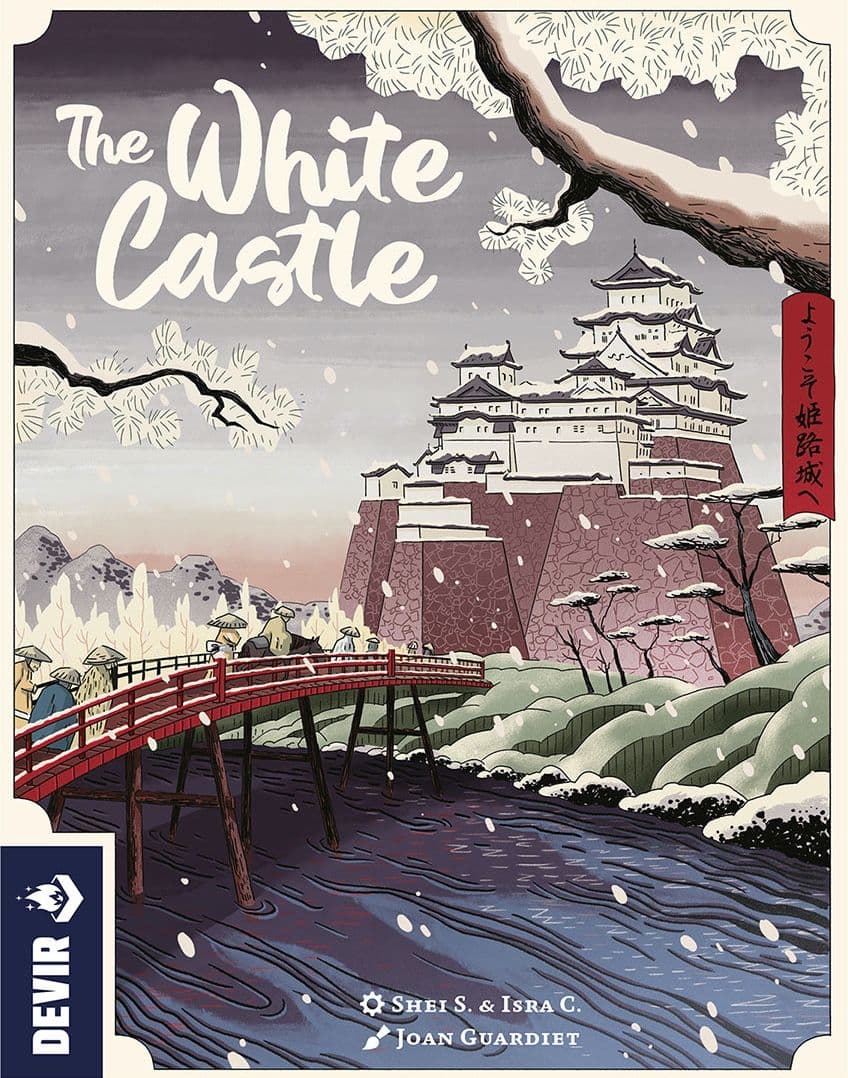
2023Set in the rich historical era of 1761 feudal Japan, 'The White Castle' invites players to step into the roles of ambitious rival clan leaders. Your ultimate objective is to earn the favor of Daimyo Sakai Tadakiyo and amass political influence within the stunning walls of Himeji Castle, famously known as the White Heron Castle. As you navigate the intricate social hierarchies and resource economies of the period, you must strategically manage your clan's assets to outmaneuver your opponents. Every decision carries weight as you seek to maximize your standing in the royal court, carefully balancing the needs of your people against your aspirations for power and prestige.
The gameplay revolves around a remarkably tight and unforgiving structure: the entire game unfolds over a mere three rounds. In each round, players draft exactly three dice, meaning you are granted only nine core actions throughout the entire game session. This fascinating limitation transforms the experience into a deeply strategic puzzle of engine building and extreme efficiency. Dice of three different colors are rolled and arranged along striking three-dimensional cardboard bridges. When drafting, you must select either the highest or lowest value die from the bridge's edges. You then place this die onto various action spaces, paying or earning coins based on the difference between the die's value and the space's requirement. Taking lower-value dice strategically triggers your personal lantern action, establishing a scaling engine of bonuses to propel your future turns.
Utilizing these drafted dice, players engage in a specialized form of worker placement. By spending tracked resources like food, iron, and precious pearls, you deploy three distinct types of clan members across the board. Gardeners cultivate the grounds for immediate rewards and end-of-round income, courtiers ascend the social ladder within the Room of the Thousand Carpets for pivotal action cards, and warriors secure the training grounds to act as powerful endgame multipliers. Your final score hinges on how brilliantly you synthesize these diverse avenues of influence into a cohesive strategy before the time inevitably runs out.
Board game enthusiasts praise 'The White Castle' for its brilliant juxtaposition of an ultra-compact footprint with genuinely heavy, brain-burning decision-making. As a standout entry in Devir Games' acclaimed small box Euro line, it delivers the strategic depth of a massive big-box game in a fraction of the space and time. The pressure of the nine-turn limitation forces players to constantly seek out masterful, cascading combo turns. Paired with the gorgeous, vibrant artwork heavily inspired by traditional Japanese ukiyo-e prints, this beautifully crafted puzzle offers immense replayability and remains highly engaging from the first drafted die to the final scoring phase.
1-4 80m⚖️ 3.0

RANK #261
Coimbra
2018Step into the vibrant heart of Portugal during its golden Age of Discovery in Coimbra, a masterfully designed strategy game where players assume the roles of heads of the city's most influential houses. Your goal is to amass the most prestige and secure your family's legacy as the most prominent in all of Portugal. This is achieved by carefully currying favor with the city's most powerful citizens—clerics, scholars, merchants, and councilmen—as well as funding ambitious new voyages and supporting the local monasteries. Every decision is a calculated risk, a bid for influence in a city teeming with opportunity. Victory points are the ultimate measure of success, earned through a variety of avenues, demanding a flexible and forward-thinking strategy to outmaneuver your rivals.
The gameplay of Coimbra revolves around a clever and multi-faceted dice-drafting mechanism that serves as the engine for all your actions. Each round, players select dice from a central pool. The value of a chosen die dictates the turn order for actions and the price you'll pay, while its color determines which of the four main influence tracks you'll benefit from. These dice are then used to acquire powerful character cards from different city districts, each offering unique abilities, immediate resources, or crucial end-game scoring bonuses. As you gain characters, you'll advance on the corresponding influence tracks, which provide income in the form of coins, guards, pilgrim movements, and victory points. This intricate web of choices forces players to constantly evaluate the opportunity cost of every die they select.
Coimbra is highly regarded for the elegant way its systems interlock, creating a deeply engaging and satisfying puzzle. The dual nature of the dice—where both color and value are critically important—presents a fresh challenge on every turn, rewarding players who can best adapt their plans. With numerous paths to victory, from specializing in lucrative voyages to building a powerful engine from synergistic character cards and diploma sets, the game offers exceptional replayability. It strikes a perfect balance, being accessible enough for those new to mid-weight Eurogames while offering the strategic depth and tight competition that seasoned players crave. Its compelling decision-making and rewarding gameplay loop make it a standout title in the dice-drafting genre.
2-4 90m⚖️ 3.3

RANK #273
La Granja
2014Set on the picturesque island of Mallorca, 'La Granja' invites players to take the reins of their very own small farm estates located near the tranquil Alpich pond, just outside the quaint village of Esporles. As ambitious agricultural entrepreneurs, your primary objective over the course of six calculated rounds is to expand your property, cultivate lucrative crops like olives, grain, and grapes, and successfully breed a thriving population of pigs. The ultimate goal is to process these raw materials and deliver your valuable commodities directly to the local village market. By completing these deliveries and managing your rural enterprise more efficiently than your rivals, you will amass Victory Points and claim the prestigious, titular rank of 'La Granja' for your sprawling estate.
Often described by enthusiasts as a brilliant 'Eurogame potpourri,' the design masterfully weaves together several beloved mechanics into a highly cohesive and challenging experience. The standout feature is its ingenious implementation of multi-use cards. Every card drawn can be tucked under one of the four edges of your personal player board, fundamentally changing its function. Slotted on the left, it expands your fields; on the right, it upgrades farm extensions for pig capacity and income; at the top, it becomes a market barrow contract; and at the bottom, it acts as a specialized helper providing powerful ongoing abilities. This card-driven engine building is perfectly complemented by a communal dice drafting system. Each round, a shared pool of dice is rolled, and players must tactically draft them to execute core actions like upgrading resources or gaining coins, adding a beautifully calculated layer of unpredictability to the core loop.
Beyond the personal farm boards, the central village market creates a fierce, competitive arena for area control and influence. During the critical Transportation Phase, players secretly choose donkey tiles to dictate their delivery capacity and advancement on the crucial Siesta Track, which dictates future turn order. Delivering goods fulfills barrow contracts and places your hexagonal markers onto the main board. Completing higher-value deliveries allows you to aggressively bump your opponents' markers out of the village spaces, turning a traditionally solitary farming theme into a highly interactive scramble for dominance and passive scoring. This brilliant friction, combined with the game's deep, crunchy resource management and rewarding learning curve, is exactly why 'La Granja' remains a critically acclaimed heavyweight strategy staple.
1-4 120m⚖️ 3.3
RANK #288
Tiletum
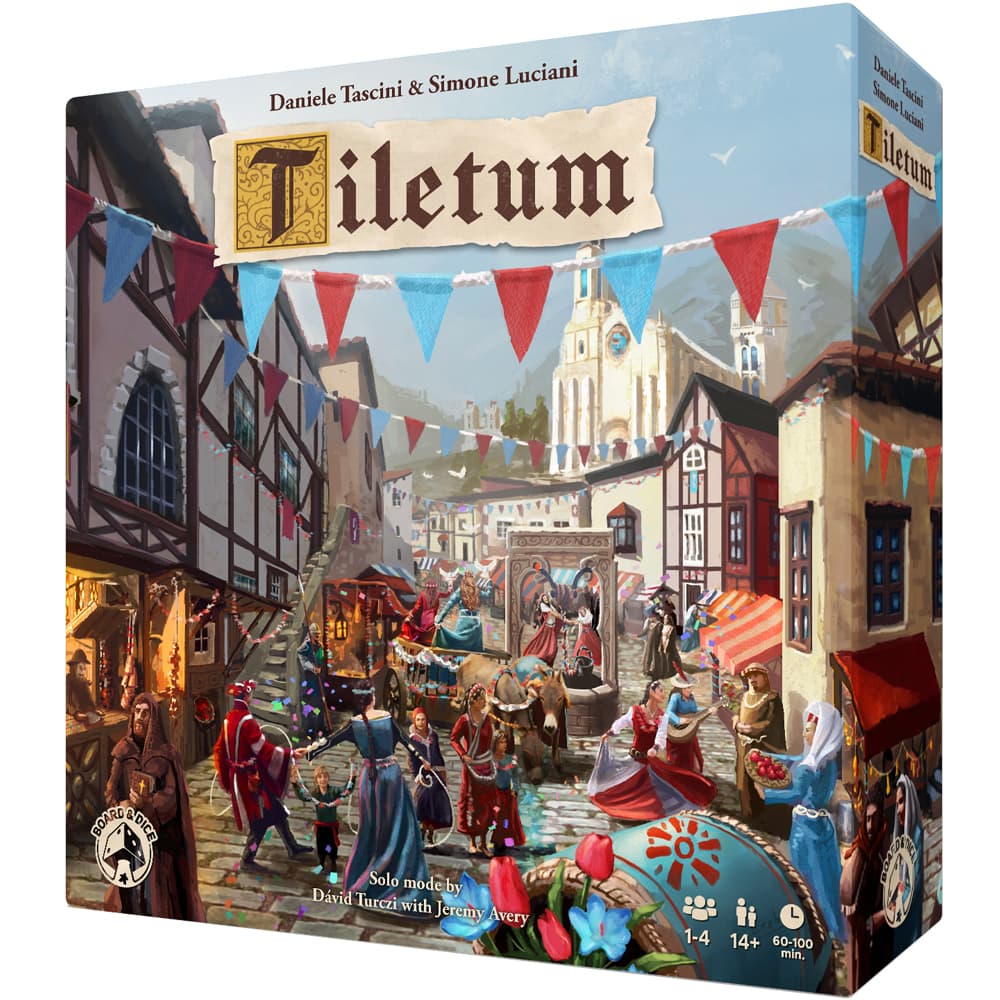
2022Tiletum is a sophisticated strategy board game that transports players to the bustling commerce centers of Renaissance Europe. As wealthy merchants, players strive to amass the greatest amount of prestige over the course of four intense rounds. The ultimate goal is to balance the logistics of international trade with the grandeur of architectural patronage. By traveling to different cities, players participate in legendary fairs, fulfill demanding trade contracts, and assist in the construction of iconic cathedrals. As a prominent entry in the celebrated 'T-series' from Board&Dice, the game rewards those who can master its intricate web of systems and outmaneuver their rivals in a race for historical influence.
The gameplay is driven by a central action wheel featuring an innovative 'inverse' dice mechanic that serves as the heart of the strategic engine. When drafting a die, the face value dictates the quantity of resources gained—such as gold, food, or stone—while the opposite side of the die determines the number of action points available to spend. This creates a fascinating tactical dilemma: do you take a '6' to fill your warehouses while sacrificing your ability to move, or take a '1' to perform five powerful actions with almost no materials? These actions allow you to move your architect and merchant across the continent, recruit specialists into your player board's rooms, and climb the King's track to avoid penalties and secure priority in future turns.
What truly sets Tiletum apart and explains its high acclaim is the sheer density of satisfying 'combos' players can trigger. A single move can lead to a chain reaction where completing a contract provides a bonus tile, which in turn allows for a free character placement, triggering a resource gain that helps build a trading house. This interconnectedness makes every decision feel impactful and rewarding. Furthermore, the variable setup of fairs and scoring tiles ensures high replayability, forcing players to adapt their route-building and resource-gathering strategies every session. It is a masterful blend of spatial positioning and resource management that offers a deep, heavy strategy experience while remaining surprisingly intuitive and smooth to play.
1-4 100m⚖️ 3.8
RANK #306
Pulsar 2849
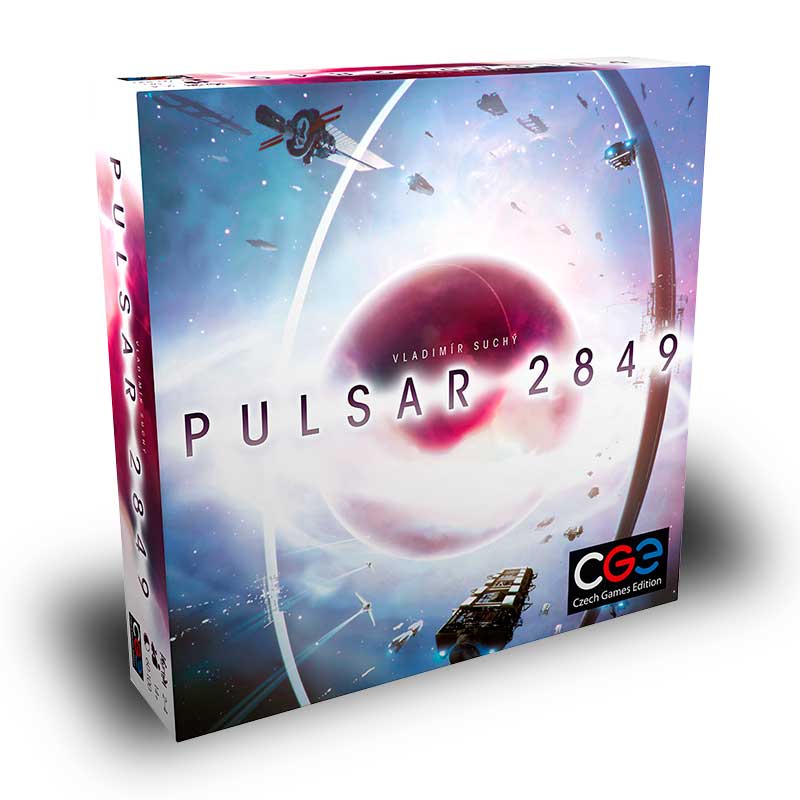
2017Pulsar 2849 is a sophisticated space-faring strategy game that transports players to the year 2849, an era where humanity has finally unlocked the immense power of deep-space pulsars. Developed by renowned designer Vladimír Suchý, this title invites two to four players to participate in a high-stakes celestial gold rush across the galaxy. The primary objective is to develop the most efficient energy distribution network in a vast star cluster. Over the course of exactly eight rounds, participants navigate a modular star board, claiming pulsars, activating energy transmitters, and exploring distant planetary systems to secure their place as the galaxy's premier energy mogul. It is a quintessential Euro-style 'point salad' experience where every individual action contributes to a grander scoring engine.
The heartbeat of the game is its innovative dice drafting system, which revolves around a central 'median' mechanic. During each round, a pool of dice is rolled and sorted by value, with a marker placed on the middle die. When selecting a die, players must weigh the raw value of the die against its position relative to that median. Choosing a high-value die allows for more powerful actions but forces the player's marker down on the initiative and engineering tracks, potentially sacrificing turn order or vital resources for the future. Conversely, lower dice values offer weaker actions but grant beneficial movement on these tracks. Drafted dice are then used to survey the galaxy, harness pulsars by installing and spinning gyrodynes, patenting new technologies in a tiered tree, or completing complex HQ projects. This creates a tense balancing act where players must manage their trajectory on resource tracks while building a lucrative scoring engine.
What makes Pulsar 2849 particularly beloved among strategy enthusiasts is its brilliant mitigation of luck. While it is fundamentally a dice-driven game, the median mechanic ensures that every roll—no matter how high or low—presents a strategic opportunity rather than a frustration. The game is praised for its immense replayability, driven by variable technology boards and different HQ setups that shift priorities in every session. The interconnectedness of the systems—where a ship's movement might trigger a transmitter which in turn completes a project—provides a deeply satisfying sense of momentum. For fans of heavy strategy games, it offers a dense, rewarding puzzle that rewards forward-thinking and adaptability without the aggressive conflict found in traditional space operas, focusing instead on efficiency and clever optimization.
2-4 80m⚖️ 3.6

Sagrada
2007Sagrada is a visually stunning dice-drafting game where players take on the role of artisans competing to construct the most beautiful stained-glass window for the Sagrada Família. The objective is to achieve the highest score by strategically placing colorful translucent dice onto a personal player board, which represents a window frame. Each player works with a unique pattern card that dictates specific placement requirements, ensuring that every session offers a fresh set of challenges. By balancing personal secret goals, shared public objectives, and strict construction rules, players must meticulously plan their moves to create a masterpiece that captures the essence of light and color.
The core of the game revolves around a drafting mechanic where a pool of colored dice is rolled each round. Players take turns selecting a single die and positioning it on their 4x5 grid, following a "snake draft" order where the last player picks twice in a row. Placement is governed by strict adjacency rules: dice cannot be placed next to others of the same color or value (orthogonally). Furthermore, the pattern cards inserted into the player boards often feature specific restrictions, requiring certain spaces to be filled with exact colors or shades. To navigate these constraints, players can spend favor tokens to utilize special Tool cards, which provide powerful abilities like moving already-placed dice, re-rolling, or ignoring certain placement rules. This interplay between the luck of the roll and the tactical use of tools creates a satisfying, low-stress puzzle-solving experience.
Sagrada is widely beloved for its accessibility and its breathtaking table presence. The high-quality components, particularly the vibrant, jewel-like dice, mimic the look of real stained glass when they catch the light, making it a favorite for both casual and serious gamers. Beyond its aesthetics, the game offers a deep tactical experience that rewards foresight and adaptability. Because the available tools and scoring objectives change every game, the replayability is exceptionally high. It manages to feel like a relaxing, meditative activity while simultaneously challenging the brain with its spatial constraints and optimization puzzles, firmly establishing itself as a modern classic in the abstract strategy genre.
1-4 45m⚖️ 2.3