Deck Building Games
Browse all Deck Building board games in the Meeple Pulse database.
Styles
Themes
AbstractAdventureAncientAnimalsArtBusinessCard GameCo-operativeComic BookCooperativeCrimeEconomicEnvironmentalismExplorationFantasyHistoricalHorrorHumorIntrigueLiteraryMagicMarvelMedievalModernMuseumMysteryMythologyNatureNauticalPoliticalPress Your LuckSatireSci-FiSocial CommentarySocial InteractionSpaceSuperheroesThematicTravelWarWesternWord-Guessing
Mechanics
3D PlacementActingAction / DexterityAction DraftingAction Point AllowanceAction Point Allowance SystemAction Point SystemAction PointsAction ProgrammingAction QueueAction RetrievalAction SelectionAction/EventAlliancesAlternate ActivationApp-AssistedApp-DrivenArea ControlArea InfluenceArea MajorityArea Majority / InfluenceArea MovementArgumentationAsymmetricAsymmetric FactionsAsymmetric GameAsymmetric PowersAsymmetrical PowersAuction & BiddingAuction/BiddingAuctioningBag BuildingBettingBetting and BluffingBetting and WageringBetting and WagersBiddingBingoBlind BiddingBluffingCampaign / Battle Card DrivenCampaign / LegacyCampaign / Legacy GameCampaign / Mission-basedCampaign / ScenariosCampaign GameCampaign PlayCard DraftingCard DrawingCard DrivenCard Driven ActionCard Driven CombatCard Driven Dice AllocationCard Driven MovementCard ManagementCard PlayCard Play / Hand ManagementCard Play Conflict ResolutionCard SheddingCard-Driven MovementCharacter CreationCharacter ProgressionChit-Pull SystemCo-op PlayCo-operative GameCo-operative PlayCode-breakingCombat ResolutionCombo ChainCommand CardsCommodity SpeculationCommunication LimitsContract FulfillmentContractsCooperative GameCooperative GameplayCooperative PlayCooperative Trick-takingDebateDeck BuildingDeck ConstructionDeck, Bag, and Pool BuildingDeck-BuildingDeductionDexterityDice DraftingDice PlacementDice RollingDiplomatic InfluenceDraftingDynamic Battle SystemEnclosureEnd Game BonusesEngine BuildingEngine-BuildingEscape RoomEvent DrivenExplorationFarmingFlip and WriteFollowFollow ActionGrid CoverageGrid MovementHand ManagementHex-and-CounterHexagon GridHidden MovementHidden RolesI Cut You ChooseIncomeInfluence / Area MajorityLadder ClimbingLegacyLegacy ElementsLegacy GameLegacy SystemLimited CommunicationLine DrawingLine of SightMancalaMap MovementMarketMarket DraftingMarket ManipulationMarket MechanicMarket SpeculationMatchingMeasurement MovementMemoryMission ObjectivesModular BoardModular Board ConstructionMovement TemplatesMulti-Use CardsMulti-use CardsMultiple ScenariosMust FollowNarrative ChoiceNarrative Choice / ParagraphNegotiationNegotiation MechanicsNetwork & Route BuildingNetwork BuildingNetwork and Route BuildingOne vs ManyOne vs. ManyOpen DraftingPaper-and-PencilPartnershipsPattern BuildingPattern RecognitionPick-up and DeliverPlayer EliminationPlayer InteractionPlayer JudgePoint SaladPoint to Point MovementPolyominoesPush Your LuckPush-Your-LuckPuzzlePuzzle-LikePuzzle-SolvingRaceReal-TimeRecipe FulfillmentResource ManagementRole PlayingRole SelectionRoll / Spin and MoveRondelRoute BuildingRoute-BuildingRoute/Network BuildingSanity SystemScenario / Campaign PlayScenario / Mission / Campaign GameScenario / Mission FunctionSecret Unit DeploymentSemi-Cooperative GameSet CollectionSheddingSimulationSimultaneous ActionSimultaneous Action SelectionSimultaneous Hidden AllocationSocial DeductionSocial InteractionSolo / Solitaire GameSpace ExplorationStat Check / Skill CheckStock HoldingStorytellingStrategic PlanningTableau BuildingTactical Decision-MakingTake ThatTargeted CluesTeam PlayTeam-Based GameTeam-Based GuessingTeamworkTech TreesTech Trees / Tech TracksTechnology & Armament TracksTechnology TreeTension & Aggression TracksTile DraftingTile LayingTile PlacementTime TrackTime TravelTower DefenseTrack MovementTradingTrick-takingTug of WarTurn Order: PassTurn Order: Stat-BasedUnit PlacementVariable Phase OrderVariable Player PowersVariable Set-upVariable SetupVictory Point TracksVotingWord AssociationWord GameWord GuessingWord-GuessingWord-guessingWordplayWorker Placement
RANK #78
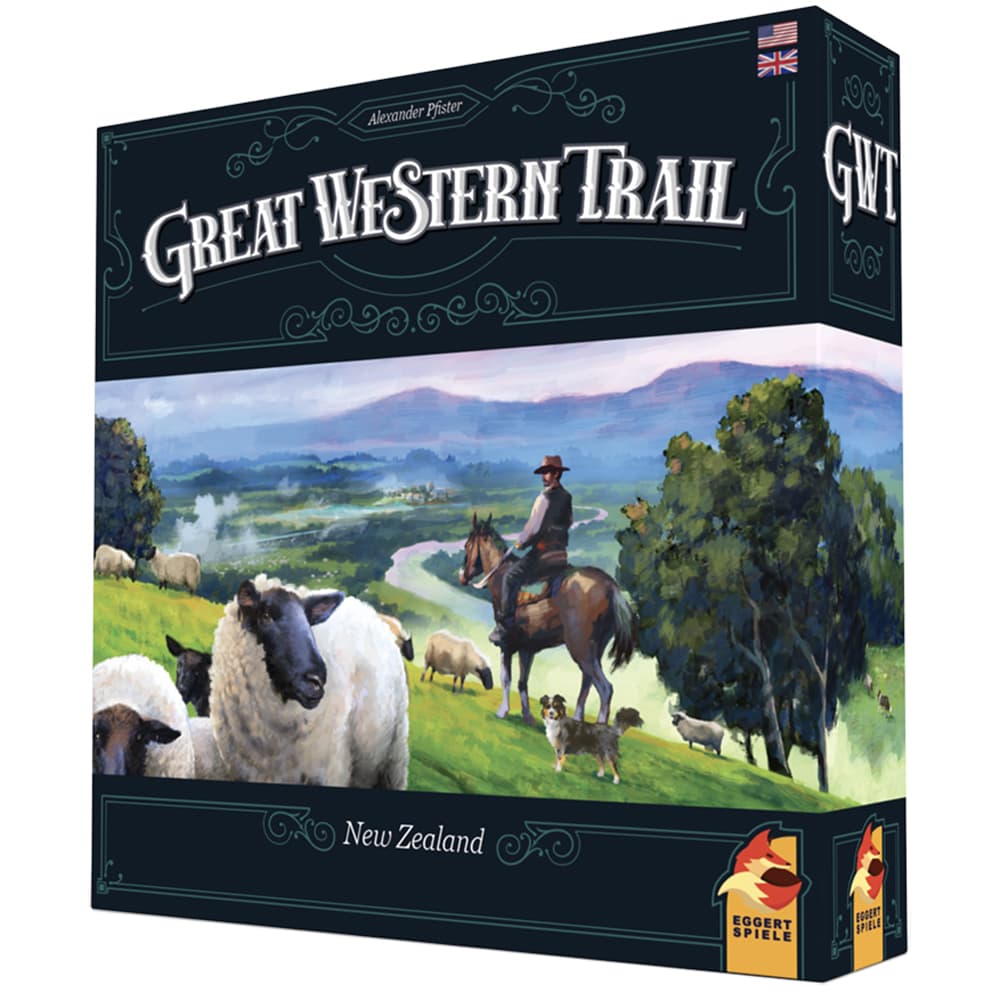
Embark on a new journey in the acclaimed Great Western Trail trilogy with *Great Western Trail: New Zealand*. This standalone adventure, designed by Alexander Pfister, transports players to the stunning landscapes of the 19th-century South Island. You assume the role of a "runholder," a sheep station owner striving to build a prosperous enterprise. Your primary objective is to skillfully manage your flock, enhance your sheep breeds, and deliver them to Wellington for export. Along the way, you'll develop your pastoral estate, hire a capable staff, and navigate the burgeoning trade routes of the era. The player who amasses the most victory points by creating the most successful and renowned sheep-rearing operation will emerge as the victor in this intricate economic simulation.
The game masterfully blends the core mechanics of its predecessors with innovative new elements. At its heart is a combination of deck-building and a rondel-like movement system. Players guide their runholder piece along a branching path, stopping at various locations to perform actions. These actions are diverse, allowing you to hire specialized workers like shepherds, builders, and sailors, construct new buildings that offer unique abilities, improve your personal player board, and purchase higher-quality sheep cards for your deck. A key new feature is the shearing mechanic; this allows players to gain immediate income from their sheep's wool, offering a crucial alternative to selling the livestock itself. Furthermore, the familiar railroad is replaced by a dynamic sea routes board, where you must dispatch your ship to establish trade, claim valuable bonuses, and unlock powerful end-game scoring opportunities.
The strategic depth and high replayability are what make this installment a standout experience. *Great Western Trail: New Zealand* offers numerous interwoven paths to victory, ensuring that no two games feel alike. One player might focus on crafting a lean, powerful deck of premium sheep for massive payouts in Wellington. Another might pursue an aggressive building strategy, constructing a network of structures that provide powerful actions while potentially hindering opponents' progress. A third player could devote their efforts to mastering the sea routes and leveraging the Pathfinder track for key advantages. This wealth of meaningful decisions, combined with the fresh tactical puzzles introduced by shearing and sea trade, makes the game a deeply engaging and rewarding challenge for fans of medium-to-heavy strategy games.
1-4 115m⚖️ 4.0
BoxNo Cover Art
RANK #88
In Mechs vs. Minions, players take on the roles of either mighty mechs or swarms of minions in a battle for supremacy. The game is set in a fantasy world where these two forces clash, and players must use their strategic thinking to outmaneuver their opponents. The goal of the game is to be the first player to eliminate all of their opponent's units, whether they are mechs or minions.
Gameplay involves moving your units around the board, attacking enemy units, and using special abilities to gain an advantage. Players can also collect resources and use them to upgrade their units and improve their chances of winning. The game features a unique mechanic where players can transform their mechs into more powerful forms, giving them new abilities and increased strength.
One of the key aspects of Mechs vs. Minions is its thematic appeal. The game's setting and artwork are designed to evoke a sense of fantasy and adventure, drawing players in with its colorful characters and immersive world. At the same time, the game's mechanics provide a deep level of strategy and complexity, making it appealing to fans of tactical games.
Overall, Mechs vs. Minions is a fun and engaging game that offers something for everyone. Its unique blend of strategy and theme makes it an excellent choice for players looking for a new challenge.
2-4 60m⚖️ 3.0
BoxNo Cover Art
RANK #91
Revive
2022In Revive, players take on the role of tribal leaders in a post-apocalyptic world, emerging after 5,000 years of a global deep freeze. The world you once knew is gone, buried under ice and forgotten by time. Your objective is to guide your people from their subterranean shelters back to the surface to reclaim this frozen wasteland. This involves exploring the vast, unknown landscapes, re-establishing a presence for your tribe, and rediscovering long-lost technologies that are crucial for survival and advancement. The game is a competitive struggle for dominance in this new dawn for humanity, where the player who most successfully rebuilds and accumulates the most victory points by the time the last major artifact is claimed will be declared the leader of the new world. It's a game of hope, exploration, and strategic rebuilding against a harsh, frigid backdrop.
The gameplay of Revive is a masterclass in medium-heavy Eurogame design, offering a rich and deeply strategic experience for one to four players. On their turn, a player performs two actions, which can be different or a repeat of the same one. The core actions revolve around managing your personal player board and interacting with the central game board. You can play multi-use cards into specific slots on your board to gain resources or activate powerful abilities. You may also spend resources to 'explore' the main board by flipping over large terrain tiles, revealing new opportunities and resources. Once explored, you can 'build' powerful buildings on this new territory, which provide ongoing benefits and help you advance on your personal machine track, a form of tech tree. Another key action is to 'populate' major locations with your tribe's meeples, which unlocks potent, permanent abilities unique to your faction. Central to the game's rhythm is the 'hibernate' action; instead of taking two standard actions, you can reset your board, retrieving all played cards and refreshing abilities, forcing a critical decision about timing and tempo each round.
Revive captivates players with its seamless integration of several popular mechanics into a cohesive and compelling whole. The blend of engine building, deck building, tech trees, and highly asymmetric variable player powers creates a puzzle with immense replay value. Each tribe feels distinct, offering different strategic pathways to victory from the very start. The tension between pushing your engine for just one more turn versus taking the crucial hibernation action to reset is a constant source of engaging decisions. What further sets Revive apart is its optional five-part campaign, which cleverly introduces new rules, components, and challenges over several plays. Once unlocked, this content can be permanently added to the base game, continually expanding the strategic landscape. For players who relish complex, low-interaction Eurogames with deep strategic choices, rewarding engine-building, and a strong sense of progression, Revive offers a sophisticated and unforgettable journey.
1-4 105m⚖️ 3.8
BoxNo Cover Art
RANK #98
One of the unique features of Clank! is its deck-building mechanic. Players start with a basic deck of cards, but as they progress through the game, they can collect new cards to add to their deck. This allows players to adapt to changing circumstances and develop strategies that suit their playstyle. The game also features a variety of theme-specific mechanics, such as the use of 'Clank' tokens to track noise levels and the inclusion of treasure cards with unique abilities.
m⚖️ 3.0
BoxNo Cover Art
RANK #106
Aeon's End
2016Aeon's End is a cooperative deck-building game for 1-4 players, where players work together to defend their village against an onslaught of monsters from the void. The game takes place in a fantasy world, where players must use their unique abilities and items to defeat the monsters and save their village.
The game consists of a series of rounds, each representing a night in the village. During each round, players draw cards from their deck, which can be used to attack monsters or defend against them. Players can also acquire new items and abilities by defeating monsters and collecting their loot.
One of the unique features of Aeon's End is its modular board, which consists of a series of tiles that are arranged randomly at the start of each game. This creates a different play experience every time, as players must adapt to the changing layout of the village and the monsters that come with it.
The game also includes a variety of monster types, each with their own strengths and weaknesses. Players must use strategy and teamwork to defeat these monsters and save their village.
1-4 60m⚖️ 3.0
RANK #133
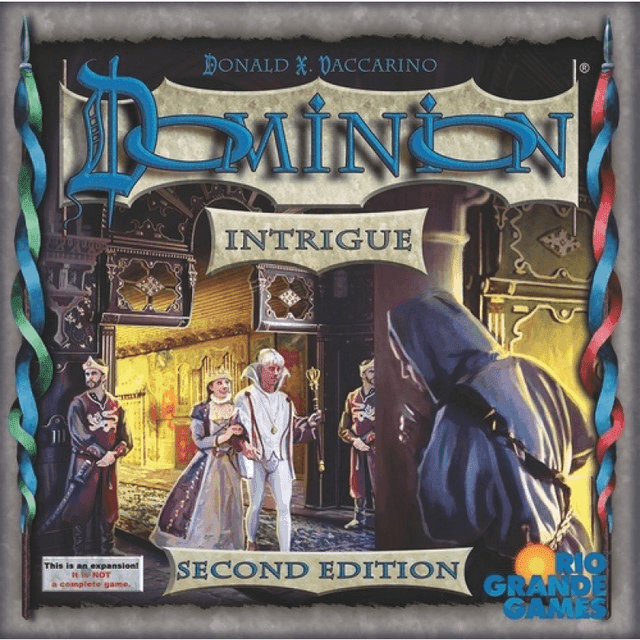
Dominion: Intrigue stands as the celebrated first expansion to the game that defined a genre. It can be played entirely on its own or seamlessly combined with the original base game and other expansions for endless variety. The objective remains the same: players compete to build the most prosperous and powerful kingdom, represented by the accumulation of Victory Point cards in their personal deck by the game's end. Starting with a meager and identical set of cards, each participant must strategically purchase cards from a shared central supply, crafting a unique deck that functions as their engine. This engine must be carefully balanced, generating wealth to acquire valuable provinces while simultaneously defending against the nefarious schemes of rival monarchs.
Gameplay in Intrigue retains the elegant 'ABC' turn structure of its predecessor: perform an Action, Buy a card, and Cleanup your hand to draw a new one. Where Intrigue carves its own identity is in its thematic focus on player choice and interaction. Many of its 26 new Kingdom cards present players with a dilemma, forcing a tactical decision between two powerful effects. The 'Steward' card, for example, lets a player choose to draw more cards, gain extra currency, or remove unwanted cards from their deck. This expansion also cleverly introduces hybrid-type cards, such as the 'Harem', which serves as both a Treasure card for buying power and a Victory card for end-game scoring. These dual-purpose cards help to solve the classic Dominion puzzle of when to start adding 'useless' Victory cards that can otherwise clog up a finely tuned deck.
What makes Intrigue an enduring favorite is the dramatic increase in direct player interaction and strategic depth it introduces. While the original game had attack cards, Intrigue's are often more subtle and choice-driven, leading to more engaging and dynamic confrontations. The constant decision-making required by the new card effects ensures that every turn is meaningful and no two games ever feel the same. It masterfully expands upon the core concepts of Dominion without adding burdensome rules, making it an ideal next step for players who have mastered the base set and a perfect, albeit slightly more complex, entry point for new players seeking a richer, more interactive deck-building experience.
2-4 30m⚖️ 2.4
BoxNo Cover Art
RANK #135
In Tainted Grail: The Fall of Avalon, players take on the roles of heroes from Arthurian legend as they navigate a treacherous world filled with mythical creatures and ancient magic. The game's goal is to be the first player to reach the legendary island of Avalon, but this will not be an easy task. Players must manage their characters' abilities and resources carefully, making strategic decisions about which quests to undertake and how to allocate their time and energy. As they journey through the land, players will encounter a variety of challenges and obstacles, including fierce battles with monsters and rival heroes who seek to thwart their progress.
The game's mechanics are designed to create a sense of immersion and engagement, drawing players into the world of Arthurian legend and challenging them to think strategically about how to achieve their goals. With its richly detailed setting and complex gameplay, Tainted Grail: The Fall of Avalon is an experience that will appeal to fans of fantasy and adventure games alike.
One of the key features of Tainted Grail: The Fall of Avalon is its modular board, which allows players to create a unique game world for each playthrough. This adds a high level of replayability to the game, as players can experiment with different combinations of quests and challenges to see how they affect the gameplay experience.
Overall, Tainted Grail: The Fall of Avalon is a challenging and rewarding game that offers something new and exciting for fans of fantasy and adventure games. Its richly detailed setting and complex gameplay make it an excellent choice for players who enjoy strategic decision-making and immersive storytelling.
1-4 60m⚖️ 3.5
BoxNo Cover Art
RANK #142
The Lord of the Rings: Journeys in Middle-earth is a cooperative board game for 1-4 players that immerses players in the world of J.R.R. Tolkien's classic novel. Players take on the roles of brave adventurers tasked with navigating treacherous landscapes, battling fearsome enemies, and solving puzzles to reach their ultimate goal: destroying the One Ring.
The game is set in a modular board system, where each player's journey is unique and shaped by their individual choices and actions. The game features a variety of mechanics, including exploration, puzzle-solving, and combat, which are all woven together to create an immersive and engaging experience.
One of the standout features of Journeys in Middle-earth is its thematic depth. Players must navigate the complexities of Middle-earth's geography, politics, and mythology, making it feel like a truly authentic experience for fans of the book or movie.
1-4 60m⚖️ 3.5
RANK #145
Dominion
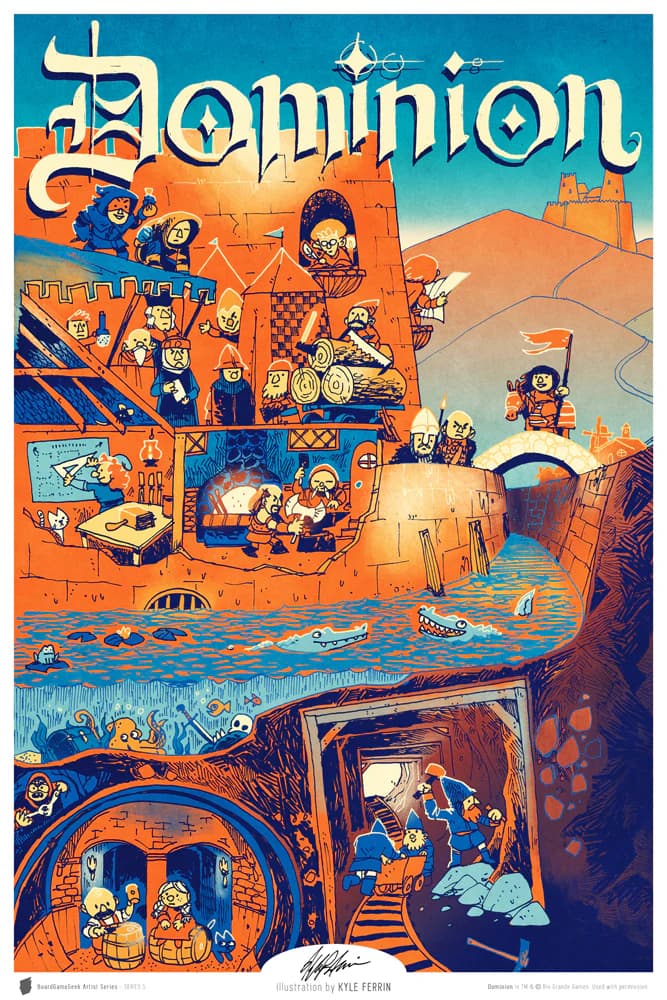
2008Step into the role of a monarch in Dominion, the revolutionary 2008 title that single-handedly created the deck-building genre. In this game, you are a ruler, like your parents before you, of a quaint and peaceful kingdom filled with rivers and evergreens. However, unlike them, you have aspirations of grandeur! You seek to expand your influence and forge the largest and most prosperous dominion of all. Players compete to accumulate the most victory points by the end of the game, which are primarily acquired by purchasing Estate, Duchy, and Province cards. Each player begins with an identical, humble deck of ten cards containing a few low-value Treasures and Estates. Your objective is to skillfully build upon this foundation, creating a well-oiled machine of a deck that can generate wealth and secure victory.
The gameplay is famously elegant, following a simple turn structure often called the 'A-B-C' loop: Action, Buy, and Cleanup. During your Action phase, you can play one Action card from your hand to perform special abilities, such as drawing more cards, gaining extra buys, or even attacking your opponents. In the Buy phase, you use the Treasure cards you've drawn to purchase new cards from a shared central supply. This supply, known as the Kingdom, consists of ten unique stacks of Action cards that are randomized each game, ensuring no two sessions are ever alike. Finally, in the Cleanup phase, you discard your entire hand and all cards played, then draw a fresh hand of five. When your draw pile is empty, your discard pile is shuffled to form a new one, now enriched with the powerful cards you recently acquired.
Dominion's enduring appeal lies in its brilliant fusion of simplicity and strategic depth. The game is celebrated for its immense replayability; the vast number of possible Kingdom card combinations creates an endless puzzle to solve. Players relish the challenge of discovering powerful synergies and building efficient 'engines' within their decks. A core tension drives every decision: do you acquire more powerful Action cards to improve your deck's function, or do you start buying Victory cards to secure your win? These victory cards are crucial for scoring but provide no abilities, effectively clogging your hand and slowing your engine down. This constant strategic trade-off, combined with its accessible rules and quick playtime, has cemented Dominion's status as a timeless classic and an essential gateway into the world of modern board games.
2-4 30m⚖️ 2.4
BoxNo Cover Art
RANK #149
Aeon's End: War Eternal is a cooperative deck-building game where players take on the roles of mages tasked with defending their world against an eternal war. The game features a unique mechanic called 'spellcrafting,' which allows players to combine different spells and abilities to create powerful magical effects. Players must work together to defeat the invading forces, using their combined magical powers to hold back the tide of darkness. As they progress through the game, players will encounter new challenges and obstacles, requiring them to adapt their strategy and work even more closely together to succeed.
1-4 60m⚖️ 3.5
BoxNo Cover Art
RANK #160
In Clank! In Space!, players take on the roles of thieves trying to steal valuable treasures from a spaceship while navigating its dangers and avoiding detection by the ship's security systems.
The game is played over several rounds, with each player starting with a hand of cards that represent their character's abilities and equipment. On each turn, players can choose to draw new cards, play cards from their hand to perform actions such as moving around the ship or attacking other players, or use special abilities to gain an advantage.
One of the key mechanics in Clank! In Space! is deck-building, where players can acquire new cards and upgrade their existing ones to improve their chances of success. However, this also means that players must carefully manage their resources and make strategic decisions about which cards to play and when.
Another important aspect of the game is its thematic elements, which are heavily focused on space exploration and adventure. The game's artwork and design are highly detailed and immersive, drawing players into the world of the spaceship and its inhabitants.
2-4 45m⚖️ 3.0
BoxNo Cover Art
RANK #162
The 7th Continent is a cooperative board game designed for 1-4 players. Players take on the roles of explorers who are stranded on a mysterious continent, and their goal is to survive and uncover the secrets of this unforgiving environment.
Each player has a unique set of skills and abilities that they can use to navigate the dangers of the continent. The game board represents the continent, which is divided into different regions, each with its own challenges and opportunities. Players must work together to explore these regions, gather resources, and build shelter.
As players progress through the game, they will encounter various events and challenges that will test their skills and push them to make difficult decisions. The game features a unique mechanism called 'survival', which simulates the physical and mental strain of surviving on the continent. Players must manage their resources carefully, as running out of food, water, or other essential supplies can have severe consequences.
One of the key mechanics in The 7th Continent is the use of 'tiles' to represent different locations and events on the board. These tiles are drawn from a deck and placed on the board, creating a unique landscape for each game. Players must navigate this ever-changing environment, using their skills and abilities to overcome obstacles and achieve their goals.
The 7th Continent is a challenging and immersive game that requires players to think strategically and work together effectively. It's an excellent choice for fans of cooperative games and those who enjoy exploring new worlds and overcoming difficult challenges.
1-4 60m⚖️ 3.5