Strategy Games
Browse all Strategy board games in the Meeple Pulse database.
Styles
Themes
AbstractAdventureAncientAnimalsArtBusinessCard GameCo-operativeComic BookCooperativeCrimeEconomicEnvironmentalismExplorationFantasyHistoricalHorrorHumorIntrigueLiteraryMagicMarvelMedievalModernMuseumMysteryMythologyNatureNauticalPoliticalPress Your LuckSatireSci-FiSocial CommentarySocial InteractionSpaceSuperheroesThematicTravelWarWesternWord-Guessing
Mechanics
3D PlacementActingAction / DexterityAction DraftingAction Point AllowanceAction Point Allowance SystemAction Point SystemAction PointsAction ProgrammingAction QueueAction RetrievalAction SelectionAction/EventAlliancesAlternate ActivationApp-AssistedApp-DrivenArea ControlArea InfluenceArea MajorityArea Majority / InfluenceArea MovementArgumentationAsymmetricAsymmetric FactionsAsymmetric GameAsymmetric PowersAsymmetrical PowersAuction & BiddingAuction/BiddingAuctioningBag BuildingBettingBetting and BluffingBetting and WageringBetting and WagersBiddingBingoBlind BiddingBluffingCampaign / Battle Card DrivenCampaign / LegacyCampaign / Legacy GameCampaign / Mission-basedCampaign / ScenariosCampaign GameCampaign PlayCard DraftingCard DrawingCard DrivenCard Driven ActionCard Driven CombatCard Driven Dice AllocationCard Driven MovementCard ManagementCard PlayCard Play / Hand ManagementCard Play Conflict ResolutionCard SheddingCard-Driven MovementCharacter CreationCharacter ProgressionChit-Pull SystemCo-op PlayCo-operative GameCo-operative PlayCode-breakingCombat ResolutionCombo ChainCommand CardsCommodity SpeculationCommunication LimitsContract FulfillmentContractsCooperative GameCooperative GameplayCooperative PlayCooperative Trick-takingDebateDeck BuildingDeck ConstructionDeck, Bag, and Pool BuildingDeck-BuildingDeductionDexterityDice DraftingDice PlacementDice RollingDiplomatic InfluenceDraftingDynamic Battle SystemEnclosureEnd Game BonusesEngine BuildingEngine-BuildingEscape RoomEvent DrivenExplorationFarmingFlip and WriteFollowFollow ActionGrid CoverageGrid MovementHand ManagementHex-and-CounterHexagon GridHidden MovementHidden RolesI Cut You ChooseIncomeInfluence / Area MajorityLadder ClimbingLegacyLegacy ElementsLegacy GameLegacy SystemLimited CommunicationLine DrawingLine of SightMancalaMap MovementMarketMarket DraftingMarket ManipulationMarket MechanicMarket SpeculationMatchingMeasurement MovementMemoryMission ObjectivesModular BoardModular Board ConstructionMovement TemplatesMulti-Use CardsMulti-use CardsMultiple ScenariosMust FollowNarrative ChoiceNarrative Choice / ParagraphNegotiationNegotiation MechanicsNetwork & Route BuildingNetwork BuildingNetwork and Route BuildingOne vs ManyOne vs. ManyOpen DraftingPaper-and-PencilPartnershipsPattern BuildingPattern RecognitionPick-up and DeliverPlayer EliminationPlayer InteractionPlayer JudgePoint SaladPoint to Point MovementPolyominoesPush Your LuckPush-Your-LuckPuzzlePuzzle-LikePuzzle-SolvingRaceReal-TimeRecipe FulfillmentResource ManagementRole PlayingRole SelectionRoll / Spin and MoveRondelRoute BuildingRoute-BuildingRoute/Network BuildingSanity SystemScenario / Campaign PlayScenario / Mission / Campaign GameScenario / Mission FunctionSecret Unit DeploymentSemi-Cooperative GameSet CollectionSheddingSimulationSimultaneous ActionSimultaneous Action SelectionSimultaneous Hidden AllocationSocial DeductionSocial InteractionSolo / Solitaire GameSpace ExplorationStat Check / Skill CheckStock HoldingStorytellingStrategic PlanningTableau BuildingTactical Decision-MakingTake ThatTargeted CluesTeam PlayTeam-Based GameTeam-Based GuessingTeamworkTech TreesTech Trees / Tech TracksTechnology & Armament TracksTechnology TreeTension & Aggression TracksTile DraftingTile LayingTile PlacementTime TrackTime TravelTower DefenseTrack MovementTradingTrick-takingTug of WarTurn Order: PassTurn Order: Stat-BasedUnit PlacementVariable Phase OrderVariable Player PowersVariable Set-upVariable SetupVictory Point TracksVotingWord AssociationWord GameWord GuessingWord-GuessingWord-guessingWordplayWorker Placement
RANK #10
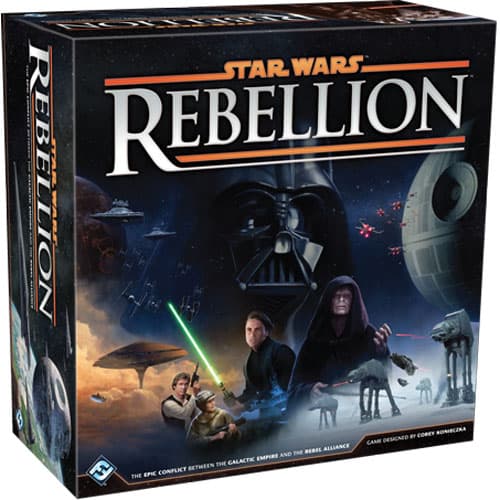
Immerse yourselves in the iconic Galactic Civil War with Star Wars: Rebellion, the epic 2016 strategy board game that casts two players into an asymmetric struggle for ultimate power. One player commands the overwhelming might of the Galactic Empire, relentlessly hunting the hidden Rebel base across the galaxy, while the other masterminds the desperate and heroic Rebel Alliance, seeking to ignite sparks of hope and rally systems to their cause before being crushed. Featuring hidden movement, expansive planetary control, and a rich narrative driven by iconic characters and strategic card play, every decision shapes the fate of the galaxy in this definitive Star Wars experience.
m⚖️ N/A
RANK #14
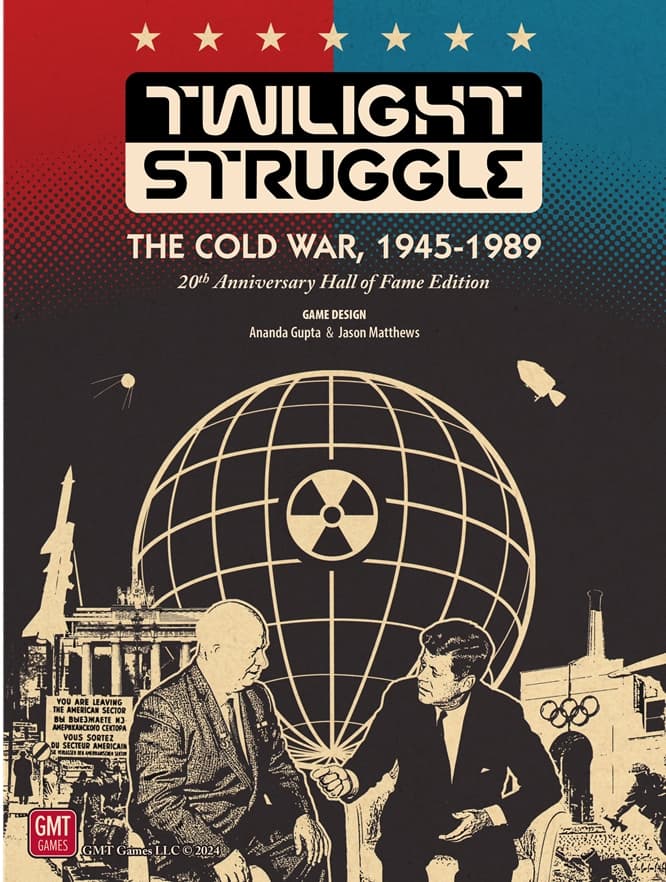
Twilight Struggle is a monumental two-player board game that simulates the entire 45-year span of the Cold War. One player assumes the role of the United States and the other the Soviet Union, as they clash in a global struggle for ideological supremacy and geopolitical influence. The goal is not direct military conflict, but rather a tense battle of wits to spread your superpower's presence across the world map. Players score Victory Points by establishing control over key countries and regions. Victory can be achieved immediately by accumulating 20 VP, by fulfilling a special condition like controlling Europe when its scoring card is played, or by forcing your opponent to trigger a global thermonuclear war.
The game's engine is driven by a deck of cards, each representing a significant historical event from the era. These cards present the game's central, agonizing dilemma: each can be used either for its 'Operations Points' value or for its event text. Operations Points are the currency for actions like placing influence markers, attempting coups to destabilize enemy-controlled nations, or making realignment rolls to reduce opponent influence. However, if a player uses an opponent's event card for its Operations Points, the event itself still occurs. This forces players to constantly mitigate disasters and make difficult choices about which fires to start and which to put out. This core mechanic is layered with a DEFCON track that measures nuclear tension; too many aggressive moves can lower the DEFCON level, and if it ever reaches 1, the player whose turn it is loses instantly.
Twilight Struggle is revered for its incredible strategic depth and historical immersion, masterfully weaving its theme into every mechanic. The constant brinkmanship, where a single misstep could lead to nuclear annihilation, creates a palpable tension that lasts from the first turn to the last. The dual-use card system is frequently cited as a work of design genius, ensuring that every hand of cards presents a new and challenging puzzle. It is a demanding and complex game, but one that rewards dedicated players with a deeply satisfying and unforgettable strategic experience, solidifying its reputation as one of the greatest two-player games ever created.
2 180m⚖️ 3.6
RANK #21
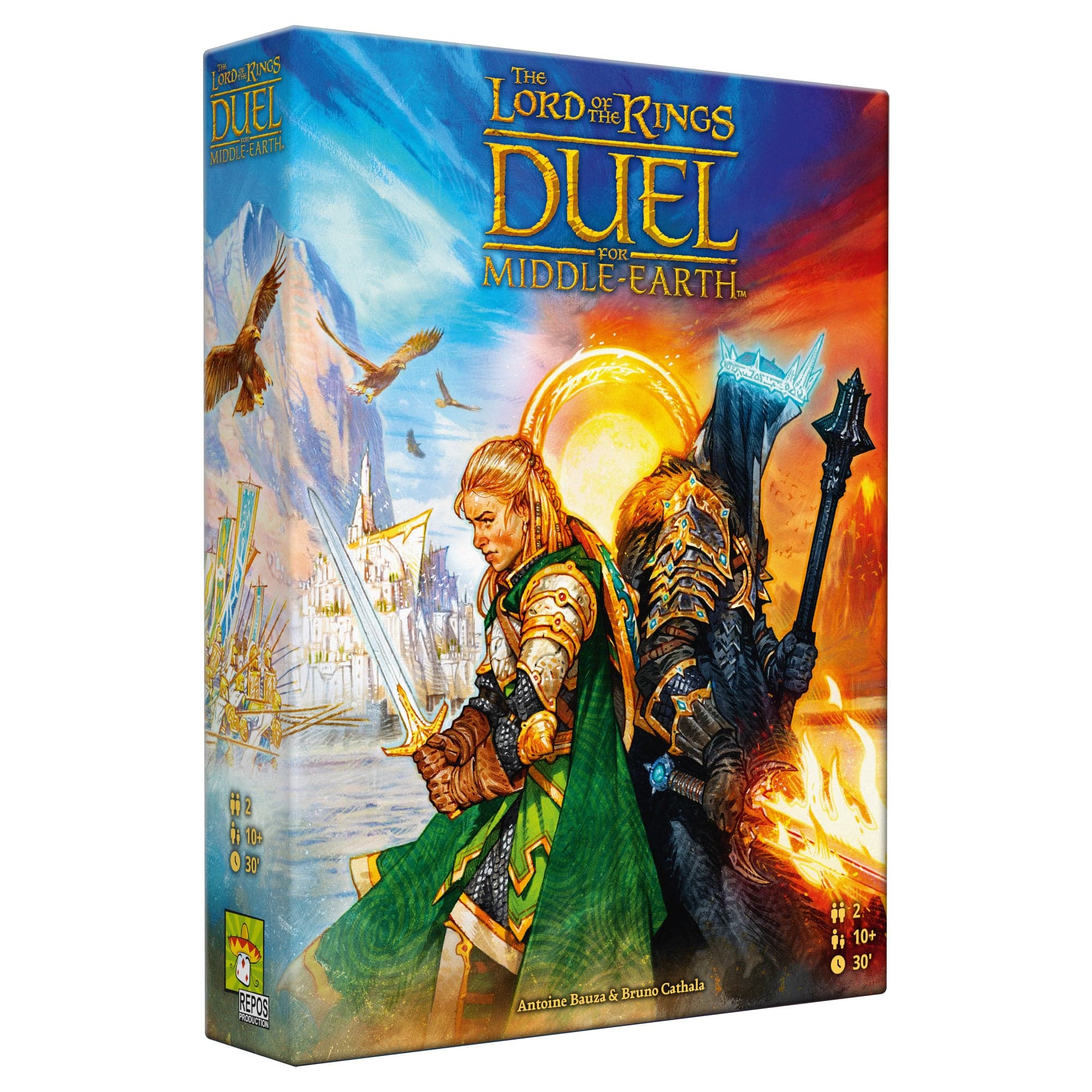
Embark on an epic strategic journey through J.R.R. Tolkien's beloved realm with "The Lord of the Rings: Duel for Middle-earth," a compelling two-player competitive board game. Players assume the mantle of either the valiant Free Peoples or the insidious forces of Sauron's Shadow, engaging in a desperate struggle for control over key territories and the ultimate fate of Middle-earth. Your primary goal is to outmaneuver and decisively defeat your opponent, claiming dominance through a blend of military might and cunning political influence.
Gameplay unfolds across a beautifully illustrated map of Middle-earth, where players deploy iconic units and leverage powerful event cards to expand their influence and engage in tactical skirmishes. Core mechanics center around card-driven action selection, intricate hand management, and dynamic area control, demanding careful strategic planning and adaptable decision-making. Each turn presents critical choices: where to commit your precious resources, when to launch an offensive, and how best to counter your opponent's machinations, making every move impactful in this high-stakes duel.
Fans are drawn to the game's deep thematic immersion, which masterfully translates the grandeur of Tolkien's narrative into a focused, engaging two-player experience. Its unique appeal lies in the asymmetric factions, offering distinct playstyles and challenging players to master their chosen side while anticipating their adversary's strategies. With streamlined yet profound strategic choices and high replayability, "Duel for Middle-earth" offers an intense and rewarding tabletop experience for anyone eager to carve their legend in the lands of Middle-earth.
m⚖️ N/A
RANK #23
Dive into the cutthroat world of the English Industrial Revolution with Brass: Lancashire, the seminal 2007 economic strategy game where shrewd entrepreneurs vie for dominance across the historic landscape. Players will strategically expand their industrial empire by building canals, establishing crucial rail links, and developing key industries like cotton mills, coal mines, and iron works. Managing cash flow, leveraging market demands, and outmaneuvering rivals are paramount as you invest, produce, and sell resources to secure victory points, making every decision a pivotal step towards becoming the wealthiest industrialist in Lancashire.
m⚖️ N/A
RANK #185
Watergate
2019In the midst of the Watergate scandal, players must navigate the complex web of evidence and alliances to emerge victorious. As either Richard Nixon or a newspaper editor, each player has a unique set of goals and challenges that will test their strategic thinking and negotiation skills. The game is divided into two main components: the evidence web on the left side of the board, where players collect and analyze clues, and the evidence track on the right, where they use these findings to build momentum and discredit their opponents. With a simple yet engaging gameplay mechanic, Watergate challenges players to think critically about the flow of information and the power dynamics at play in this pivotal moment in American history. As tensions rise and alliances are forged and broken, players must carefully weigh their actions and make tough decisions that will ultimately determine the fate of their faction. Will Nixon's administration be able to cover up its misdeeds, or will the press uncover the truth and bring about a new era of transparency? The outcome is far from certain in this gripping game of cat and mouse, where strategy and luck combine to create an unforgettable experience. With each playthrough offering a unique set of challenges and opportunities, Watergate is a game that will keep you on the edge of your seat until the very end. Whether you're a history buff or simply a fan of strategic gameplay, this game has something for everyone. So gather your friends and get ready to immerse yourself in one of the most pivotal moments in American history – the Watergate scandal. With its engaging mechanics and rich thematic content, Watergate is an experience that will leave you questioning the nature of power and the importance of a free press. As you navigate the complex web of alliances and rivalries, you'll be forced to confront the darker aspects of human nature and the consequences of unchecked ambition. But don't worry – with its simple yet engaging gameplay mechanic, Watergate is accessible to players of all skill levels. So why not give it a try? With its unique blend of strategy and historical significance, Watergate is a game that will keep you coming back for more. And who knows – you might just learn something new about one of the most infamous scandals in American history.
m⚖️ N/A
RANK #217
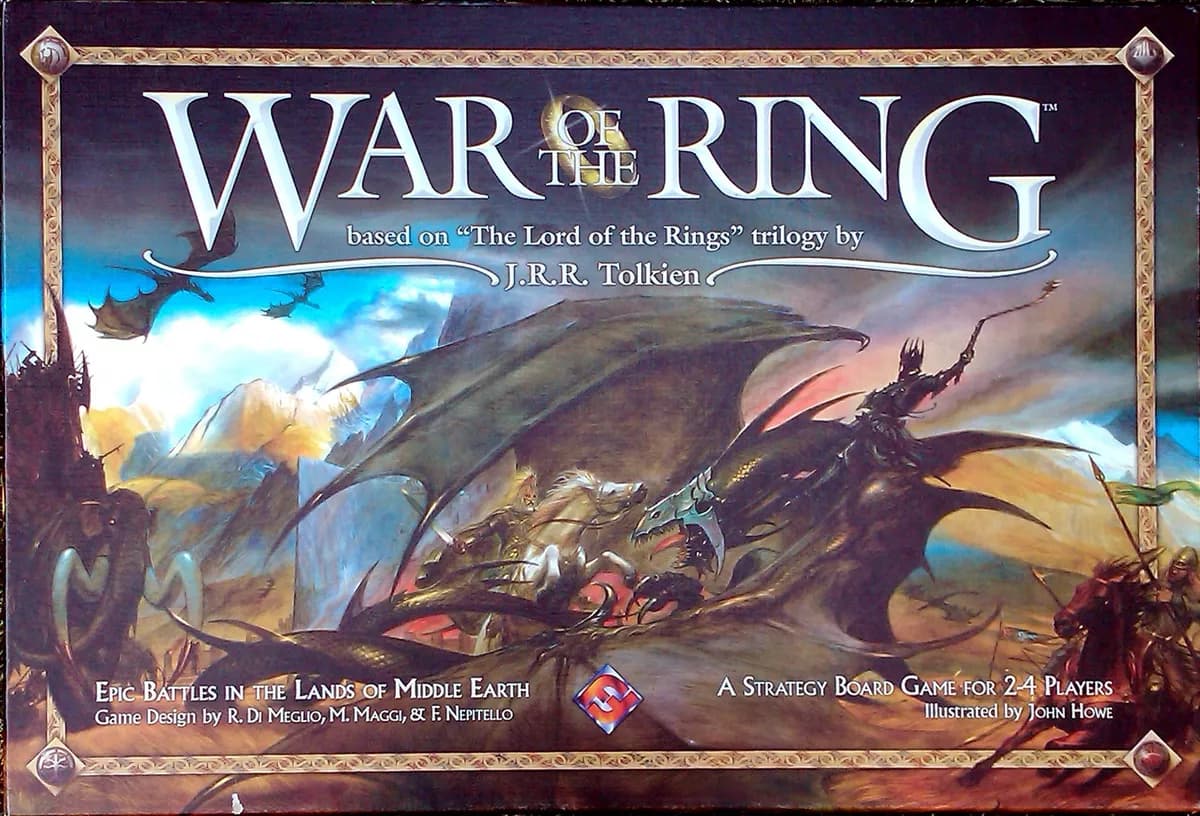
War of the Ring
2004War of the Ring is a monumental, asymmetrical strategy game that masterfully translates the epic scope of J.R.R. Tolkien's 'The Lord of the Rings' trilogy into a captivating tabletop experience. In this grand conflict for Middle-earth, one player commands the heroic Free Peoples, while the other marshals the overwhelming forces of the Shadow. The game presents two distinct paths to victory for each side, creating a constant strategic tension. The Free Peoples player must desperately defend their last strongholds against a relentless onslaught, all while secretly guiding the Fellowship of the Ring on its perilous quest to destroy the One Ring in the fires of Mount Doom. Conversely, the Shadow player seeks to crush their enemies through sheer military might, conquering key cities and fortresses. However, they must also divert resources to hunt for the Ring-bearer, as corrupting Frodo before he reaches his destination offers an alternative, insidious path to triumph.
Gameplay is driven by a clever action dice system and a rich deck of event cards that evoke pivotal moments from the books. At the start of each round, players roll their unique set of dice, with the Shadow player receiving more to represent their vast power. The symbols rolled dictate the actions available, such as maneuvering armies, initiating sieges, recruiting reinforcements, advancing the Fellowship, or playing powerful character and strategy cards. A core element of the game is the hidden movement of the Fellowship. The Free Peoples player tracks its progress secretly, only revealing its location when the Shadow's hunt is successful or when they choose to do so strategically. This forces the Shadow player into a difficult balancing act: they must decide how many dice to commit to the military campaign versus the all-important Hunt for the Ring, which, if successful, can reveal the Fellowship and inflict corrupting damage upon the Ring-bearer.
The enduring appeal of War of the Ring lies in its profound thematic immersion and the compelling, narrative-driven experience it generates. Every roll of the dice and every card played feels consequential, echoing the high stakes of Tolkien's saga. The game brilliantly captures the asymmetry of the conflict; the Free Peoples player often feels outmatched and on the defensive, fighting a desperate war of attrition while pinning their hopes on a single Hobbit's stealth and resilience. Meanwhile, the Shadow player wields immense power but must remain vigilant, as a military victory can be snatched away at the last moment by the Fellowship's success. This blend of grand-scale wargaming with a tense, hidden quest creates a deeply strategic and emotionally resonant experience that is widely considered one of the greatest thematic board games ever made.
2-4 150m⚖️ 4.4
RANK #218
Memoir '44
2004Memoir '44 invites players to step into the role of commanders during the pivotal moments of World War II. Created by esteemed designer Richard Borg, this historically-themed board game, published by Days of Wonder, offers a streamlined and accessible entry into the wargaming genre. Players recreate iconic battles from the D-Day landings and other significant engagements of the war. The primary goal is to be the first to achieve a predetermined number of Victory Medals. These medals are typically awarded for eliminating enemy units from the hexagonal battlefield, but specific scenarios often introduce unique objectives, such as capturing and holding key terrain features or breaking through enemy lines, which also grant these crucial tokens of success. The game successfully abstracts the complexities of war into a fast-paced and engaging system, making historical conflict both approachable and exciting.
At the heart of Memoir '44 lies the innovative "Commands & Colors" game system, which elegantly blends strategy with an element of chance. A player's turn is driven by the playing of a single Command Card from their hand. These cards dictate which units can be activated and, crucially, in which of the three distinct sections of the board—left flank, center, or right flank—those orders can be given. Once a card is played, the player orders their chosen units, which can be infantry, armor, or artillery, to move and/or engage in combat. Combat is resolved through a quick and intuitive dice roll, using custom dice whose symbols determine hits, force retreats, or result in misses. The terrain itself is a critical tactical element, with hills, forests, and towns providing defensive cover, impeding movement, and blocking line of sight, forcing commanders to carefully consider their positioning and approach. After all actions are completed, the player draws a new Command Card, concluding their turn and setting the stage for their opponent's response.
The enduring appeal of Memoir '44 stems from its masterful balance of tactical depth and straightforward gameplay. It serves as a perfect 'gateway' wargame, welcoming players who might be intimidated by more complex simulations while still offering satisfying strategic decisions for veteran gamers. The scenario-driven design provides immense replayability; with over a dozen historical scenarios in the base game alone, each with a unique map layout, force composition, and victory conditions, no two games feel quite the same. The combination of strategic card management—knowing when to play a powerful card or when to hold back—and the luck inherent in dice rolls and card draws creates a constant and engaging tension. It brilliantly captures the narrative and drama of a WWII skirmish, delivering a complete and compelling experience in about an hour, securing its place as a classic in the world of historical board gaming.
2-8 45m⚖️ 2.0
RANK #232
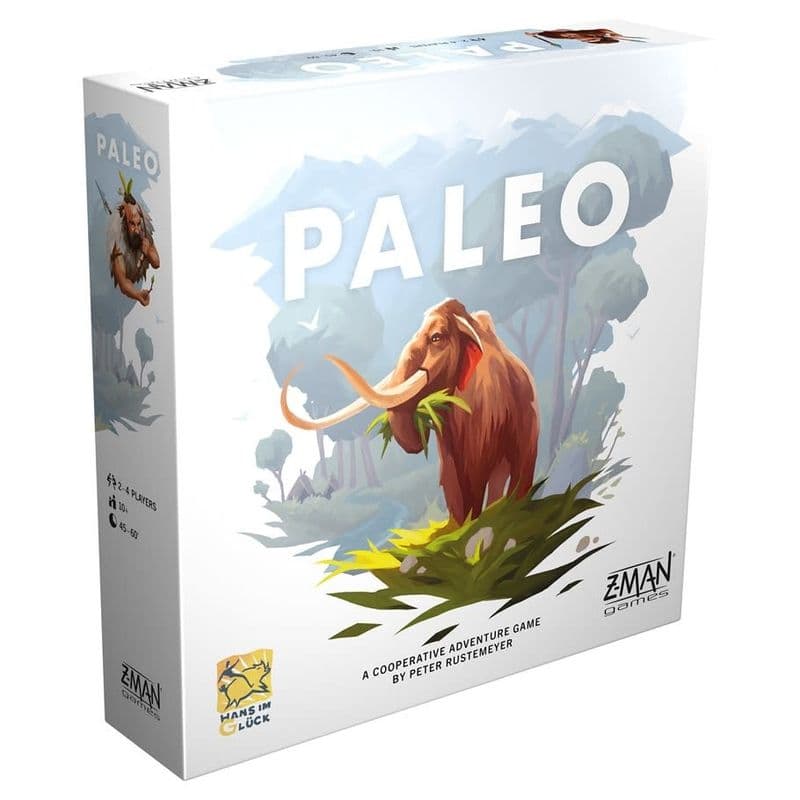
Paleo
2020In Paleo, players embark on a cooperative adventure set in the Stone Age. The game is designed for 2-4 players and takes approximately 45-60 minutes to play. Players work together to keep their tribe alive while completing missions and creating a cave painting. The game includes 10 unique modules that can be mixed and matched to vary the difficulty level or try different rules variants, including a solo mode. Each player begins with a couple of humans, each with a skill and life points. On their turn, players send out their humans to explore, gathering resources and completing tasks while avoiding dangers such as skull tokens. The game requires strategy and cooperation to succeed, making it an engaging experience for players who enjoy cooperative games. One of the unique features of Paleo is its use of card-driven mechanics, where players draw cards with different backgrounds that provide clues about what's on the other side. This mechanic adds a layer of uncertainty and excitement to the game, as players must work together to uncover the secrets of the cards. The game also includes a variety of modules that can be added or removed to change the gameplay experience, making it suitable for players who enjoy replayability and customization. Overall, Paleo is an engaging cooperative game that challenges players to work together while exploring the Stone Age world. Its unique mechanics and modular design make it an attractive option for fans of cooperative games.
2-4 45m⚖️ 3.0
BoxNo Cover Art
RANK #307
Kemet: Blood and Sand is a comprehensive modernization of the 2012 strategy masterpiece, immersing players in a mythic version of Ancient Egypt where powerful gods battle for total dominance. Unlike traditional area-control board games that often reward defensive posturing, this title is built for relentless aggression, explicitly rewarding players who initiate combat to earn permanent Fame Points. You take the role of an Egyptian deity—such as Anubis, Bastet, or Horus—leading a devoted army across a landscape dotted with sacred temples and massive pyramids. The ultimate objective is to secure nine Fame Points, which are earned through bloody victories, controlling vital territories, and purchasing game-changing powers.
The gameplay loop is centered on a refined action-selection system located on each player's pyramid board. During the Day Phase, players place five tokens on various action slots, governed by a rule of equilibrium that forces them to diversify their tactics across different levels of the pyramid. A core feature is the acquisition of Power Tiles from four distinct colors: Ruby for offensive might, Sapphire for defensive stability, Diamond for utility, and Onyx for advanced tactical maneuvers. By upgrading physical, 3D pyramids in their cities, players unlock the ability to purchase these tiles, which grant incredible permanent abilities or summon legendary mythological creatures to join their ranks. Combat is resolved using a deterministic card-based system, where players must secretly choose Battle Cards and potentially supplement them with Divine Intervention bluffs, removing the unpredictability of dice in favor of pure strategic calculation.
What makes Blood and Sand a modern classic is its incredible mobility and high player interaction. The map utilizes a unique obelisk teleportation system, allowing troops to move from their home city to distant points instantly, ensuring that no player is ever truly safe behind their borders. This 2021 edition significantly improves the original experience with refined components like recessed dual-layer player boards, stackable pyramids, and a redesigned map that scales to different player counts using storm overlays. It is a deep, highly replayable 'dudes on a map' experience that offers satisfying engine-building through its tech tree while maintaining the fast-paced tension of a wargame.
2-5 120m⚖️ 3.3
RANK #9,756
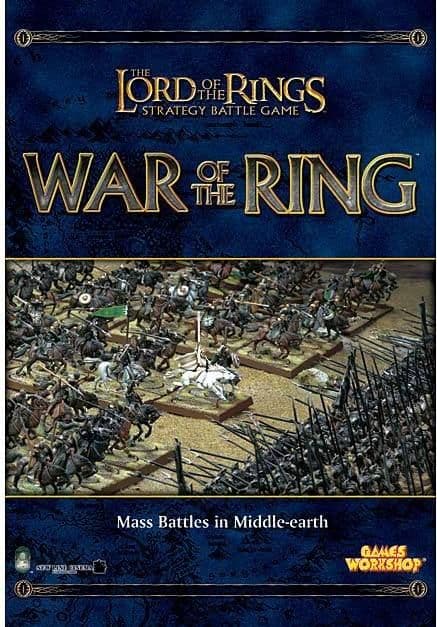
War of the Ring
2009War of the Ring is a grand-scale, asymmetrical strategy game that immerses two players, or up to four in teams, in the epic conflict of J.R.R. Tolkien's Middle-earth. One side assumes control of the Free Peoples, defending the last bastions of hope, while the other commands the overwhelming forces of the Shadow. The paths to victory are starkly different, creating a deeply thematic and tense opposition. The Free Peoples player is on a desperate quest to escort the Fellowship of the Ring to the heart of Mordor and destroy the One Ring in the fires of Mount Doom. A secondary, military victory is possible but incredibly challenging. Conversely, the Shadow player seeks to crush Middle-earth under its heel by conquering enough cities and strongholds for a military win, or by relentlessly hunting the Ring-bearer and corrupting them with the Ring's influence before they can complete their quest.
Gameplay is driven by the roll of custom Action Dice each round. The symbols on these dice dictate the specific actions a player can execute, forcing difficult choices at every turn. These actions range from mustering new armies and maneuvering them across the expansive map of Middle-earth to playing powerful Event Cards that can introduce famous characters or trigger pivotal story moments. For the Free Peoples, some actions are dedicated to advancing the various nations on a political track to rally them to war, while others are used to secretly move the Fellowship towards its goal. The Shadow player, in turn, can use their dice to commit resources to the Hunt for the Ring, an ever-present threat that seeks to reveal the Fellowship's location and inflict corruption upon the Ring-bearer.
The game's enduring appeal lies in its masterful fusion of grand strategy wargaming with a deeply personal, narrative-driven quest. This creates a powerful and engaging story with every playthrough. The asymmetry is the heart of the experience; the Free Peoples' player feels the weight of a desperate defense, trying to buy just enough time for a small band of heroes to succeed against impossible odds. Meanwhile, the Shadow player wields immense power, constantly pressing the attack and forcing difficult sacrifices. This dynamic tension, where a massive war rages on the board while a hidden, critical journey unfolds in parallel, perfectly captures the spirit of "The Lord of the Rings" and has cemented War of the Ring as a modern classic in thematic gaming.
2-4 180m⚖️ 4.4

Towers of Sifnos
2026In "Towers of Sifnos," players are transported to the ancient Aegean, where they take on the roles of Greek commanders on the titular island. Sifnos, renowned for its rich gold, silver, and lead mines, has become a target for relentless pirate raids. Your charge is not merely to survive, but to thrive amidst the chaos, developing the island's defenses and securing its resources for your own legacy. This is a deeply strategic experience where the primary objective is to accumulate the most victory points. Victory is achieved by shrewdly expanding your influence over the island's lucrative mining regions, constructing a formidable network of defensive towers, and proving your military prowess by successfully fending off the waves of pirate invaders. Every decision contributes to your standing, and only the commander with the greatest foresight and influence will be remembered as the true protector of Sifnos.
The gameplay is a masterful blend of card-driven action selection, hand management, and engine building. Each round challenges players to carefully manage their resources and plan their strategy. A turn begins with a 'prepare' step, where you can play cards into your personal action columns. This crucial phase requires you to pay for these cards by discarding other cards of a matching resource type, creating a compelling engine-building puzzle as you permanently upgrade your future actions. Following this, you must choose two of three distinct main actions: 'Invest' allows you to place dice onto the board's provinces to establish influence, with forts providing greater placement flexibility; 'Construct' lets you erect towers, gaining immediate rewards and bolstering your control; and 'Muster' involves deploying and maneuvering soldiers to build up military 'might'. This might becomes critical when three dice occupy a province, triggering a 'defend' phase where players compare their combined strength from dice, towers, and soldiers to repel the invasion and earn valuable bonuses.
"Towers of Sifnos" distinguishes itself with its tight, interactive design and the multi-faceted nature of its strategic puzzles. The constant tension between long-term engine building and immediate territorial contention creates a highly engaging dynamic. Do you invest in cards that will power up your actions for the rest of the game, or do you seize a critical location on the board right now? The ability to build on top of an opponent’s tower, albeit at a cost, ensures that no position is ever completely secure, fostering a healthy level of player interaction without being overly confrontational. The game’s appeal lies in this rewarding strategic depth, offering a significant step up from gateway games without becoming overwhelmingly complex. It’s a compelling challenge for players who relish seeing a plan come together, combining clever hand management with tactical board presence to outwit their rivals and secure victory over the riches of the ancient isles.
1-4 90m⚖️ 2.9
BoxNo Cover Art
Combat Commander
2006Combat Commander: Europe is a tactical-level board game that recreating infantry combat during the European Theater of World War II. Players take command of different factions—primarily the United States, Germany, and the Soviet Union—controlling squads, leaders, and specialized teams. The primary goal is to achieve victory by accumulating points through the control of strategic objectives on the map, the destruction of enemy units, or by successfully moving units off the opponent's map edge. Unlike many traditional wargames that focus on rigid movement phases, this game captures the chaotic and unpredictable nature of the battlefield, where survival often depends as much on luck and timing as it does on positioning.
At the heart of the game is the Fate Deck, a unique card-driven system that handles every aspect of the simulation. Each card in the deck serves multiple roles: it provides 'Orders' that allow players to move, fire, or recover; it contains 'Actions' that can be played out of turn to react to enemy movements; and it features pre-printed 'Dice Rolls' used for all combat and morale checks. This means that players do not use physical dice; instead, they flip cards to determine outcomes. This system introduces significant 'fog of war' and friction; if a player does not have a 'Fire' card in their hand, their troops simply cannot shoot that turn, simulating a breakdown in communication, jammed weapons, or hesitant soldiers. This mechanic forces players to manage their hand carefully, discarding less useful cards to cycle through the deck in search of the specific commands they need to execute their strategy.
What makes Combat Commander a beloved staple in the wargaming community is its incredible narrative flair and high replayability. Every scenario feels like a unique story unfolding, where a sudden 'Event' triggered by a card flip can change the weather, call in a sniper, or turn a regular soldier into a hero. The game is famous for its 'bursty' nature, where moments of relative calm can suddenly explode into desperate firefights or bayonet charges. Because the terrain is modular and the Fate Deck ensures no two matches play out the same way, the tactical puzzles remain fresh even after dozens of sessions. It moves away from the 'math-heavy' nature of some hex-and-counter games, offering instead a cinematic and emotionally engaging experience that rewards adaptability and risk management over pure calculation.
1-2 120m⚖️ 3.3
Showing 1 to 12 of 13 games