Economic Games
Browse all Economic board games in the Meeple Pulse database.
Styles
Themes
AbstractAdventureAncientAnimalsArtBusinessCard GameCo-operativeComic BookCooperativeCrimeEconomicEnvironmentalismExplorationFantasyHistoricalHorrorHumorIntrigueLiteraryMagicMarvelMedievalModernMuseumMysteryMythologyNatureNauticalPoliticalPress Your LuckSatireSci-FiSocial CommentarySocial InteractionSpaceSuperheroesThematicTravelWarWesternWord-Guessing
Mechanics
3D PlacementActingAction / DexterityAction DraftingAction Point AllowanceAction Point Allowance SystemAction Point SystemAction PointsAction ProgrammingAction QueueAction RetrievalAction SelectionAction/EventAlliancesAlternate ActivationApp-AssistedApp-DrivenArea ControlArea InfluenceArea MajorityArea Majority / InfluenceArea MovementArgumentationAsymmetricAsymmetric FactionsAsymmetric GameAsymmetric PowersAsymmetrical PowersAuction & BiddingAuction/BiddingAuctioningBag BuildingBettingBetting and BluffingBetting and WageringBetting and WagersBiddingBingoBlind BiddingBluffingCampaign / Battle Card DrivenCampaign / LegacyCampaign / Legacy GameCampaign / Mission-basedCampaign / ScenariosCampaign GameCampaign PlayCard DraftingCard DrawingCard DrivenCard Driven ActionCard Driven CombatCard Driven Dice AllocationCard Driven MovementCard ManagementCard PlayCard Play / Hand ManagementCard Play Conflict ResolutionCard SheddingCard-Driven MovementCharacter CreationCharacter ProgressionChit-Pull SystemCo-op PlayCo-operative GameCo-operative PlayCode-breakingCombat ResolutionCombo ChainCommand CardsCommodity SpeculationCommunication LimitsContract FulfillmentContractsCooperative GameCooperative GameplayCooperative PlayCooperative Trick-takingDebateDeck BuildingDeck ConstructionDeck, Bag, and Pool BuildingDeck-BuildingDeductionDexterityDice DraftingDice PlacementDice RollingDiplomatic InfluenceDraftingDynamic Battle SystemEnclosureEnd Game BonusesEngine BuildingEngine-BuildingEscape RoomEvent DrivenExplorationFarmingFlip and WriteFollowFollow ActionGrid CoverageGrid MovementHand ManagementHex-and-CounterHexagon GridHidden MovementHidden RolesI Cut You ChooseIncomeInfluence / Area MajorityLadder ClimbingLegacyLegacy ElementsLegacy GameLegacy SystemLimited CommunicationLine DrawingLine of SightMancalaMap MovementMarketMarket DraftingMarket ManipulationMarket MechanicMarket SpeculationMatchingMeasurement MovementMemoryMission ObjectivesModular BoardModular Board ConstructionMovement TemplatesMulti-Use CardsMulti-use CardsMultiple ScenariosMust FollowNarrative ChoiceNarrative Choice / ParagraphNegotiationNegotiation MechanicsNetwork & Route BuildingNetwork BuildingNetwork and Route BuildingOne vs ManyOne vs. ManyOpen DraftingPaper-and-PencilPartnershipsPattern BuildingPattern RecognitionPick-up and DeliverPlayer EliminationPlayer InteractionPlayer JudgePoint SaladPoint to Point MovementPolyominoesPush Your LuckPush-Your-LuckPuzzlePuzzle-LikePuzzle-SolvingRaceReal-TimeRecipe FulfillmentResource ManagementRole PlayingRole SelectionRoll / Spin and MoveRondelRoute BuildingRoute-BuildingRoute/Network BuildingSanity SystemScenario / Campaign PlayScenario / Mission / Campaign GameScenario / Mission FunctionSecret Unit DeploymentSemi-Cooperative GameSet CollectionSheddingSimulationSimultaneous ActionSimultaneous Action SelectionSimultaneous Hidden AllocationSocial DeductionSocial InteractionSolo / Solitaire GameSpace ExplorationStat Check / Skill CheckStock HoldingStorytellingStrategic PlanningTableau BuildingTactical Decision-MakingTake ThatTargeted CluesTeam PlayTeam-Based GameTeam-Based GuessingTeamworkTech TreesTech Trees / Tech TracksTechnology & Armament TracksTechnology TreeTension & Aggression TracksTile DraftingTile LayingTile PlacementTime TrackTime TravelTower DefenseTrack MovementTradingTrick-takingTug of WarTurn Order: PassTurn Order: Stat-BasedUnit PlacementVariable Phase OrderVariable Player PowersVariable Set-upVariable SetupVictory Point TracksVotingWord AssociationWord GameWord GuessingWord-GuessingWord-guessingWordplayWorker Placement
RANK #9
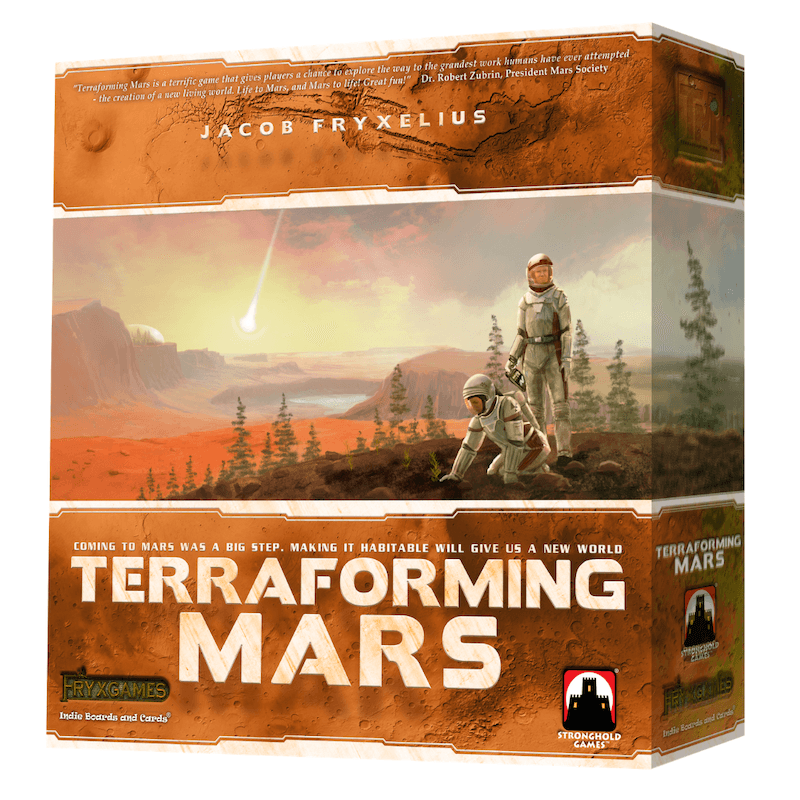
Embark on an epic interstellar journey in the highly acclaimed 2016 strategy board game, Terraforming Mars. As the leader of a powerful corporation, your mission is to transform the red planet into a verdant, oxygen-rich world capable of sustaining human life. Through innovative engine-building, strategic resource management, and the judicious use of unique project cards, players will raise global temperature, create oceans, and cultivate widespread plant life, all while competing to leave the most significant mark on humanity's greatest colonization endeavor. This deep, tactical sci-fi experience challenges players to adapt, plan ahead, and master complex synergies to achieve planetary domination and secure the future of mankind.
m⚖️ N/A
RANK #16
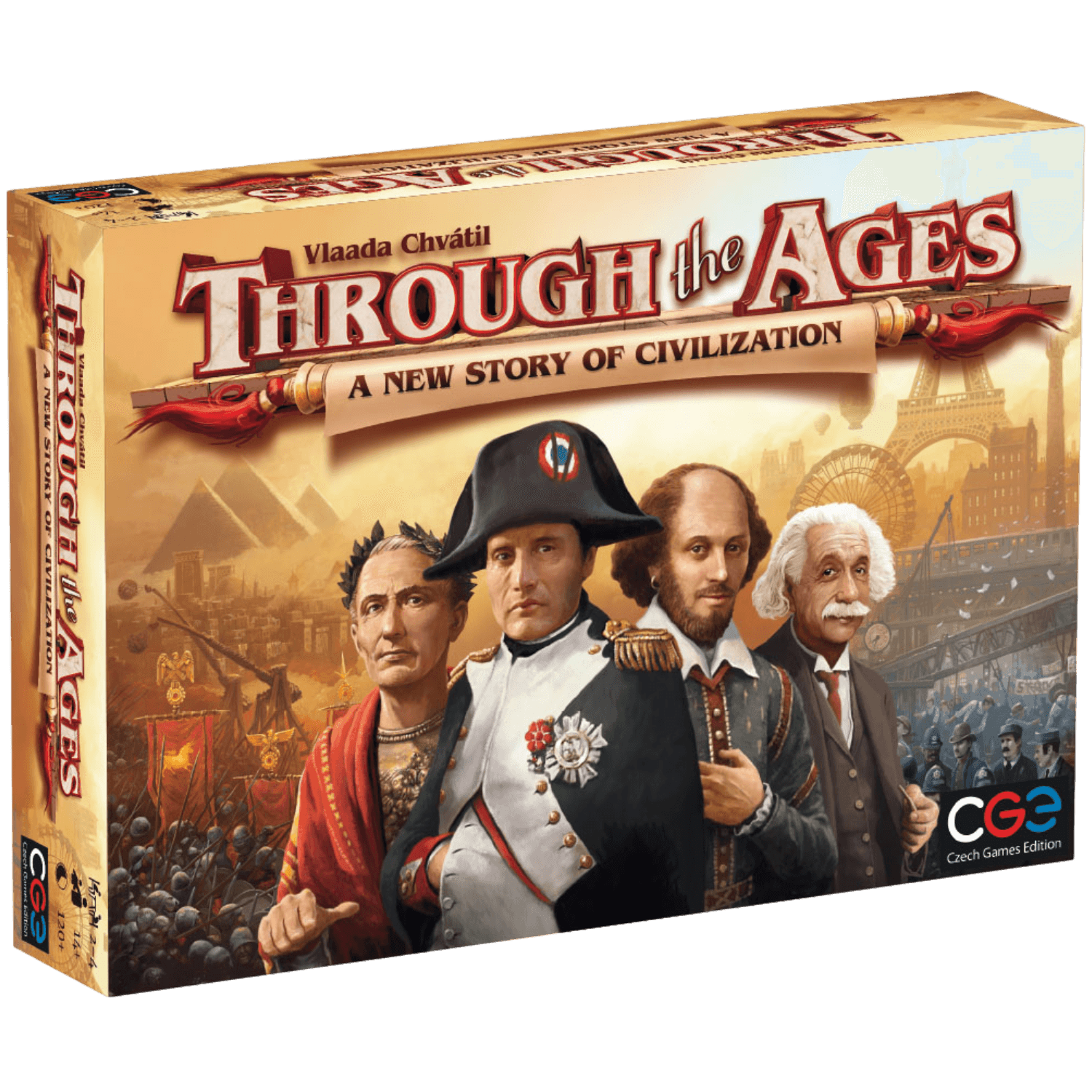
Through the Ages: A New Story of Civilization (2015) is a monumental strategy board game where players rewrite history, guiding their burgeoning civilization from antiquity through the modern era. Your ultimate goal is to accumulate the most culture points by developing a superior civilization, marked by technological advancements, powerful leaders, magnificent wonders, and a thriving population. This epic journey tests your foresight and adaptability, demanding careful long-term planning to emerge as the preeminent power in a constantly evolving world.
The game unfolds through a unique card drafting system, where new technologies, leaders, and wonders become available, requiring players to strategically acquire and utilize them using an innovative action point allowance system. Managing essential resources like food, minerals, and population is crucial for expansion and development, while balancing economic growth with military strength is paramount. Building a robust military deters aggression and secures your borders, adding a tense layer of player interaction and strategic bluffing to the otherwise deep economic engine.
Beloved for its unparalleled strategic depth and immersive thematic experience, Through the Ages offers a truly brain-burning challenge with virtually limitless replayability. Its elegant design minimizes luck, rewarding careful planning, efficient resource management, and cunning tactical decisions. Players adore the sensation of guiding a civilization through millennia, making profound choices that ripple across ages, creating a highly satisfying and richly rewarding gaming experience that stands as a benchmark for heavy strategy games.
m⚖️ N/A
RANK #114
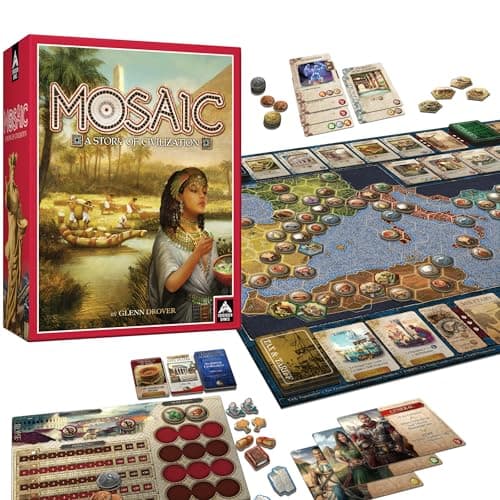
"Through the Ages: A Story of Civilization" is a monumental board game that tasks players with one of the grandest challenges imaginable: guiding a civilization from its humble beginnings in antiquity through to the complexities of the modern era. It's a game of epic scope where military might is just one tool among many. The ultimate objective is not world domination, but the creation of a lasting legacy. Victory is determined by the accumulation of culture points, a measure of your society's artistic, philosophical, and technological contributions to history. Players strive to build a civilization that will be remembered and celebrated for its profound impact, leaving an indelible mark on the annals of time.
The game's engine is driven by a clever card drafting mechanism. A central 'card row' displays a constantly shifting array of potential advancements, from new technologies and political systems to great leaders and world wonders. The cost to acquire these cards decreases the longer they remain unchosen, creating a tense and dynamic market of opportunities. On their turn, players spend a set number of civil and military actions to execute their grand strategy. These actions allow them to draft cards, increase their population, construct or upgrade buildings, and bolster their military forces. Success hinges on a delicate balancing act. You must carefully manage your production of food and resources, your investment in science to unlock new possibilities, and the strength of your army, as rivals can exploit any weakness through aggression or outright war to seize resources and disrupt your progress.
Players are drawn to "Through the Ages" for its profound strategic depth and the immensely rewarding experience of nurturing a civilization from a single settlement into a sprawling empire. It presents an intricate and fascinating puzzle, forcing players to make crucial long-term decisions while adapting to the tactical opportunities presented by the card row. The game's unique appeal lies in this synthesis of grand strategy and tactical execution. While player interaction can be direct and confrontational through the military system, the core conflict is often a race for efficiency and cultural prestige. This focus on building a superior internal engine, rather than simply conquering territory, has cemented its reputation as an essential title for serious hobbyists seeking a challenging, engrossing, and highly replayable masterpiece of game design.
2-4 180m⚖️ 4.2
RANK #115
7 Wonders
2010Step into the role of a leader of one of the seven great cities of the Ancient World in "7 Wonders," a celebrated civilization-building game. Your primary objective is to guide your city to glory by accumulating the most victory points over the course of three distinct historical Ages. Victory is not achieved through a single path, but through a masterful balance of developing your city's military might, advancing its scientific knowledge, constructing grand civic monuments, and fostering a robust commercial infrastructure. Each decision contributes to your final legacy, as you erect a wonder that will stand the test of time and create a civilization renowned throughout history.
The gameplay of "7 Wonders" is centered around an elegant and engaging card drafting mechanic. At the beginning of each of the three Ages, players receive a hand of cards representing various structures and advancements. Simultaneously, each player selects one card to play and then passes their remaining hand to an adjacent player, a direction that reverses each Age. This process continues until each player has played six cards per Age. With a chosen card, a player has three options: pay the resource cost to build the structure in their city's tableau, tuck the card under their Wonder board to build the next stage of their architectural marvel, or discard it to gain valuable coins. This simultaneous action selection brilliantly eliminates player downtime, keeping the game moving at a brisk pace regardless of the player count.
The game's enduring appeal lies in its remarkable blend of accessibility and strategic depth. New players can quickly grasp the core rules, while seasoned gamers will discover nuanced strategies and scoring synergies with every play. At the end of each Age, military conflicts are resolved with immediate neighbors, adding a layer of direct interaction. Final scoring is a satisfying culmination of your efforts, where points are tallied from military victories, scientific sets, completed wonder stages, civic buildings, commercial enterprises, powerful guilds, and your remaining treasury. This variety of scoring avenues ensures high replayability, as players can explore different strategies in every game, making "7 Wonders" a timeless classic that has earned its place as a cornerstone of modern board gaming.
3-7 30m⚖️ 2.3
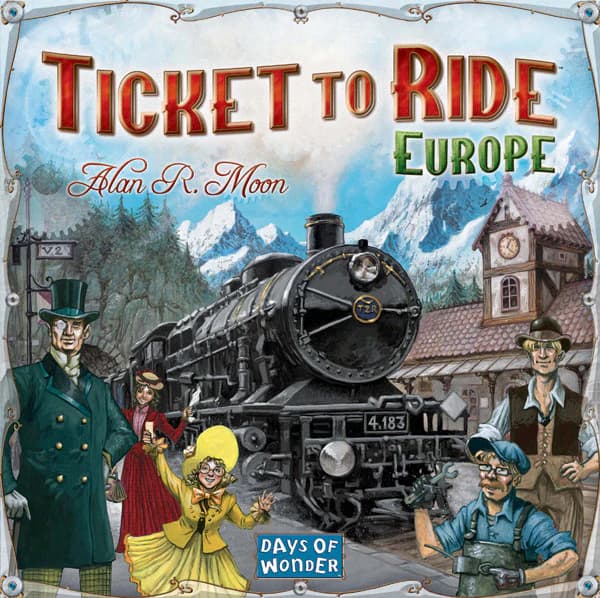
RANK #177
Ticket to Ride: Europe transports players to the golden age of steam travel at the turn of the 20th century. In this standalone installment of the beloved train adventure series, you are not just a passenger but a budding railway tycoon, competing to build the most impressive rail network across the continent. The ultimate goal is to amass the most points by the end of the game. This is achieved through a combination of strategically claiming routes between iconic European cities, successfully connecting distant destinations specified on secret ticket cards, and constructing the longest continuous path of trains for a substantial end-game bonus. Each decision matters as you race against your rivals to dominate the railways, from the misty hills of Edinburgh to the sun-drenched shores of Constantinople.
The game is celebrated for its elegant and accessible ruleset. On your turn, you choose one of four simple actions: draw more train car cards, claim a route on the board, draw new destination tickets, or build a train station. Claiming a route involves collecting and playing a set of train car cards that match the color and length of the desired path, earning you immediate points. This Europe-centric version introduces several clever mechanics that add new layers of strategy. Ferries are special sea routes that require powerful locomotive (wild) cards to claim. Tunnels introduce a thrilling push-your-luck element; when you try to build through a mountain, you must draw extra cards from the deck, potentially increasing the cost of the route unexpectedly. Finally, the introduction of Train Stations provides a strategic safety net, allowing you to use a single route segment owned by an opponent to help complete one of your own destination tickets, though at the cost of end-game points for unused stations.
Ticket to Ride: Europe has earned its place as a cornerstone of modern board gaming, largely due to its status as a premier 'gateway' game. It's incredibly easy to teach to newcomers and families, with games often concluding in under an hour, yet it offers enough strategic depth to keep veteran gamers engaged. The core tension between building your own network and inadvertently blocking opponents creates a compelling and interactive experience without direct confrontation. The additions of tunnels, ferries, and stations subtly enhance the original's formula, providing more varied decisions and reducing the frustration of being completely cut off from a critical city. This perfect balance of simplicity, strategy, and high replayability makes it a timeless classic that continues to bring people to the table for another journey across Europe.
2-5 60m⚖️ 1.9
RANK #237
Castle Combo
2024In Castle Combo, players compete to assemble the most prosperous medieval domain by strategically recruiting a cast of unique characters. This fast-paced card game challenges you to build a personal 3x3 grid that represents your growing realm. Your goal is to skillfully place character cards to create powerful scoring synergies and maximize your victory points. By the game's end, the player whose tableau demonstrates the most clever combinations and generates the highest score will be declared the ruler of the most prestigious castle in the land, earning victory through careful planning and tactical recruitment.
At its core, the gameplay revolves around tableau building and card drafting from two distinct markets: the 'Village' and the 'Castle'. A 'Messenger' pawn dictates which of these two card rows is active for you to purchase from on your turn, adding a simple yet engaging tactical layer. Players must spend 'Gold' to acquire a new character, which is then placed orthogonally adjacent to an existing card in their personal grid. Each card not only provides an immediate effect, such as granting more Gold or special 'Keys', but also contributes to end-game scoring based on its final position relative to others. Keys can be spent to manipulate the Messenger or refresh the card market, offering crucial flexibility. The game concludes swiftly once all players have completed their nine-card grid, at which point final scores are tallied.
The unique appeal of Castle Combo lies in its elegant blend of accessibility and strategic depth. Its rules are straightforward enough to teach in minutes, making it an ideal gateway game for new players or a perfect 'filler' for game night. However, the puzzle of optimizing your 3x3 grid presents a compelling challenge for even seasoned gamers. The dual-market mechanic forces players to constantly adapt their plans, while the race to find the most effective card combinations ensures high replayability. Coupled with vibrant and playful art, the game provides a satisfying and engaging experience that packs a surprising amount of decision-making into a very short playtime.
2-5 20m⚖️ 1.9
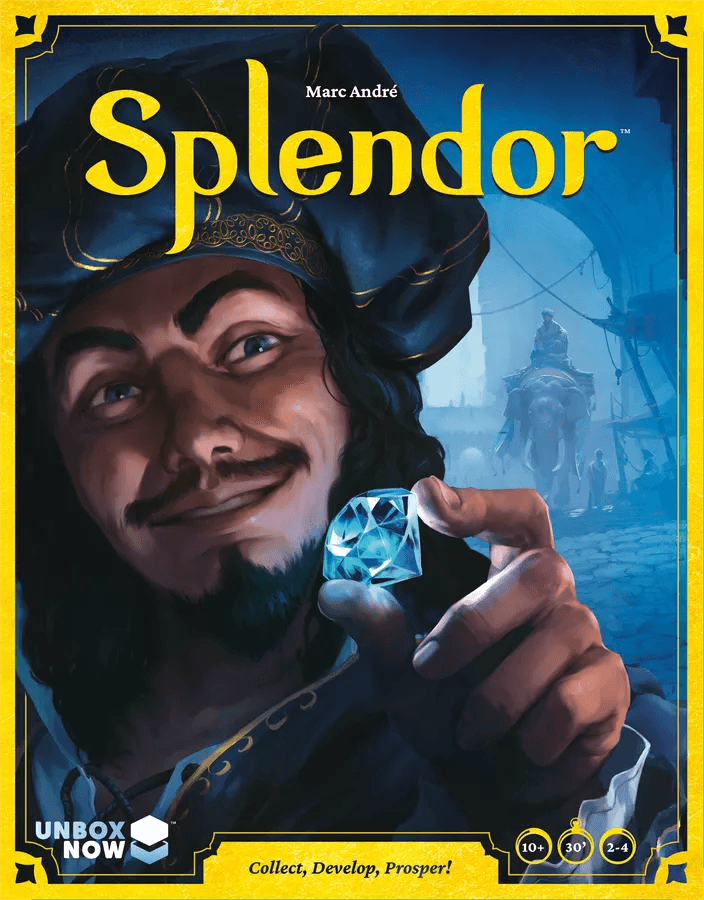
RANK #242
Splendor
2014In Splendor, players assume the roles of ambitious gem merchants during the Renaissance, all vying to become the most influential and prestigious trader in the land. The ultimate goal is to be the first to accumulate 15 prestige points. You will strategically invest your resources to acquire gem mines, develop better methods of transportation, and commission artisans to transform raw jewels into magnificent works of art. These investments not only build your wealth but also attract the attention of powerful nobles, whose patronage is crucial for securing victory and establishing your legacy as a master merchant.
The gameplay is celebrated for its streamlined and intuitive turn structure. Each turn, a player chooses just one of a few simple actions: take gem tokens that act as currency, reserve a valuable development card for future acquisition, or purchase a development card from the central display. These cards are the core of the game's compelling engine-building mechanic. Every card you purchase grants a permanent gem bonus, making subsequent purchases cheaper and creating a satisfying sense of escalating power. As you collect specific combinations of card bonuses, you automatically earn the favor of noble patrons, who grant substantial prestige points. The game ends once a player reaches 15 points, and at the end of that round, the merchant with the highest score wins.
Splendor's enduring popularity lies in its perfect balance of accessibility and strategic depth, making it an ideal 'gateway' game for those new to the hobby. The high-quality, weighty gem tokens provide a wonderfully tactile experience that elevates the gameplay. While the rules are easy to learn, the game presents meaningful choices on every turn. Players must constantly weigh the benefits of expanding their economic engine against the immediate need to score points. This elegant tension, combined with a brisk playing time and significant replay value, has solidified Splendor's reputation as a modern classic for families and strategy enthusiasts alike.
2-4 30m⚖️ 1.8
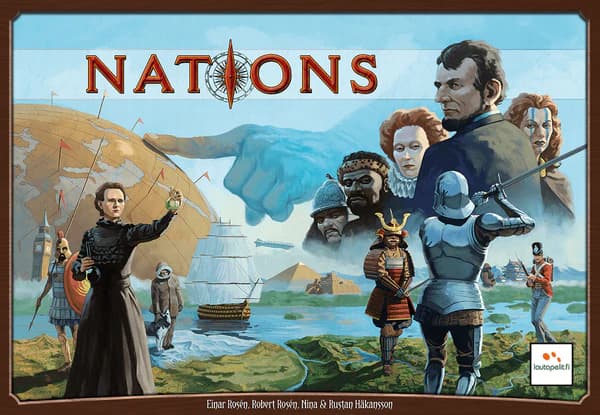
RANK #269
Nations
2013In Nations, you take the helm of a burgeoning civilization, guiding it from the annals of antiquity to the cusp of the First World War. Your ultimate objective is not conquest, but the creation of a lasting legacy, measured in victory points earned through cultural achievements, magnificent wonders, valuable colonies, and historical renown. Players must skillfully navigate the challenges of history to build the most prestigious and prosperous nation. The game is an epic race to accumulate the most 'books', which symbolize your civilization's accumulated knowledge and cultural impact, proving your dominance through wisdom and development rather than brute force.
The game unfolds over eight rounds, divided into four historical ages: Antiquity, Medieval, Renaissance, and Industrial. Each round is a meticulously structured sequence of phases. Players begin by preparing for the challenges ahead, revealing new progress cards and a pivotal event card. The heart of the game is the action phase, where players take turns performing one action at a time, with the player possessing the strongest military going first. Actions are varied and strategic: you might purchase a new technology or building from a shared card row, deploy your workers to activate structures for resources, or assign an architect to the monumental task of constructing a world wonder. Competition is indirect but fierce, as players vie for military superiority to set the turn order and manage the effects of historical events, all while managing resources and keeping their populace stable.
Nations is celebrated for offering a profound and satisfying civilization-building experience within a streamlined and manageable playtime. It captures the grand sweep of history without the complex combat systems or map-based conflicts common to the genre, instead focusing on a tense, indirect struggle for supremacy. Its unique appeal stems from the delicate balancing act required to succeed. You must constantly weigh the immediate needs of your people—food and stability—against long-term investments in military, culture, and economic infrastructure. The variable card market and unpredictable events ensure that each game presents a new strategic puzzle, making Nations a highly replayable and engaging journey through time for strategy enthusiasts.
1-5 120m⚖️ 3.4

RANK #1,145
Point City
2023Point City is a streamlined card-drafting game that challenges players to architect a flourishing urban environment from the ground up. Serving as a spiritual successor to the popular Point Salad, this title elevates the experience by introducing more complex layers of engine-building and resource management. The primary objective is to accumulate the most victory points by strategically selecting cards from a dynamic market grid. Players must balance the acquisition of raw materials with the construction of civic structures, all while competing against others to secure the most lucrative developments for their growing cityscape.
The heart of the game lies in its unique dual-sided cards. One side represents basic resources—such as energy, industry, or ecology—while the flip side features a specific building with unique costs and scoring opportunities. On their turn, a player drafts two adjacent cards from a central four-by-four grid. If they take a resource, it is added to their pool; if they take a building, they must be able to pay the required resource cost using cards in their hand or permanent resources provided by previously constructed buildings. This engine building aspect is crucial, as every building constructed makes future projects easier to complete. As the grid is depleted, it is constantly replenished with new cards from the deck, ensuring that the market is always evolving and forcing players to adapt their strategies to the available options.
What makes Point City so compelling is its elegant blend of accessibility and depth. It retains the 'pick two' simplicity of its predecessor but adds a satisfying layer of progression that rewards long-term planning. The game is highly regarded for its fast-paced nature, typically wrapping up in under thirty minutes, making it an ideal choice for families or as a 'filler' for more dedicated gaming groups. Its vibrant artwork and intuitive iconography lower the barrier to entry, while the sheer variety of building combinations ensures high replayability. Fans of the genre appreciate the clever tension between taking a needed resource now or grabbing a powerful building before an opponent can. Ultimately, it offers a rewarding puzzle that feels both fresh and familiar, cementing its place as a modern staple in the card-drafting genre.
m⚖️ N/A

RANK #2,414
Pax Pamir
2015Set in the 19th-century 'Great Game,' Pax Pamir (2015) invites players into the high-stakes political landscape of Central Asia during the collapse of the Durrani Empire. As Afghan tribal leaders, players do not act as traditional conquerors seeking personal territory; instead, they navigate the competing interests of the British, Russian, and Afghan coalitions. The primary objective is to align oneself with the empire that eventually secures dominance over the region, while simultaneously ensuring you are the most influential figure within that specific coalition to claim ultimate victory.
The gameplay revolves around a volatile central market where players purchase cards representing agents, events, and historical figures to build a personal tableau. These cards allow players to exert influence over the map, deploying tribes to control routes and spies to infiltrate rival courts. A key mechanic involves area influence and shifting loyalties, as players can switch allegiances to a different empire if the current political tide turns. Dominance checks are triggered throughout the game, scoring players based on their coalition's standing or their personal influence if the board remains fragmented and no single empire prevails.
What makes Pax Pamir stand out is its deep historical flavor and intensely interactive nature. It is widely praised for its ability to simulate complex geopolitical struggles through a relatively tight card-driven system. Fans of the game appreciate the high level of player interaction, where every market purchase or board movement ripples across the table, forcing opponents to constantly pivot their strategies. The tension is palpable as players balance long-term engine building with the immediate need to sabotage a rival's rise. It remains a masterpiece of historical simulation, offering a unique and challenging perspective on power and diplomacy that rewards tactical flexibility and sharp social reading.
m⚖️ N/A
RANK #2,974
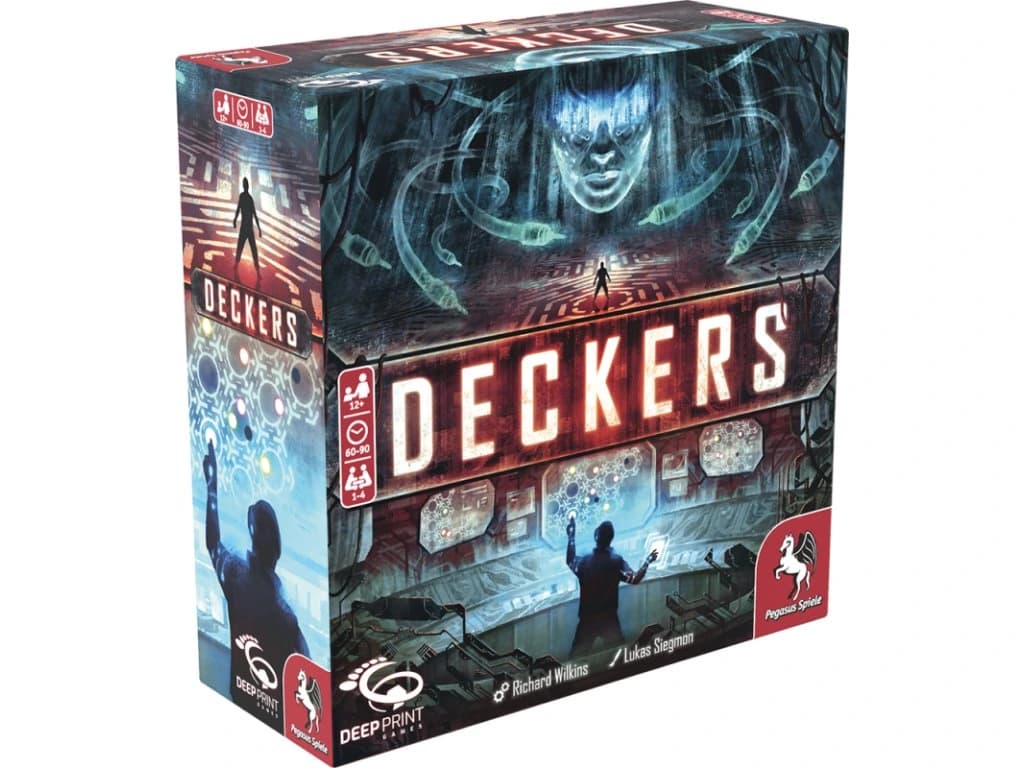
Deckers
2025Deckers is an exciting, competitive card game set in a near-future world where elite "deckers" vie for supremacy in high-stakes card tournaments. Players will meticulously craft their unique decks, strategically acquiring powerful new cards and leveraging potent abilities to outmaneuver their rivals. The ultimate goal is to accumulate the most victory points by executing brilliant card combinations, completing tactical objectives, and dominating key strategic phases before the final round concludes. Get ready for intense, strategic card-driven action!
At its core, Deckers combines innovative deck-building mechanics with tactical hand management and card drafting. Each turn, players will make critical decisions: drafting new cards from a central market, playing cards from their hand to activate powerful effects, and managing their resources to fuel their strategies. As the game progresses, decks evolve, offering dynamic gameplay where players must adapt their strategies based on opponent's moves and the available cards. Noteworthy features include 'Synergy Chains' – a mechanic where specific card combinations unlock bonus actions – and 'Adaptive Playbooks' that offer unique starting advantages, ensuring no two games feel quite the same.
Players will adore Deckers for its deep strategic gameplay wrapped in accessible rules, offering an immensely satisfying experience for both seasoned card game enthusiasts and newcomers alike. Its high replayability stems from a vast card pool, diverse starting conditions, and the ever-changing market, encouraging players to explore countless deck archetypes and strategies. The thrill of optimizing your deck, executing a perfectly timed combo, and watching your engine hum to victory provides an unparalleled sense of accomplishment. Dive into Deckers to experience the ultimate test of card-crafting prowess and strategic foresight!
m⚖️ N/A

RANK #7,856
Brass Empire
2016In the captivating steampunk world of Brass Empire, corporate titans vie for supremacy in a high-stakes struggle for resources and technological dominance. As the CEO of your burgeoning corporation, you'll strategically deploy workers to mine precious ore, construct powerful buildings, and recruit formidable units, all while skillfully managing your deck of cards. This innovative 2016 deck-building game combines engine-building and area control elements, challenging players to optimize their resource flow, outmaneuver rivals, and strategically build an unstoppable industrial empire to claim ultimate victory. Experience intense corporate warfare and strategic card play in this engaging board game.
m⚖️ N/A
Showing 1 to 12 of 13 games