Horror Games
Browse all Horror board games in the Meeple Pulse database.
Styles
Themes
AbstractAdventureAncientAnimalsArtBusinessCard GameCo-operativeComic BookCooperativeCrimeEconomicEnvironmentalismExplorationFantasyHistoricalHorrorHumorIntrigueLiteraryMagicMarvelMedievalModernMuseumMysteryMythologyNatureNauticalPoliticalPress Your LuckSatireSci-FiSocial CommentarySocial InteractionSpaceSuperheroesThematicTravelWarWesternWord-Guessing
Mechanics
3D PlacementActingAction / DexterityAction DraftingAction Point AllowanceAction Point Allowance SystemAction Point SystemAction PointsAction ProgrammingAction QueueAction RetrievalAction SelectionAction/EventAlliancesAlternate ActivationApp-AssistedApp-DrivenArea ControlArea InfluenceArea MajorityArea Majority / InfluenceArea MovementArgumentationAsymmetricAsymmetric FactionsAsymmetric GameAsymmetric PowersAsymmetrical PowersAuction & BiddingAuction/BiddingAuctioningBag BuildingBettingBetting and BluffingBetting and WageringBetting and WagersBiddingBingoBlind BiddingBluffingCampaign / Battle Card DrivenCampaign / LegacyCampaign / Legacy GameCampaign / Mission-basedCampaign / ScenariosCampaign GameCampaign PlayCard DraftingCard DrawingCard DrivenCard Driven ActionCard Driven CombatCard Driven Dice AllocationCard Driven MovementCard ManagementCard PlayCard Play / Hand ManagementCard Play Conflict ResolutionCard SheddingCard-Driven MovementCharacter CreationCharacter ProgressionChit-Pull SystemCo-op PlayCo-operative GameCo-operative PlayCode-breakingCombat ResolutionCombo ChainCommand CardsCommodity SpeculationCommunication LimitsContract FulfillmentContractsCooperative GameCooperative GameplayCooperative PlayCooperative Trick-takingDebateDeck BuildingDeck ConstructionDeck, Bag, and Pool BuildingDeck-BuildingDeductionDexterityDice DraftingDice PlacementDice RollingDiplomatic InfluenceDraftingDynamic Battle SystemEnclosureEnd Game BonusesEngine BuildingEngine-BuildingEscape RoomEvent DrivenExplorationFarmingFlip and WriteFollowFollow ActionGrid CoverageGrid MovementHand ManagementHex-and-CounterHexagon GridHidden MovementHidden RolesI Cut You ChooseIncomeInfluence / Area MajorityLadder ClimbingLegacyLegacy ElementsLegacy GameLegacy SystemLimited CommunicationLine DrawingLine of SightMancalaMap MovementMarketMarket DraftingMarket ManipulationMarket MechanicMarket SpeculationMatchingMeasurement MovementMemoryMission ObjectivesModular BoardModular Board ConstructionMovement TemplatesMulti-Use CardsMulti-use CardsMultiple ScenariosMust FollowNarrative ChoiceNarrative Choice / ParagraphNegotiationNegotiation MechanicsNetwork & Route BuildingNetwork BuildingNetwork and Route BuildingOne vs ManyOne vs. ManyOpen DraftingPaper-and-PencilPartnershipsPattern BuildingPattern RecognitionPick-up and DeliverPlayer EliminationPlayer InteractionPlayer JudgePoint SaladPoint to Point MovementPolyominoesPush Your LuckPush-Your-LuckPuzzlePuzzle-LikePuzzle-SolvingRaceReal-TimeRecipe FulfillmentResource ManagementRole PlayingRole SelectionRoll / Spin and MoveRondelRoute BuildingRoute-BuildingRoute/Network BuildingSanity SystemScenario / Campaign PlayScenario / Mission / Campaign GameScenario / Mission FunctionSecret Unit DeploymentSemi-Cooperative GameSet CollectionSheddingSimulationSimultaneous ActionSimultaneous Action SelectionSimultaneous Hidden AllocationSocial DeductionSocial InteractionSolo / Solitaire GameSpace ExplorationStat Check / Skill CheckStock HoldingStorytellingStrategic PlanningTableau BuildingTactical Decision-MakingTake ThatTargeted CluesTeam PlayTeam-Based GameTeam-Based GuessingTeamworkTech TreesTech Trees / Tech TracksTechnology & Armament TracksTechnology TreeTension & Aggression TracksTile DraftingTile LayingTile PlacementTime TrackTime TravelTower DefenseTrack MovementTradingTrick-takingTug of WarTurn Order: PassTurn Order: Stat-BasedUnit PlacementVariable Phase OrderVariable Player PowersVariable Set-upVariable SetupVictory Point TracksVotingWord AssociationWord GameWord GuessingWord-GuessingWord-guessingWordplayWorker Placement
RANK #54
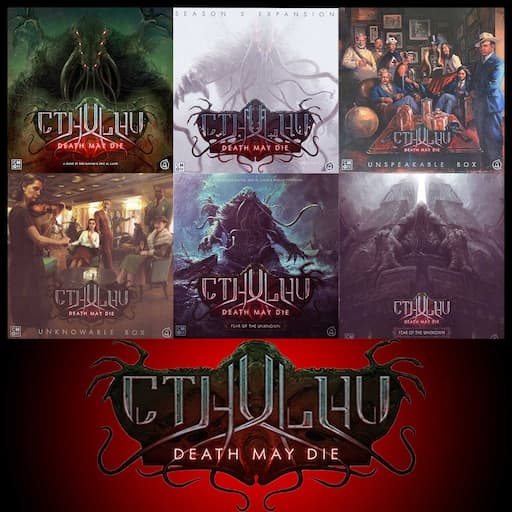
In Cthulhu: Death May Die, players take on the roles of investigators trying to uncover the mysteries of the ancient deity Cthulhu. The game is set in a Lovecraftian world where players must navigate through a series of challenges and puzzles to ultimately defeat the Great Old One. However, as they delve deeper into the mystery, they will realize that their own sanity may be at risk.
The gameplay involves a combination of exploration, puzzle-solving, and strategic decision-making. Players can choose from various characters with unique abilities and strengths, each contributing to the overall success or failure of the mission. The game features a modular board, which is composed of interlocking tiles that represent different locations and environments. As players explore these areas, they will encounter various obstacles, creatures, and other challenges that must be overcome.
One of the key mechanics in Cthulhu: Death May Die is the sanity system. Players can collect Sanity tokens, which allow them to perform certain actions or access specific abilities. However, if a player's sanity drops too low, they will become unhinged and start making irrational decisions that may harm their own chances of success.
The game also features a unique mechanic called 'Sanity Shocks,' which occur when players encounter particularly traumatic events or make poor choices. These shocks can have significant consequences for the player's character, including loss of sanity, temporary incapacitation, or even death.
1-4 60m⚖️ 3.5
BoxNo Cover Art
RANK #74
Mansions of Madness: Second Edition is a cooperative board game designed for 1-5 players, where each player takes on the role of an investigator tasked with uncovering mysteries and battling against the forces of darkness in the 1920s. The game is set in the Arkham Horror universe, which is known for its Lovecraftian themes and eerie atmosphere. Players work together to explore locations, gather clues, and solve puzzles while navigating the challenges posed by the game's complex rules and mechanics.
The gameplay experience is divided into two main phases: exploration and combat. During the exploration phase, players move their investigators around the board, visiting various locations such as mansions, cemeteries, and libraries. Each location has its own set of challenges and rewards, which are determined by a deck of cards that represents the game's narrative. Players can also draw event cards, which may provide benefits or penalties to their progress.
The combat phase is where the game's tension builds up. When an investigator encounters a monster or other hostile entity, they must engage in combat using a combination of dice rolls and card play. The outcome of these battles depends on the player's skills, equipment, and luck. If an investigator falls in battle, they are removed from the game, which adds to the sense of urgency and danger.
One of the unique features of Mansions of Madness: Second Edition is its modular board design. The game comes with a set of interlocking tiles that can be arranged differently each time it's played, creating a new map for the investigators to explore. This feature allows for high replayability and adds to the game's overall sense of mystery and discovery.
The game also includes a range of miniatures and tokens that represent the investigators' equipment and abilities. These components add a tactile element to the gameplay experience and help players visualize their progress and challenges.
1-5 60m⚖️ 4.0
RANK #97
Final Girl
2021In Final Girl, 2-3 players take on the roles of iconic horror movie heroines, racing to escape a terrifying villain and survive until dawn. Players navigate through a modular board, using their unique abilities and items to fend off monsters and evade death. The game features a blend of strategy and luck, as players must balance their own survival with the need to rescue other heroes and hinder the monster's progress. Will you be the last one standing, or will you become the final girl?
1-2 30m⚖️ 3.0

RANK #215
Chaos in the Old World plunges players into the dark and gritty Warhammer Fantasy universe, casting them not as heroes, but as one of four malevolent Chaos Gods. Each player embodies either Khorne, the god of war; Nurgle, the lord of decay; Tzeentch, the master of magic; or Slaanesh, the prince of pleasure. The objective is to spread your ruinous influence across the land and be the first to corrupt it entirely. Victory is a two-pronged path: either be the first to accumulate 50 victory points by dominating regions and fulfilling objectives, or achieve a unique, thematic victory by advancing your god's threat dial to its final space. This dual-condition system creates a constant tension, as players must pursue their own goals while simultaneously thwarting the different, and often conflicting, ambitions of their rivals.
Gameplay unfolds in a series of structured rounds, each beginning with an Old World event card that introduces new variables, such as meddling heroes or political shifts. Players then draw from their god-specific Chaos decks, gaining access to powerful, unique abilities. The core of the game lies in the Summoning Phase, where players expend power points to place their forces—from lowly cultists to formidable Greater Daemons—onto the map and play their cards to manipulate the board state. Combat erupts wherever opposing forces meet, resolved through brutal dice rolls. Following the battles, players with a presence in a region can place corruption tokens. Once a region is fully corrupted, it is despoiled, rewarding the most influential god and permanently scarring the world. This cycle of summoning, fighting, and corrupting drives the engine of this highly interactive conflict.
The game's enduring appeal stems directly from its profound and masterfully implemented asymmetry. No two gods play alike; Khorne revels in bloodshed and advances by killing enemy units, while the insidious Nurgle corrupts populous regions and spreads his plagues. Tzeentch manipulates the game state with magic from the shadows, and Slaanesh tempts heroes and nobles to their downfall. This deep strategic diversity means that players must not only master the intricacies of their chosen deity but also deeply understand the capabilities and victory paths of their opponents. This creates a highly dynamic and replayable experience, widely considered to be at its peak with a full complement of four players, where the delicate, brutal dance of the Chaos Gods is on full display, making it a celebrated classic in the area control genre.
3-4 90m⚖️ 3.6
BoxNo Cover Art
Museum: The Cthulhu Relics is a thrilling board game that challenges players to navigate the mysteries of ancient artifacts and uncover the secrets of the Cthulhu cult. In this game, players take on the roles of archaeologists, tasked with collecting and preserving relics from various cultures while avoiding the malevolent influence of the Great Old One. The game's objective is to be the first player to collect three sets of relics, each representing a different aspect of human knowledge: science, art, and philosophy. Players must carefully manage their resources, navigate the complex web of alliances and rivalries between cult members, and make strategic decisions about which artifacts to acquire and how to protect them from the forces of darkness.
m⚖️ 4.0
BoxNo Cover Art
Embark on a chilling journey into the dark heart of 'Grim Coven,' a competitive board game where players assume the roles of rival occult factions vying for ultimate power in a hidden, shadowy world. Your sinister objective: to gather forbidden artifacts, master dark rituals, and ultimately summon an ancient, malevolent entity to solidify your coven's dominance. Success demands cunning strategy, ruthless pacts, and a willingness to delve into the deepest abominations imaginable, all while thwarting the ambitions of your equally nefarious opponents. Become the preeminent force of the arcane and carve your legend in fear.
Gameplay in 'Grim Coven' unfolds over several tense rounds, blending robust hand management with strategic resource management and area control elements. Players will utilize their unique coven's variable player powers to deploy cultists to various cursed locations, harvesting rare components and forbidden knowledge, or interfering with rival operations. Crucial decisions revolve around playing powerful ritual cards from your hand, managing a dwindling pool of sanity and mundane resources, and deciding when to make a desperate sacrifice for a surge of power. Dice rolling introduces an element of unpredictable chaos to confrontations and high-stakes rituals, ensuring no two games ever feel the same.
'Grim Coven' enthralls players with its deeply immersive dark fantasy horror theme, offering a unique blend of strategic depth and thrilling player interaction. Fans laud its tight design, which forces difficult, meaningful choices at every turn, alongside the satisfaction of outmaneuvering rivals in a race for forbidden might. The game's narrative richness, combined with high replayability thanks to diverse coven abilities and varied game states, makes it a standout for those who crave a strategic challenge steeped in dread and dark ambition. It's a truly grim experience, but one that board game enthusiasts will relish for its intricate design and compelling thematic journey.
m⚖️ N/A