The Action Cube Gamble: Did Company of Heroes Actually Stick the Landing?
Bad Crow Games attempted the impossible, converting the high-intensity RTS “Company of Heroes” into a board game. After a tragic development cycle and a massive 2nd Edition overhaul, we look at whether it’s a tactical masterpiece or just a mountain of plastic.
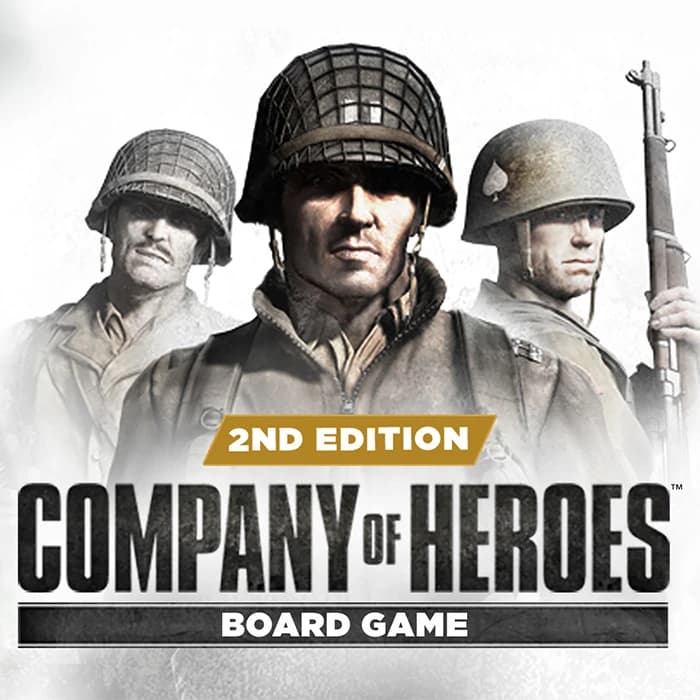
I remember staring at the first Kickstarter page for the Company of Heroes Board Game and thinking, “There is no way this works.”
Real-time strategy (RTS) and board games are natural enemies. RTS is about APM (actions per minute), split-second micro-management, and the literal fog of war that hides a Puma as it circles your flank. Board games? They’re deliberate. They’re math. They’re waiting for Dave to finish his three-minute turn while you stare at a single Panzer IV.
But Bad Crow Games didn't just want to make a World War II wargame. They wanted to make this game. And then, the project almost died, not due to bad mechanics, but because heart-wrenching reality stepped in. The passing of founder Chris Gabrielson in 2022 could have shelved this entire “War Crate” dream. Instead, his brother Brian took the reins, steering the 2nd Edition into something that actually feels like the source code was leaked onto the tabletop.
The “RTS” Secret Sauce: Action Cubes
Most wargames use a “I go, You go” or a complex activation sequence. Company of Heroes uses Action Cubes. It sounds like a Euro-game nightmare, right? “I’m spending my wood to fire my Panther!” No, it’s smarter than that.
The cubes represent your “Command and Control.” In the video game, you’re limited by how fast your eyes can move; here, you’re limited by how many cubes you can spend before the round ends. It creates a frantic, high-stakes economy where you have to decide: Do I reinforce my position at the Victory Point, or do I use that last cube to retreat my pinned infantry before they’re wiped? It captures that one-more-click anxiety perfectly.
The Fog of War Fable
The biggest controversy in the community was always how to handle Fog of War. You can't just put a grey shroud over the dining room table.
Bad Crow’s solution? Destructible terrain and building mechanics. If your squads are in a building, the walls come off. If a tank rolls through a hedge, the hedge is gone. While a lot of wargames try to be “realistic”, this game tries to be “cinematic”. It’s 15mm scale, or roughly 1:120 for the scale-heads, which is small enough to fit a whole combat theater on a table but big enough to make a Tiger tank feel like a bully.
I’ve seen dozens of WWII games. Most of them are dry, hex-based slogs where you’re checking line of sight for forty minutes. Here? If you have the cube and the range, you roll the dice. It’s “push your luck” disguised as a tactical sim.
The War Crate Pivot
Let’s talk about the production. The “War Crate” was supposed to be this heavy-duty metal case in the first edition. It was a disaster, too heavy, expensive, and prone to warping. The pivot to a modular plastic system in the 1.5 and 2nd editions was the smartest move they made. It’s a logistical masterclass in how to store 200+ tiny tanks and still be able to set up the game in under ten minutes.
If you’re coming from Bolt Action or Flames of War, you might find the “hit point” system a bit gamey. But if you’ve spent hundreds of hours hearing “A unit has been lost!” in your sleep, this game is a direct line to your nostalgia.
The Verdict: It’s not a “pure” wargame. It’s a board game that learned exactly the right lessons from digital design. It’s messy, it’s loud, and it’s one of the few tabletop adaptations that doesn't feel like a cynical cash grab.